

&imwidth=800&imheight=600&format=webp&quality=medium "Unconnected wiring led to failure of India's navigation satellite, ISRO reveals")
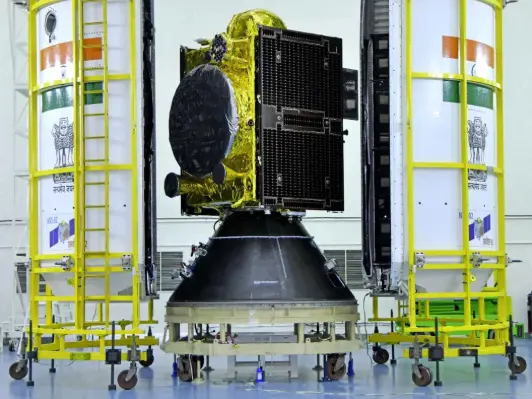
Spacefaring is a zero-error business. The smallest of errors or acts of negligence can lead to million-dollar failures and capability loss. A year after the failure of its strategic-use NVS-02 Navigation satellite, the Indian Space Agency, ISRO, has now revealed that something as simple as an unconnected/disconnected part of a circuit could have been the cause. In the GSLV-F15/NVS-02 mission carried out in January 2025, ISRO's GSLV rocket placed the NVS-02 satellite in its initial orbit.
Thereafter, the satellite had to fire its onboard engines to push itself to its final destination, a higher orbit that is almost 36,000 km above the Earth. However, the engine firing and orbit raising did not take place. Stuck in its initial orbit, the expensive satellite was unable to serve its core purpose of providing Position, Navigation, and Timing. ISRO said that it constituted an Apex Committee to review the observations and recommend further course of action regarding the NVS-02 satellite failure. Based on available Telemetry data, detailed simulation studies were further carried out.
The Apex Committee concluded that the prime reason for the observation was found to be the drive signal not reaching the pyro valve of the oxidizer line of the engine meant for orbit raising. “The committee concluded that the most likely cause for the observation is the disengagement of at least one contact (in each of the main and redundant paths) of the connector.” In simple terms, there were two circuits-a primary and a backup- but there was a "disengagement" in a contact(a connecting component) in both of them. Therefore, the signals for engine firing were not delivered; it can be inferred. However, this incident also raises questions about the agency's quality control and inspection standards, as both the primary and secondary systems seem to have failed in the same manner.
Further, ISRO mentioned that the committee had provided a set of recommendations aimed at enhancing the redundancy and reliability of the engine firing system for future missions. In line with these recommendations, all the corrective actions were successfully implemented in the CMS-03/GSAT-7R satellite launched for the Indian Navy in November 2025, ISRO said. It was added that the engine firing systems performed satisfactorily and placed the CMS-03/GSAT-7R satellite in the intended orbit. Further, this set of recommendations will be followed for all future missions, as applicable, ISRO said.
The NVS-02 failure was a costly one for India, as the failure rendered India's desi-GPS 'NAVIC' near-defunct. Back in 2025, the author had reported on the perilous condition of NAVIC after the NVS-02 failure. Even a year after the failure, ISRO has not launched the replacement for the NVS-02.
Trending Stories
&imwidth=180&imheight=135&format=webp&quality=medium)
West Bengal govt forms SIT to probe Kolkata Durga Puja stampede that killed 19
&im=FitAndFill=(700,400)&imwidth=180&imheight=135&format=webp&quality=medium)
What is the real meaning behind Pete Hegseth's tattoos?
&imwidth=180&imheight=135&format=webp&quality=medium)
Zohran Mamdani's Garba dance goes viral as he joins Indian community's Navratri celebrations | WATCH
&imwidth=180&imheight=135&format=webp&quality=medium)
Rafale Marine fighter begins flight trials in Goa ahead of Indian Navy induction
&imwidth=180&imheight=135&format=webp&quality=medium)
Explosions heard in Iran’s Hormozgan province near Strait of Hormuz: State media
&imwidth=180&imheight=135&format=webp&quality=medium)
Shock, anger and despair in Bangladesh over the executions
&imwidth=180&imheight=135&format=webp&quality=medium)
Americans told to prepare their will before visiting this country
&imwidth=180&imheight=135&format=webp&quality=medium)
WATCH | Mysterious haze grips Ohio city as toxic chemical leak forces mass evacuation – What is happening?
&imwidth=180&imheight=135&format=webp&quality=medium)
Kim Jong Un death rumors explode | China accused of secretly sending troops to Pyongyang
&imwidth=180&imheight=135&format=webp&quality=medium)
James Bond auction: Own Daniel Craig's Skyfall suit, Ana de Armas' dress and 300+ rare 007 collectibles
&imwidth=180&imheight=135&format=webp&quality=medium)
Trump says end to Ukraine war is 'closer than ever'; Witkoff's Putin remarks spark criticism
&imwidth=180&imheight=135&format=webp&quality=medium)
Trump waves at 'empty space' in viral video,' critics claim 'mental decline getting worse' | WATCH
&imwidth=180&imheight=135&format=webp&quality=medium)
IND vs NZ T20Is: Will Sooryavanshi play? Skipper Shreyas Iyer clears the air on Samson vs Vaibhav debate
&imwidth=180&imheight=135&format=webp&quality=medium)
US midterms: Democrats sue Trump administration over alleged 'threats and intimidation' ahead of election, Musk issues warning to Dems
&imwidth=180&imheight=135&format=webp&quality=medium)
‘Her heart and mind in good shape’: What Helen Haines’ husband said after MP loses both legs in ‘targeted’ attack
&imwidth=180&imheight=135&format=webp&quality=medium)
Israel election 2026: Three possible scenarios after October 27 polls
&imwidth=180&imheight=135&format=webp&quality=medium)
US midterms 2026: What polls and prediction markets indicate about Congress
&imwidth=180&imheight=135&format=webp&quality=medium)
US Midterms 2026 and money: From Bloomberg to Musk, corporate donors, super PACs and lobbies, it's all about the cash
&imwidth=180&imheight=135&format=webp&quality=medium)
Ramayana promotion takes a funny turn after Ranbir Kapoor's verbal blunder, leaves fans in splits | Watch
&imwidth=180&imheight=135&format=webp&quality=medium)
US orders embassy staff, families to leave Saudi Arabia amid Houthi attacks: Report
&imwidth=180&imheight=135&format=webp&quality=medium)
Priyanka Chopra celebrates Dussehra 2026 with Nick Jonas and daughter Malti Marie | See pics
&im=FitAndFill=(700,400)&imwidth=180&imheight=135&format=webp&quality=medium)
New OTT releases this week (October 19-25, 2026): Gajab Raat to Chaar Yaar-8 titles to watch during Dussehra week on Netflix, Prime Video and more
&imwidth=180&imheight=135&format=webp&quality=medium)
US business activity grows in June, but tariffs and inflation cloud outlook
&imwidth=180&imheight=135&format=webp&quality=medium)
'I’m not saying it’s extraterrestrial' - 'Mutant' creature forces Mexicans to flee their homes
&imwidth=180&imheight=135&format=webp&quality=medium)
‘I caution the president...’: Trump’s ex-press secretary warns after Zacharia’s exit
&imwidth=180&imheight=135&format=webp&quality=medium)
Hunger makes alcohol more appealing, study finds
&imwidth=180&imheight=135&format=webp&quality=medium)
Finance influencer dies by suicide in Chennai; father accuses tech CEO, who denies charge
&imwidth=180&imheight=135&format=webp&quality=medium)
France protests: 'Block everything' movement escalates as public fury over austerity grows; over 200 arrested. Here's all you to need to know
&imwidth=180&imheight=135&format=webp&quality=medium)
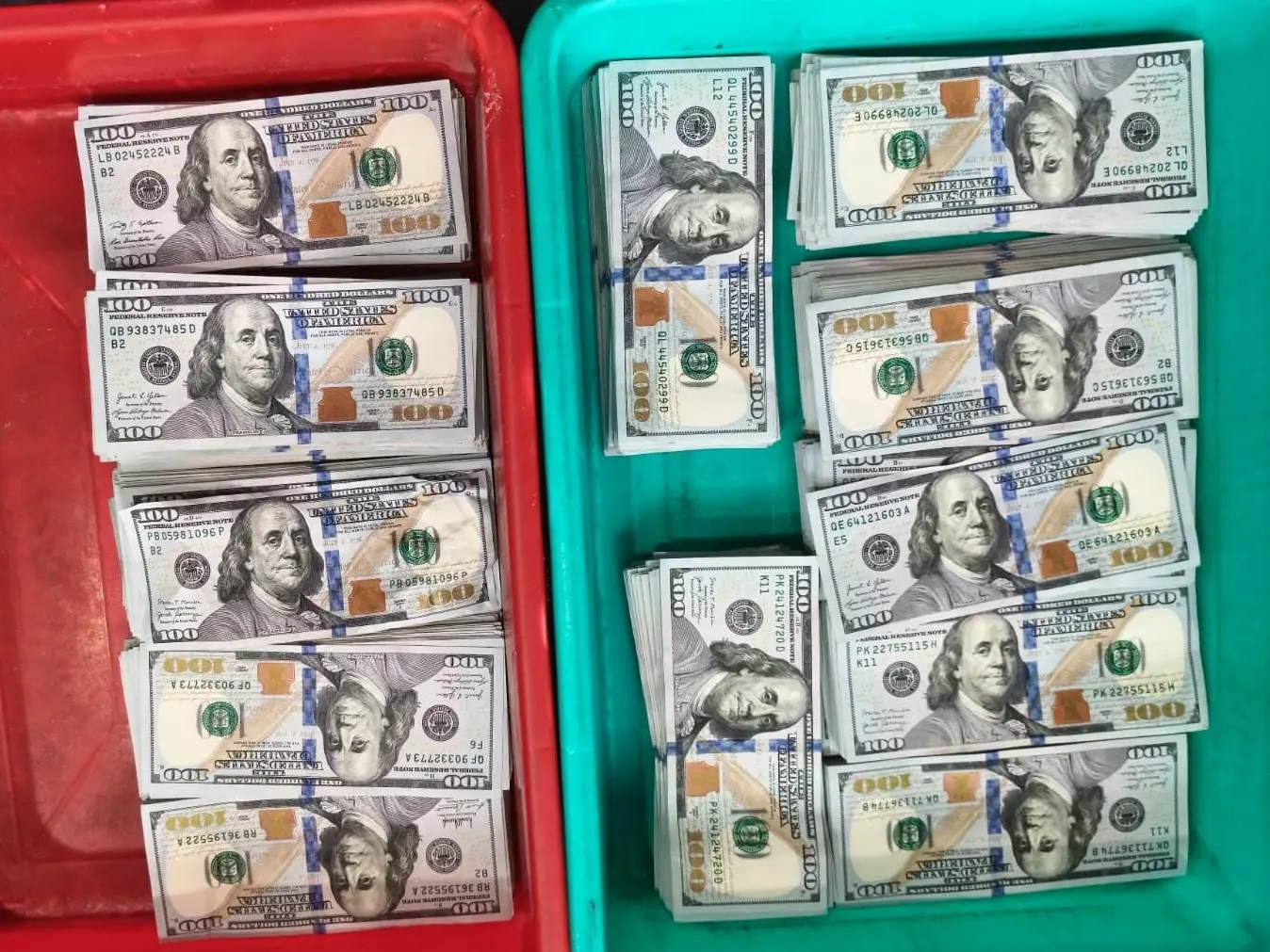
Kolkata airport: CISF detects ₹1.13 crore in US dollars hidden in bags of 2 Bangkok-bound passengers
&imwidth=180&imheight=135&format=webp&quality=medium)
Feds obtain DNA evidence that could prove Ilhan Omar married her brother: Report
&imwidth=180&imheight=135&format=webp&quality=medium)
US midterms 2026: Trump's approval rating hits record low as Democrats gain ground
&imwidth=180&imheight=135&format=webp&quality=medium)
French military plane crashes in northeast France, one dead
&imwidth=180&imheight=135&format=webp&quality=medium)
Turkey, Qatar, Pakistan and Indonesia sign 'Badr' defence cooperation pact in Doha
