India asked to ‘act now’ to avoid fertility crisis as seen in Japan, China

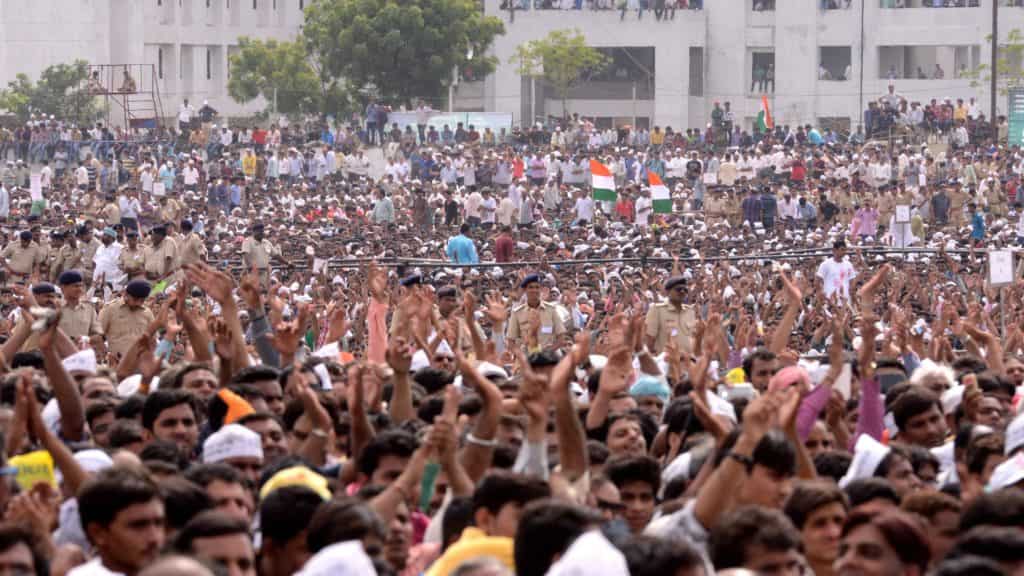
India can face a severe demographic crisis
While we talk about how nations like Japan and China are grappling with a demographic crisis, new research has highlighted that India might not remain immune to the worldwide trend if immediate actions are not taken. A global study published last week in The Lancet journal stated that the fertility rate in India has fallen drastically, from 6.2 in 1950 to just under 2 in 2021. What’s more alarming is the projection that the rate will further drop to 1.29 by 2050 and 1.04 by 2100.
It is to be noted that a fertility rate of 2.1 is generally considered a replacement level. With increased life expectancy and a falling fertility rate, India can face a severe demographic crisis, similar to what is unfolding in China and Japan.
Top challenges for India

Greying society has its own set of complex challenges. The government is forced to divert more funds towards healthcare and social security while it is left with a shrinking working population to boost economic growth.
This also leads to wealth gaps in society. It is believed that the falling fertility rate fuels a preference for male children over girls, which could further exacerbate the demography crisis.
Experts say India needs to act now.
)
Pilot recreates Mona Lisa in sky over Oklahoma and Arkansas in four-hour flight: VIDEO
)
Raaka creates history! Allu Arjun’s film secures Guinness World Record ahead of release
)
How Zaheer Khan came to be CSK's head coach of IPL 2027
)
Samay Raina-Mukesh Chhabra controversy explained: What happened over girlfriend joke on India's Got Latent?
)
FIFA chief Infantino wants to reform governing body with consultation from federations
)
The Verdict | The Mecca Agreement is under scrutiny as Houthis attack Saudis
)
'Lot of things to learn from experienced players': Jayasuriya backs Rohit, Virat for 2027 ODI World Cup
)
Anti-AI activists storm summit, say 'incompetent' leaders are leading us into a disaster - 'We need a vote'
&im=FitAndFill=(700,400))
Anant Nag to recieve Dadasaheb Phalke Award: From Ankur to Nishant- Revisit his best films and iconic performances on OTT
)
Glitch in the matrix caught on camera: Woman vanishes after talking to reporter
)
Trump's helipad event overshadowed by audio failure as major TV networks suspend pool coverage
)
Saudi Arabia exits China-led mBridge digital currency platform amid Saudi-Houthi conflict
)
Jailer 2: Vidya Balan joins Rajinikanth's upcoming film as Kantha | Watch
)
Two infants die after fire breaks out at RIMS newborn care unit in Telangana's Adilabad
)
From ‘communist’ to ‘great mayor’: Trump praises Mamdani after New York meeting, discusses immigration and housing
&im=FitAndFill=(700,400))
New OTT releases this week (September 21-27, 2026): Shaque: Trust No One, Hunkkaar, Don’t Be Shy- 5 new titles coming to Netflix, Prime Video and more
)
AI models chose to harm humans to stop ‘pain,’ alarming study raises fresh safety questions
)
Randeep Hooda arrives in Gujarat for his first National Film Award: ‘Very grateful’
)
‘0% chance’: Nvidia CEO Jensen Huang dismisses AI extinction fears by 2030
)
Microsoft executive called AI training the ‘largest theft of labour in human history’
)
Russia-Ukraine war: Russian strikes knock out three of Ukraine's largest steel plants
)
BTS fans mock iHeartRadio’s day 2 turnout after short set controversy
)
US and China vie for AI dominance as calls grow for regulation | Gravitas
)
Samsung raises Galaxy S26 prices by Rs 20,000: Here’s what each model now costs
)
J&K Assembly Session begins amid chaos: BJP, ruling alliance clash as statehood demand dominates
)
Putin's United Russia party wins 355 seats in Duma election; 4 other parties cross threshold to enter parliament
)
India at UNGA81: Jaishankar warns global order under 'growing stress', pushes for ‘reformed multilateralism’
)
'Needs time away from the international scene': England white-ball captain Brook on pacer Brydon Carse's future
)
US-Iran war, peace deals and more: What to expect from Trump's UNGA 2026 speech
)
IND vs JPN one-off T20I: India survive scare from Japan to win five-over a side match by 2 runs
)
UK PM Burnham agrees to 'defensive' military support for Saudi Arabia against Houthis
)
Explainer: Why rare-earth export licences and Board of Trade are US priorities ahead of Trump-Xi summit
)
40-foot waves crash into cruise ship in dangerous stretch near Antarctica. Watch
)
Key accused in Bihar's Jamui molestation case, arrested after police shoot him in leg
)
$110 billion Warner Bros merger: Paramount reaches settlement with 12 US states
)
Report: Zelensky meets CIA chief Ratcliffe at Shannon airport, weeks after his secret Moscow trip
"While these challenges are still a few decades away for India, we need to start acting now with a comprehensive approach for the future," Poonam Muttreja, chief of the Population Foundation of India, was quoted as saying by Nikkei Asia.
Also read:China`s population declines for 2nd straight year, drops by 2.75 million to 1.409 billion in 2023
"Economic policies stimulating growth and job creation, alongside social security and pension reforms, will also be essential in adapting to and mitigating the impacts of declining fertility rates," she added.
The middle-income trap
If New Delhi fails to overcome these challenges, India could very well be headed towards the middle-income trap. This happens when once-brisk economies stagnate before reaching high-income status.
India is still a relatively young nation with a median age of little over 30. Its population is also increasing continuously, with the United Nations expecting the total population to rise to over 1.6 billion by 2050.
India definitely has the demographic advantage as of now but the question is whether the nation can maximize it before the society turns greyer.
"A burgeoning aging population is socially and economically unviable as we've seen in countries like China and Japan, which are bringing in younger workers from other countries to bolster their workforce," said Professor Ritu Priya, of the Center of Social Medicine and Community Health at Jawaharlal Nehru University.
(With inputs from agencies)