Explainer: How Indian Army used LEO satellite internet to aid cyclone-hit Sri Lanka

&imwidth=600&imheight=450&format=webp&quality=medium "Explainer: How Indian Army used LEO satellite internet to aid cyclone-hit Sri Lanka")
Photograph: (WION)
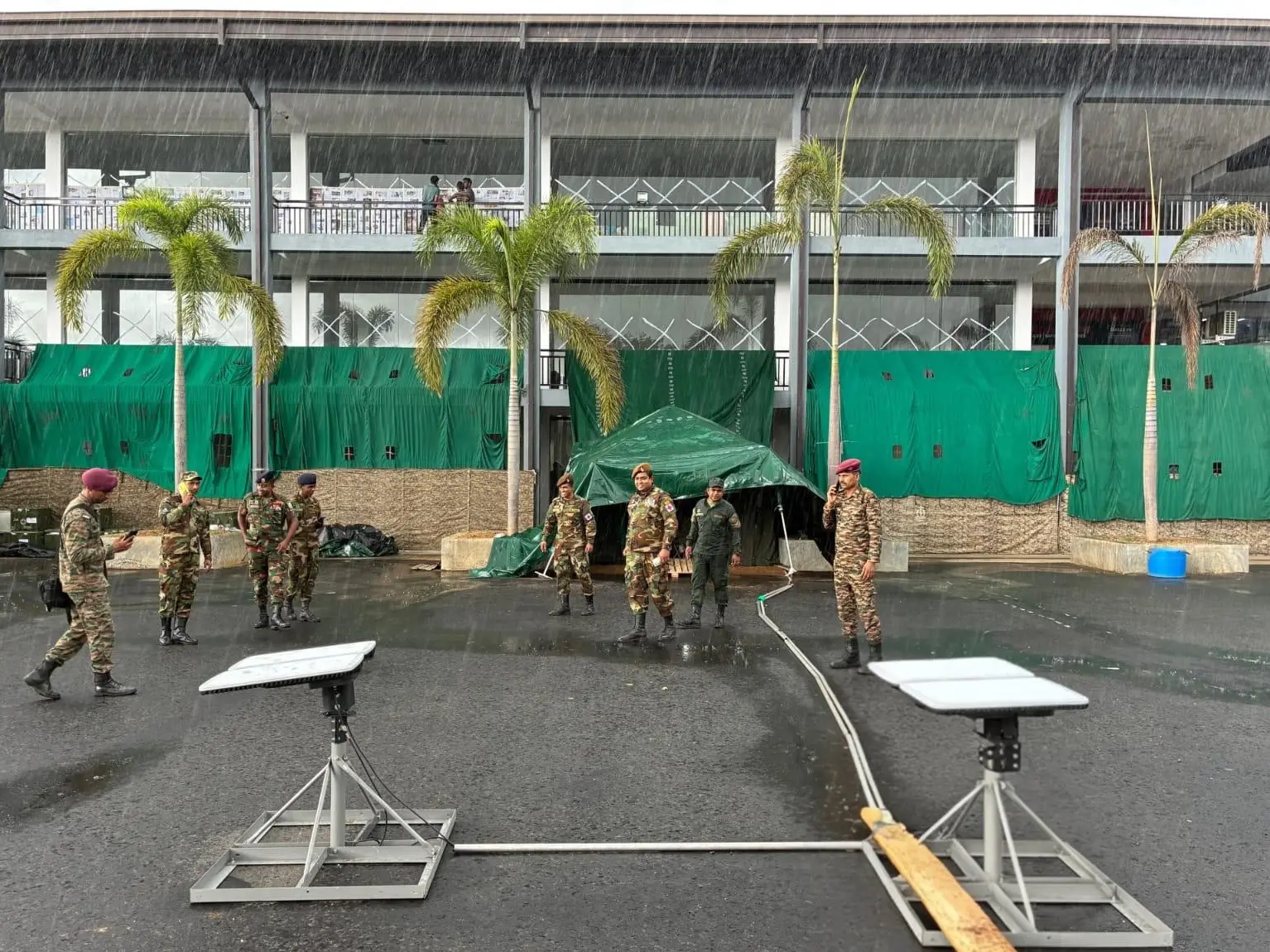
This satellite-based connectivity is facilitating 24/7 telemedicine consultations with specialist medical teams, ensuring the Army is able to deliver essential healthcare and emergency assistance to affected communities without delay.
Since 28th November 2025, the Indian Armed Forces have been playing a major role in providing Humanitarian Aid and Disaster Relief (HADR) for cyclone-hit Sri Lanka, where the impact of Cyclone Ditwah, resultant landslides and floods claimed over 600 lives. The Indian Army has now successfully demonstrated the use of satellite-based internet connectivity on an emergency basis to re-establish reliable communications in regions where terrestrial networks have been severely disrupted.
This satellite-based connectivity is facilitating 24/7 telemedicine consultations with specialist medical teams, ensuring the Army is able to deliver essential healthcare and emergency assistance to affected communities without delay. The initiative highlights the critical role of resilient, fast, satellite infrastructure in restoring essential services and in operational continuity during disaster response efforts.
This was made possible as European firm Eutelsat and its partner Indian firm Airtel are extending OneWeb Low Earth orbit (LEO) satellite connectivity to strengthen the Indian Army’s ongoing humanitarian relief operations in flood-impacted areas of Sri Lanka.
Neha Idnani, Regional Vice President for APAC, Eutelsat, said, “Eutelsat is deeply committed to supporting the Indian Army’s relief efforts with OneWeb LEO connectivity, delivered in partnership with Airtel. The ability to maintain high-quality communications in crisis situations is vital, and we remain committed to equipping organisations on the ground with secure, resilient connectivity required to safeguard lives and enable essential services.”
How conventional satellite connectivity works
For several decades, militaries and civilians have been using satellite internet and satellite telephony services by utilising special devices that can access signals from large communication satellites that are placed 36,000 km above the Earth. From 36,000 km away from the Earth, these satellites can see almost one-third of the planet and provide a wide area of coverage, as the satellites are in geostationary orbit. A satellite in geostationary orbit spins in sync with the Earth's rotation; therefore, it appears to be stationary when viewed from the Earth. This is why TV antennae at rooftops at are positioned to look towards a specific direction, towards the specific Geostationary satellite.
Trending Stories
&im=FitAndFill=(700,400)&imwidth=280&imheight=210&format=webp&quality=medium)
&imwidth=280&imheight=210&format=webp&quality=medium)
&imwidth=280&imheight=210&format=webp&quality=medium)
&imwidth=280&imheight=210&format=webp&quality=medium)
&imwidth=280&imheight=210&format=webp&quality=medium)
&imwidth=280&imheight=210&format=webp&quality=medium)
&imwidth=280&imheight=210&format=webp&quality=medium)
&imwidth=280&imheight=210&format=webp&quality=medium)
&imwidth=280&imheight=210&format=webp&quality=medium)
&imwidth=280&imheight=210&format=webp&quality=medium)
&imwidth=280&imheight=210&format=webp&quality=medium)
&imwidth=280&imheight=210&format=webp&quality=medium)
&imwidth=280&imheight=210&format=webp&quality=medium)
&imwidth=280&imheight=210&format=webp&quality=medium)
&imwidth=280&imheight=210&format=webp&quality=medium)
&imwidth=280&imheight=210&format=webp&quality=medium)
&imwidth=280&imheight=210&format=webp&quality=medium)
&imwidth=280&imheight=210&format=webp&quality=medium)
&imwidth=280&imheight=210&format=webp&quality=medium)
&imwidth=280&imheight=210&format=webp&quality=medium)
&imwidth=280&imheight=210&format=webp&quality=medium)
&imwidth=280&imheight=210&format=webp&quality=medium)
&imwidth=280&imheight=210&format=webp&quality=medium)
&imwidth=280&imheight=210&format=webp&quality=medium)
&imwidth=280&imheight=210&format=webp&quality=medium)
&imwidth=280&imheight=210&format=webp&quality=medium)
&im=FitAndFill=(700,400)&imwidth=280&imheight=210&format=webp&quality=medium)
&im=FitAndFill=(700,400)&imwidth=280&imheight=210&format=webp&quality=medium)
&imwidth=280&imheight=210&format=webp&quality=medium)
&imwidth=280&imheight=210&format=webp&quality=medium)
&imwidth=280&imheight=210&format=webp&quality=medium)
&imwidth=280&imheight=210&format=webp&quality=medium)
&imwidth=280&imheight=210&format=webp&quality=medium)
&imwidth=280&imheight=210&format=webp&quality=medium)
&im=FitAndFill=(700,400)&imwidth=280&imheight=210&format=webp&quality=medium)
&imwidth=280&imheight=210&format=webp&quality=medium)
However, Geostationary satellites have some limitations. Because these satellites are 36,000 km above the Earth, there is a slight lag (of a few milliseconds) as the signal has to travel a huge distance. This lag, also known as latency, is not best suited for contemporary applications such as HD video-conferencing, online gaming, stock market trading among others etc.
Also Read: Yunus government condemns lynching of Hindu man, says violence has no place in New Bangladesh
How Low Earth Orbit satellite constellations work
Over the last five years, Low Earth Orbit satellite constellations have become increasingly popular. Several private firms, including Eutelsat OneWeb have been operating Low Earth orbit satellite constellations comprising hundreds, if not thousands, of small satellites. These satellites are placed barely 400-1,200 km above the Earth. Therefore, a single satellite would be visible from one point on Earth only for a handful of minutes, which means that each satellite offers coverage only over a small area at a time.
Eutelsat-OneWeb operates more than 640 satellites in its fleet, so that they can almost encircle the Earth with its fleet of satellites and provide coverage in most regions. Being close to the Earth, it is possible to rapidly beam down internet signals from these satellites and enable internet usage on-board flights, ships, and even in remote areas (where terrestrial communication connectivity is sparse) for high-speed utilities such as HD video-calling, online gaming, trading, etc.
While Geostationary satellite signals would have to travel 72,000 km for a two-way communication, Low Earth Orbit satellite signals have to travel barely 2,000 km for two-way communication. Significantly less signal travel time is what makes LEO satellite-based internet services so unique. Users of LEO-based satellite internet can obtain connectivity via portable devices known as terminals, which can communicate with satellites. Such terminals are small in size, lightweight and portable.
Why LEO-based internet is in high demand
Estimates from the International Telecommunication Union (ITU), the United Nations specialised agency for information and communication technologies (ICTs) say that one-third of the world's population is not connected to the internet or might not have access to high-speed internet. This is owing to a mix of economic reasons, societal divide, technological barriers, electricity problems, digital literacy gaps, etc.
Conventional internet cables and telecom infrastructure are laid only in highly populated regions and areas with a large consumer base. In contrast, it is unviable and too expensive to lay down similar communication infrastructure in sparsely populated regions, mountains, forests, and islands.
A fleet of satellites in Low Earth orbit can help bridge this connectivity gap and offer high-speed internet for such remote regions. Which is why there are multiple business entities such as Elon Musk's Starlink, Jeff Bezos' Amazon Leo(formerly Project Kuiper), Europe's Eutelsat OneWeb, China's Guowang and Qianfan that are competing for this lucrative market. In simple terms, they want to ensure that there are no major internet connectivity blind spots in most parts of the world. Such services can also enable high-speed internet access on board moving platforms such as aeroplanes, ships, and trains. Such LEO-based constellations serve military applications as well, as they offer significantly better capabilities than conventional communication satellites placed in higher geostationary orbits.