

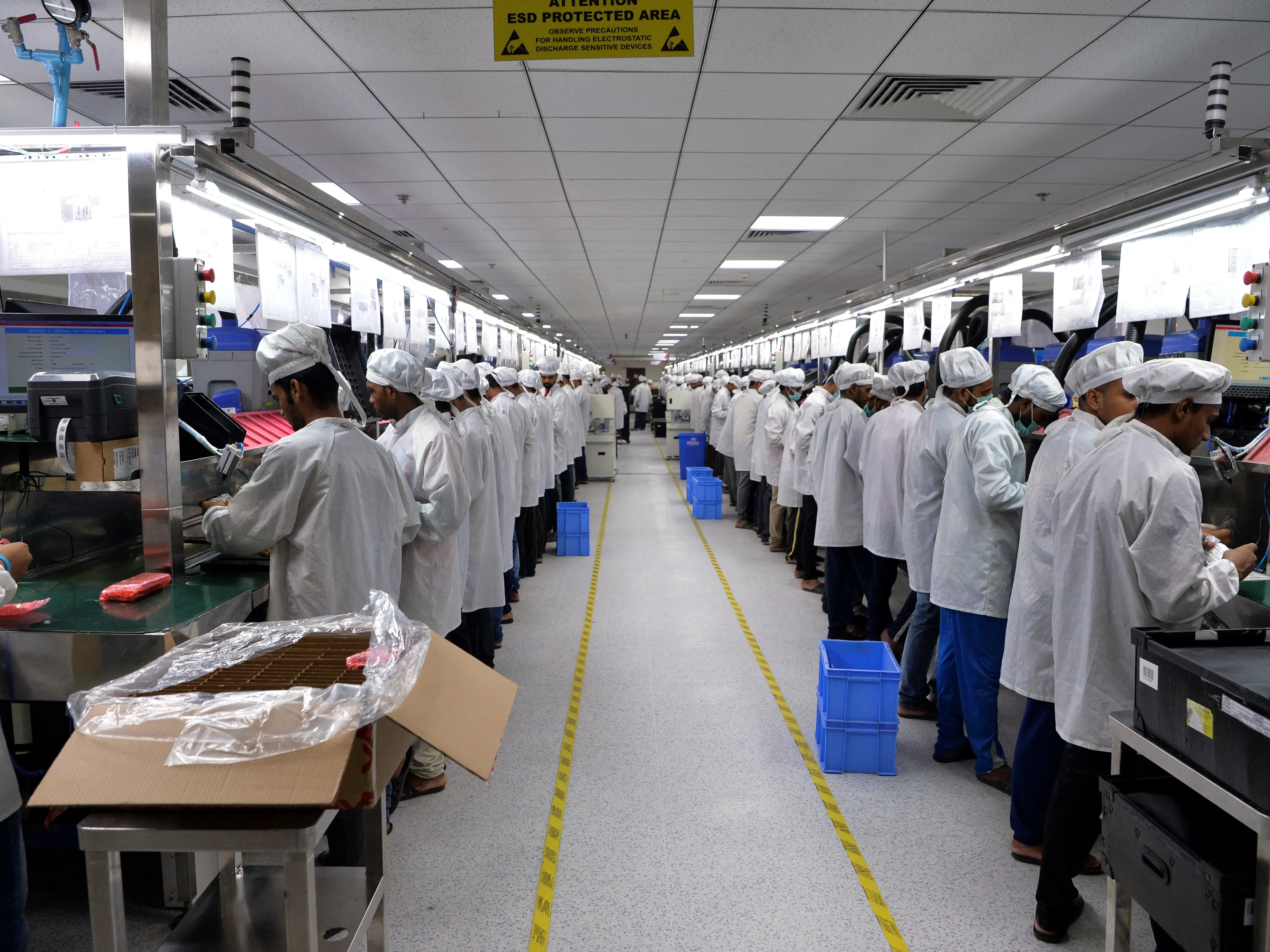
&imwidth=800&imheight=600&format=webp&quality=medium "Govt implements labour reforms: What does it mean for employees?")
More than five years after the Parliament passed the labour codes, the Centre on Friday (21 Nov) has announced the implementation of four labour codes- the Code on Wages, 2019; the Industrial Relations Code, 2020; the Code on Social Security, 2020; and the Occupational Safety, Health and Working Conditions Code, 2020 – with immediate effect. This has been a major part of the reform agenda of the ruling Prime Minister Narendra Modi-led government.
The new labour codes will replace 29 existing central labour laws previously scattered across a range of sectors.
Calling it a major step towards a self-reliant India, Union Minister of Labour and Employment of India, Mansukh Mandaviya, in a post on social media platform X, said, "From today, the new labour codes have been made effective in the country". They will ensure: A guarantee of timely minimum wages for all workers, appointment letters for the youth “They will ensure a guarantee of timely minimum wages for all workers, appointment letters for the youth, equal pay and respect for women, gratuity for fixed-term employees after one year of employment, free annual health check-ups for workers above 40 years of age, double wages for overtime, 100% health security for workers in hazardous sectors, and a guarantee of social justice for workers as per international standards,” he said.
What will it change for employees?
Minimum wage and overtime
Trending Stories
&im=FitAndFill=(700,400)&imwidth=180&imheight=135&format=webp&quality=medium)
‘0-100km/h in 1 second Tesla Roadster’: Why tyre grip becomes a problem when cars accelerate this fast
&imwidth=180&imheight=135&format=webp&quality=medium)
Up to 1 million satellites in orbit? the space race raising questions about who controls space
&imwidth=180&imheight=135&format=webp&quality=medium)
US sanctions Cuban state-owned bank BICSA over alleged financial links to Iran
&imwidth=180&imheight=135&format=webp&quality=medium)
Majid Majidi's new film Midday Meal takes top prize at Asia's biggest film festival
&imwidth=180&imheight=135&format=webp&quality=medium)
Russian woman and Bihar boy's love story goes viral after she reaches India to marry him
&imwidth=180&imheight=135&format=webp&quality=medium)
Arijit Singh 9-city India stadium tour to start from January: Check venue and ticket prices
&imwidth=180&imheight=135&format=webp&quality=medium)
'A new space debris solution for global customers’: Samtel CEO Puneet Kaura on India-Japan partnership
&imwidth=180&imheight=135&format=webp&quality=medium)
Billy Joel's health update: Why the singer can't drive or perform right now?
&imwidth=180&imheight=135&format=webp&quality=medium)
Ukraine blinded: Musk deflects blame on Trump, Putin sharpens attack | Gravitas
&imwidth=180&imheight=135&format=webp&quality=medium)
Oregon school shooting: 16-year-old identified as suspect after at least four killed, including three children
&imwidth=180&imheight=135&format=webp&quality=medium)
Who is Abu Dhabi royal Mahrah Al Nahyan, found unconscious on London street with toddler after cocaine use
&imwidth=180&imheight=135&format=webp&quality=medium)
US-Iran War: Trump eyes mother of all bombs; Iran in crosshairs

Not Khan but Pal: Why did Imran Khan choose his mother's surname over his father's? Family tree explained
&imwidth=180&imheight=135&format=webp&quality=medium)
Russia-Ukraine War: Putin vows retaliation against Ukraine
&imwidth=180&imheight=135&format=webp&quality=medium)
'Turns out the future does have flying cars': Musk's Tesla unveils 'flying' sports car with SpaceX technology | Watch
&imwidth=180&imheight=135&format=webp&quality=medium)
‘He told me clearly...’: Yuzvendra Chahal reveals why Rohit Sharma dropped him from India’s 2023 WC squad
&imwidth=180&imheight=135&format=webp&quality=medium)
China tells Israel to stop West Bank settlements, calls Palestine issue ‘historic injustice’
&im=FitAndFill=(700,400)&imwidth=180&imheight=135&format=webp&quality=medium)
Inside the Peshawar school tragedy: 34 dead, building's condition under scrutiny and owner arrested. Here's what all happened
&im=FitAndFill=(700,400)&imwidth=180&imheight=135&format=webp&quality=medium)
‘No traffic jams for Tesla owners’: How Elon Musk’s new flying car is different from regular cars?
&imwidth=180&imheight=135&format=webp&quality=medium)
‘My president, I mean my husband’: Trump's new press secretary Katie Zacharia's first briefing goes off the rails in 14 minutes
&im=FitAndFill=(700,400)&imwidth=180&imheight=135&format=webp&quality=medium)
World's 7 most innovative countries in 2026 REVEALED: Did India make the list? | In Pics
&imwidth=180&imheight=135&format=webp&quality=medium)
Trump says Zelensky 'not a good guy' amid fresh Russia-Ukraine tensions | Watch video
&imwidth=180&imheight=135&format=webp&quality=medium)
Earthquake measuring 7 magnitude strikes Russia’s Kamchatka Peninsula
&imwidth=180&imheight=135&format=webp&quality=medium)
Vijay Deverakonda and Rashmika Mandanna's Ranabaali X Review: Netizens call it history-rich but overstuffed
&imwidth=180&imheight=135&format=webp&quality=medium)
Was Trump in danger at Alaska rally? Viral video shows Secret Service agents reacting
&imwidth=180&imheight=135&format=webp&quality=medium)
'Will stand with Pakistan in case of war with US': Rajasthan BJP chief's remark sparks row
&imwidth=180&imheight=135&format=webp&quality=medium)
US midterms 2026: FBI investigates suspicious mailings containing 'unknown substance' sent to election offices
&imwidth=180&imheight=135&format=webp&quality=medium)
Durga Puja 2026: Kajol kicks of celebrations along with mother Tanuja, sister Tanishaa and cousin Ayan Mukerji
&im=FitAndFill=(700,400)&imwidth=180&imheight=135&format=webp&quality=medium)
Inside Tesla's Roadster: 10 features of Elon Musk's 'flying car' that push the limits of electric vehicles | In Pics
&imwidth=180&imheight=135&format=webp&quality=medium)
India’s naval priorities: Ex-Navy Chief calls for third aircraft carrier, more warships and submarines
&imwidth=180&imheight=135&format=webp&quality=medium)
Netanyahu defies Trump, blocks Gaza military base for Board of Peace | Gravitas
&imwidth=180&imheight=135&format=webp&quality=medium)
Saudi Arabia executes Two Bangladesh nationals over immoral act
&im=FitAndFill=(700,400)&imwidth=180&imheight=135&format=webp&quality=medium)
Tesla Roadster's thrusters vs rocket engines: What's the difference?
&imwidth=180&imheight=135&format=webp&quality=medium)
Mumbai: CJP brings Tricolour protest to Azad Maidan after weeks of demonstrations

US ends automatic work permit extensions; Indian workers lose 540-day safety net: What it means
&imwidth=180&imheight=135&format=webp&quality=medium)
'Ukraine must get all it needs to protect civilians and infrastructure': Macron
&im=FitAndFill=(700,400)&imwidth=180&imheight=135&format=webp&quality=medium)
New Friday OTT releases (October 16, 2026): DC, Sacrifice, Aasha- 6 new movies and TV shows coming on Netflix, Zee 5, Prime Video and more
Under the new framework, all workers will be entitled to minimum wages, a salary credit on the 7th of each month, and double wages for overtime.
Social security
The organisation has to issue mandatory appointment letters. Workers will also receive free annual health check-ups, and Fixed Term Employees will become eligible for gratuity after one year of continuous service.
Women workers to get equal pay, paid maternity leave
Women workers gain expanded rights including equal pay, consent-based night-shift employment with enhanced safety measures, 26 weeks of paid maternity leave, and broader opportunities across manufacturing, mining, services and IT.
Gig workers to get social security net
In a major shift, gig and platform workers such as delivery partners, ride-hailing drivers, and other app-based workers receive legal recognition for the first time. Aggregator platforms will contribute up to 5 per cent to a Social Security Fund, making insurance, accident compensation and other benefits portable across states.
Prime Minister Narendra Modi hailed the new reforms as a tool to ensure dignity for the workforce, "India's new Labour Codes strengthen the rights of every worker--formal, informal and gig. These reforms ensure better wages, safety, and dignity for our workforce. A major stride towards Viksit Bharat," he said in a post on social media platform X.
