What is the Delimitation Bill? Why the Union Government is pegging it to the Women Reservation Law

&imwidth=600&imheight=450&format=webp&quality=medium "What is the Delimitation Bill? Why the Union Government is pegging it to the Women Reservation Law")
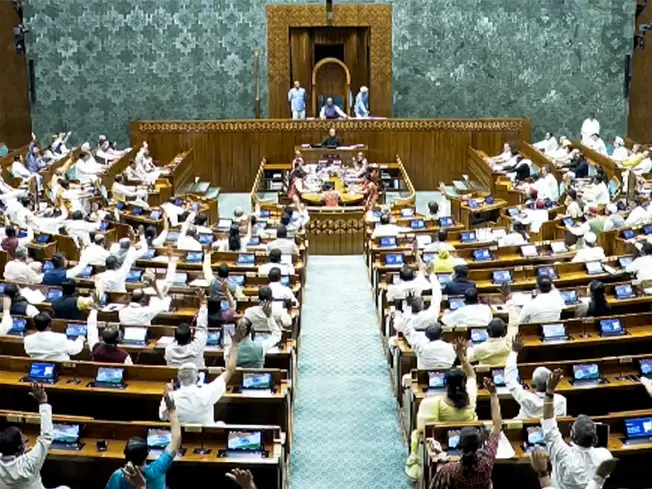
Lok Sabha Speaker Om Birla conducts the proceedings of the House during the Budget Session (2026-27) of Parliament, in New Delhi on Thursday. Photograph: (ANI)
Delimitation Bill 2026 proposes expanding Lok Sabha to 850 seats. Here’s why the INDIA bloc opposes it and how it links to Women’s Reservation.
The Union Government, in its extended Budget Session, started with the introduction of the Constitution (131st) Amendment Bill, the Delimitation Bill, 2026, and the Union Territories Laws (Amendment) Bill, 2026. The voting on the three bills will be held at 4 PM on April 17, 2026. Previously, the Union Government has circulated the draft of Bills among the MPs, which the government claims is in relation to the implementation of the Women Reservation Act, 2023. It met with strong opposition even during its introduction, with all the INDIA Bloc parties voting unanimously against the delimitation provision of the Constitution (131st) Amendment Bill, 2026, warning that the decision will have a detrimental effect on the federal structure of the country.
What is the Delimitation Bill?
The Delimitation Bill is part of the Legislative package and is dependent on the passing of the Constitution (131st) Amendment Bill. The Union Government, led by the BJP, has issued a three-sentence whip to its MPs- “A key feature of the constitutional amendment is the expansion of the Lok Sabha from its current strength to a maximum of 850 members, with 815 seats allocated to states and 35 to Union Territories.” Together, the legislative package intends to change Article 81 (Composition of Lok Sabha), Article 82 (Readjustment after Census), Article 170 (Composition of State Legislative Assemblies), and Article 334A (Women's Reservation), which will expand the Lok Sabha and withdraw the decade long freeze on the delimitation of the constituencies that has been in place since 1976. It will also create an administrative structure for a new Delimitation Commission comprising a current or former Supreme Court judge, the Chief Election Commissioner, and State Election Commissioners.
Why is the Union Government pegging it to the Women's Reservation Law
The Women Reservation Law, also known as the Nari Shakti Vandan Adhiniyam (Constitution 106th Amendment Act, 2023), reserves 33 per cent of the seats in the Lok Sabha and State assemblies of India. The reservation was set for a 15-year period since the date of passing, and since the passing of the law, the reserved seats would be circulated periodically. The act inserted Article 334A in the constitution, which made the implementation of the Act conditional on a new census and a delimitation exercise.
Trending Stories
&im=FitAndFill=(700,400)&imwidth=280&imheight=210&format=webp&quality=medium)
&im=FitAndFill=(700,400)&imwidth=280&imheight=210&format=webp&quality=medium)
&imwidth=280&imheight=210&format=webp&quality=medium)
&imwidth=280&imheight=210&format=webp&quality=medium)
&imwidth=280&imheight=210&format=webp&quality=medium)

&imwidth=280&imheight=210&format=webp&quality=medium)
&imwidth=280&imheight=210&format=webp&quality=medium)
&imwidth=280&imheight=210&format=webp&quality=medium)
&im=FitAndFill=(700,400)&imwidth=280&imheight=210&format=webp&quality=medium)
&imwidth=280&imheight=210&format=webp&quality=medium)
&im=FitAndFill=(700,400)&imwidth=280&imheight=210&format=webp&quality=medium)
&imwidth=280&imheight=210&format=webp&quality=medium)
&imwidth=280&imheight=210&format=webp&quality=medium)
&im=FitAndFill=(700,400)&imwidth=280&imheight=210&format=webp&quality=medium)
&imwidth=280&imheight=210&format=webp&quality=medium)

&im=FitAndFill=(700,400)&imwidth=280&imheight=210&format=webp&quality=medium)
&imwidth=280&imheight=210&format=webp&quality=medium)
&imwidth=280&imheight=210&format=webp&quality=medium)
&imwidth=280&imheight=210&format=webp&quality=medium)
&imwidth=280&imheight=210&format=webp&quality=medium)
&imwidth=280&imheight=210&format=webp&quality=medium)
&imwidth=280&imheight=210&format=webp&quality=medium)
&imwidth=280&imheight=210&format=webp&quality=medium)
&imwidth=280&imheight=210&format=webp&quality=medium)
&imwidth=280&imheight=210&format=webp&quality=medium)
&imwidth=280&imheight=210&format=webp&quality=medium)
&imwidth=280&imheight=210&format=webp&quality=medium)
&imwidth=280&imheight=210&format=webp&quality=medium)
&imwidth=280&imheight=210&format=webp&quality=medium)
&imwidth=280&imheight=210&format=webp&quality=medium)
&imwidth=280&imheight=210&format=webp&quality=medium)
&imwidth=280&imheight=210&format=webp&quality=medium)
&imwidth=280&imheight=210&format=webp&quality=medium)
&im=FitAndFill=(700,400)&imwidth=280&imheight=210&format=webp&quality=medium)
&imwidth=280&imheight=210&format=webp&quality=medium)
Why is the INDIA bloc opposing the bill?
The INDIA bloc argues that the delimitation was supposed to be done on the 2026 census data, the Constitution (131st) Amendment Bill changes it and bases it on the 2011 census data. They further argue that the Union Government is using the Women's Reservation Bill as a basis to carry out the Delimitation exercise and increase the representation of the seats from its core support base in the Hindi heartland. According to a report by the Hindu, the Union Government has claimed that the exercise will increase the seat count of each state by almost 50 per cent. But the exercise intends to increase the representation of Hindi-speaking states from 38.1 per cent to 43.1 per cent and reduce the South from 24.3 to 20.7 per cent, East 14.4 to 13.7 per cent, North East 4.4 per cent to 3.8 per cent, North Non-Hindi 4.3 to 4.4 per cent and West 14.3 to 14.4 per cent when calculated with the 850 proposed members.
Tamil Nadu CM has called it a “historic injustice”. It is a Demographic Penalty for regions which has a relatively lower population growth rate compared to the Hindi-speaking North India.
"We support reserving 33% seats for women based on the current strength of parliament. We also want a further freeze on expanding overall seats in the parliament until population trends stabilise. We object to the haste in convening this session in the middle of an election season," said Jhon Brittas, MP of CPI (M). While Akhilesh Yadav, MP from the Samajwadi Party, has alleged that the Union Government is hasty in its implementation, suggesting that it does not want to ensure the use of caste data from the upcoming census.