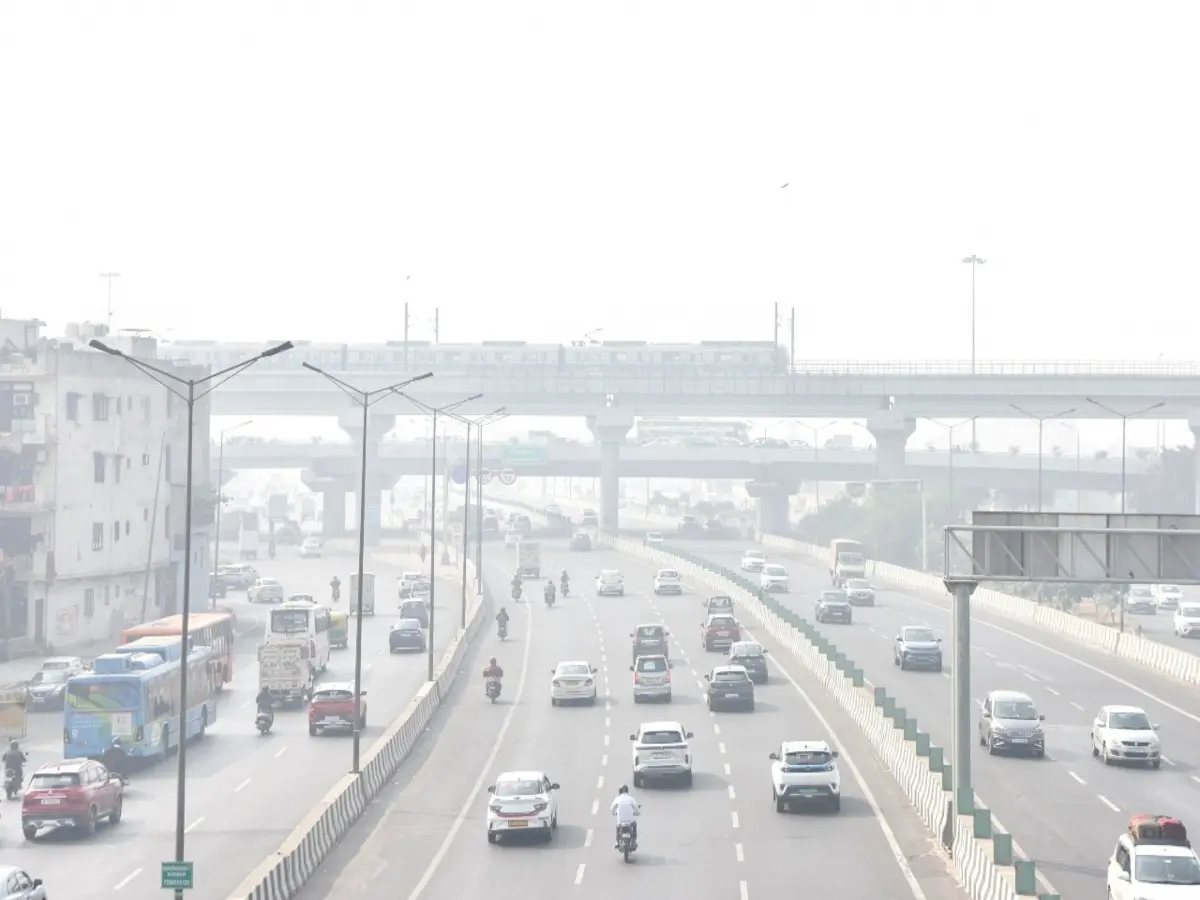
Delhi wakes up to another day of thick smog, AQI remains in 'severe' category

&imwidth=600&imheight=450&format=webp&quality=medium "Delhi wakes up to another day of thick smog, AQI remains in 'severe' category")
Representative Image Photograph: (ANI)
The pollution level was marginally higher than yesterday despite the Graded Response Action Plan (GRAP)-IV in effect across Delhi and the National Capital Region (NCR).
A thick blanket of smog engulfed the national capital Delhi early Saturday morning (Dec 14), while the Air Quality Index (AQI) settled at 462, considered ‘very poor’, according to the Central Pollution Control Board (CPCB). The pollution level was marginally higher than yesterday despite the Graded Response Action Plan (GRAP)-IV in effect across Delhi and the National Capital Region (NCR).
Ghazipur, the ITO area, and Anand Vihar saw a severe drop in visibility level. While several localities across the city continued to register "severe" air quality.
The air quality index in Bawana was recorded the highest at 497 at 7 am. Narela recorded an AQI of 492, and Okhla Phase 2 saw the level settle at 474. In contrast, NSIT Dwarka recorded the lowest AQI of 411, according CPCB data.
A layer of toxic smog lingered over Anand Vihar, with the Central Pollution Control Board reporting an air quality index of 491, which is again severe. Other locations that witnessed similar condition are Ashok Vihar (493), ITO (483), DTU (495), and Nehru Nagar (479).
Najafgarh recorded an AQI of 408, while Shadipur registered 411, marginally better but still in the 'severe' category.
GRAP IV implemented
Trending Stories
)
&im=FitAndFill=(700,400))
)
)
)
)
)
)
)
)
)
)
&im=FitAndFill=(700,400))
)
)
)
)
)
)
)
)
)
)
)
)
)
)
)
)
)
)
&im=FitAndFill=(700,400))
)
)
)
)
)
)
)
)
)
Meanwhile, authorities on Saturday (Dec 13) enforced all measures under stage IV of the Graded Response Action Plan (GRAP) with immediate effect across the Delhi-NCR.
The action was taken by the Commission for Air Quality Management (CQAM) following a steep decline in the national capital's air quality on Saturday.
What are the AQI categories?
0-50: Good
51-100: Satisfactory
101-200: Moderate
201-300: Poor
301-400: Very Poor
401-500: Severe
Major contributor: Transport pollution
Transport remains the largest contributor to Delhi’s pollution, responsible for 18.4% of emissions on Tuesday. It was followed by emissions from nearby industries (9.2%) and neighbouring cities, including Noida (8.2%), Ghaziabad (4.6%), Baghpat (6.2%), Panipat (3.3%), and Gurugram (2.9%). It is expected that transport emissions will account for 15.6% of the city’s pollution on Wednesday.
