

&imwidth=800&imheight=600&format=webp&quality=medium "Delhi gets new protest sites, but Jantar Mantar had one key advantage: Its location")
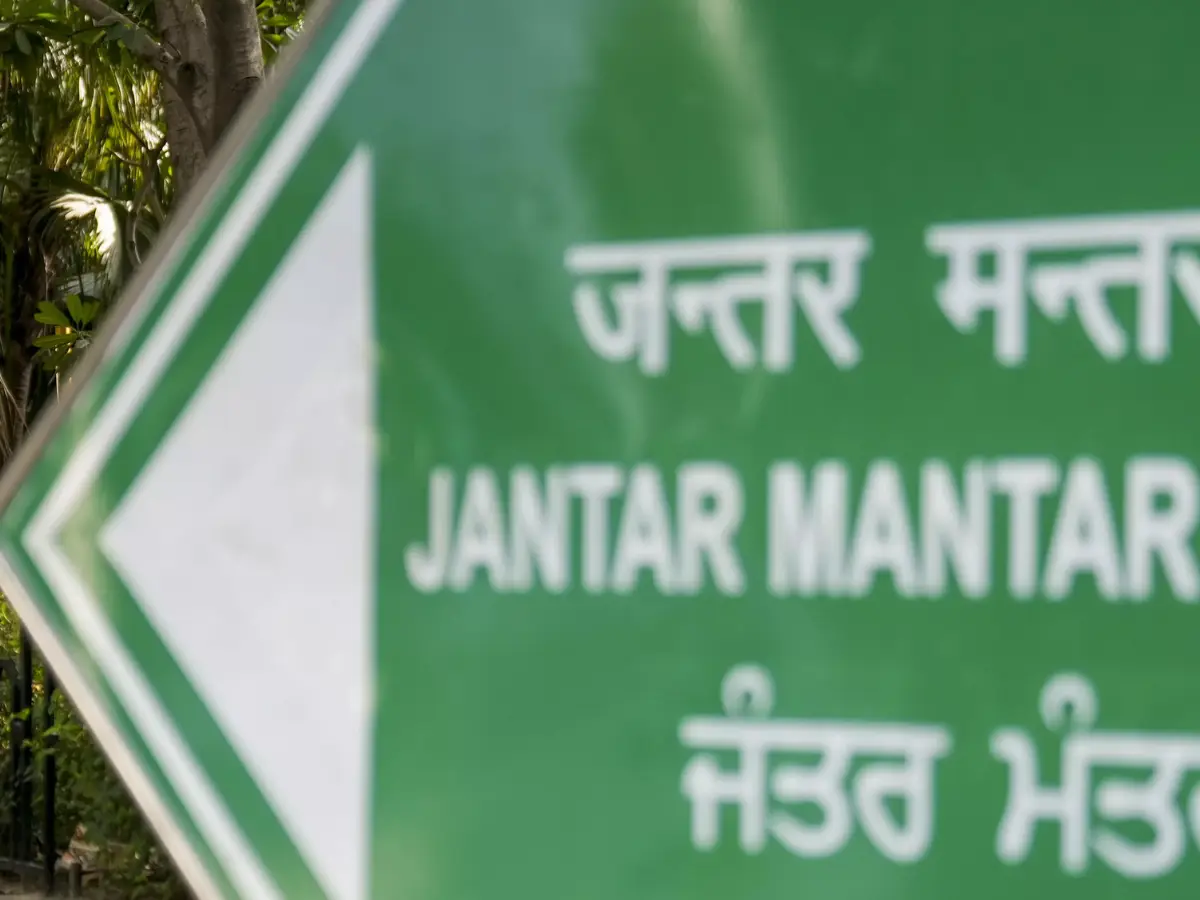
New Delhi's Jantar Mantar – known for being the protest site at the heart of the national capital, will no longer be known a protest site as Delhi Police on Oct 12 de-notified it and named three other new sites for protest. While several leaders and public figures are backing Delhi Police's decision, activists and opposition leaders are questioning the move. Former IPS officer Kiran Bedi has backed the decision saying the location was ill-suited for demonstrations because of its narrow lanes and proximity to sensitive buildings and offices. Similarly, Cockroach Janta Party (CJP) has criticised the government. If analysed closely, Bedi's remark about the protest site being closer to sensitive buildings and offices can be a crucial reason for the decision – specially at the current time when the ruling BJP is facing several protests over women's safety, irregularities and lack of accountability.
Also Read: From Jantar Mantar to Lafayette Square: Where the world protests, and how close it gets to power
Jantar Mantar close to power bloc
The power bloc of the country – the Parliament – the place from where India's legislative and executive administration runs – is located less than 1.5 to 2 kilometers away from Jantar Mantar. Jantar Mantar Road is positioned directly adjacent to Parliament Street in Lutyens’ Delhi. It is situated within a stone's throw from Prime Minister’s Office (PMO), the Ministry of Home Affairs (MHA), and the Ministry of Finance. The area is surrounded by the official bungalows of Union Ministers, Members of Parliament, and senior bureaucrats, ensuring that the sound of dissent reached their doorsteps. The Parliament House is 4.2 km, the Prime Minister's office (PMO) and Ministry of Home Affairs are 3.8 km, the Ministry of Defence is 3.7, and Ministry of External Affairs is 3.4 km. This means, Jantar Mantar protest site is at middle of India's major corridor. The vicinity from the power bloc makes it iconic and highlights the protests taking place at the location. For example: the CJP protest that took place earlier this year disrupted the lifeline around Central Delhi surrounding the Parliament. Moving protests to the three newly designated locations—Ramlila Maidan (~4 km away), CBD Ground (~12-13 km away), and Burari Ground (~20 km away)—pushes public assembly into the geographic outskirts of the city.
Size of Jantar Mantar vs new sites
Trending Stories
&imwidth=180&imheight=135&format=webp&quality=medium)
Rahul Gandhi's plea against Election Commission delayed as Supreme Court registry flags 14 ‘defects’
&im=FitAndFill=(700,400)&imwidth=180&imheight=135&format=webp&quality=medium)
Navratri 2026: 9 days, 9 forms of Goddess Durga and 9 colours- Check the complete list
&imwidth=180&imheight=135&format=webp&quality=medium)
Korean peninsula tensions escalate as North Korea launches multiple ballistic missiles, PACOM says 'no threat to US personnel'
&imwidth=180&imheight=135&format=webp&quality=medium)
Trump weighs firing Kimberly Guilfoyle as US ambassador to Greece amid misconduct allegations: Report
&imwidth=180&imheight=135&format=webp&quality=medium)
Anti-SIR protest in Mumbai: Protestors wear black masks & ribbons in Mumbai
&imwidth=180&imheight=135&format=webp&quality=medium)
UK PM Andy Birnham renews claims of Russian meddling in Brexit vote
&imwidth=180&imheight=135&format=webp&quality=medium)
BCCI rejects venue shift reports, India vs Sri Lanka 1st ODI to remain in Delhi
&imwidth=180&imheight=135&format=webp&quality=medium)
'Absolutely disgusting': Australia slams US plan to livestream Nidal Hasan's execution; Mike Johnson raises concerns, warns of terrorist propaganda
&imwidth=180&imheight=135&format=webp&quality=medium)
1,500 drones illuminate Mumbai sky as Cordelia Cruises unveils second ship, Cordelia Sky
&imwidth=180&imheight=135&format=webp&quality=medium)
Houthis warns US of 'painful response' if Washington joins Saudi war in Yemen as airlines suspend flights to Saudi Arabia
&imwidth=180&imheight=135&format=webp&quality=medium)
Congress demands action against chief election commissioner
&imwidth=180&imheight=135&format=webp&quality=medium)
'Turn approver, resign, we'll forgive you': Rahul Gandhi claims receiving messages from CEC Gyanesh Kumar
&imwidth=180&imheight=135&format=webp&quality=medium)
'I will not be silenced': Ilhan Omar alleges political intimidation after federal officers search her Washington home
&imwidth=180&imheight=135&format=webp&quality=medium)
Robotic surgery, advanced treatment: What is coming to this small Gujarat town?
&imwidth=180&imheight=135&format=webp&quality=medium)
Pakistan's government blames PTI for rise of terrorism in Khyber Pakhtunkhwa
&imwidth=180&imheight=135&format=webp&quality=medium)
‘This is just the start’: Maaya Rajeshwaran on historic ITF title, confidence boost and future goals
&im=FitAndFill=(700,400)&imwidth=180&imheight=135&format=webp&quality=medium)
How does a robot decide what to do next?
&imwidth=180&imheight=135&format=webp&quality=medium)
Trump says he 'may' meet North Korean leader Kim Jong Un during upcoming Asia trip
&imwidth=180&imheight=135&format=webp&quality=medium)
'Ouch!!! That must hurt': Kangana Ranaut hails Kamal Haasan's sharp reply to Elon Musk over Starlink row
&imwidth=180&imheight=135&format=webp&quality=medium)
Sidhu Moose Wala’s younger brother wins hearts by recreating late singer’s signature move at Toronto Hologram Show
&imwidth=180&imheight=135&format=webp&quality=medium)
Girl 'dead' for 8 hours wakes up at her own funeral, dad insists she wasn't breathing
&imwidth=180&imheight=135&format=webp&quality=medium)
UK school ditches technology, shifts from screen to pen and paper for learning
&imwidth=180&imheight=135&format=webp&quality=medium)
Opposition’s 10 demands in Supreme Court petition range from stay on SIR to audit of voter rolls
&imwidth=180&imheight=135&format=webp&quality=medium)
'I am thoroughly unamused': Judge slams Trump administration after 400 trees cut at Washington golf course
&im=FitAndFill=(700,400)&imwidth=180&imheight=135&format=webp&quality=medium)
New OTT releases this week (October 12-18, 2026): Sacrifice, Koffee with Karan S9, Roadies Rebirth- 6 titles coming on Netflix, JioHotstar and more
&imwidth=180&imheight=135&format=webp&quality=medium)
Delhi protest: CJI Surya Kant declines to meet India Bloc leaders
&imwidth=180&imheight=135&format=webp&quality=medium)
China’s gold rush puts billion in focus
&imwidth=180&imheight=135&format=webp&quality=medium)
India's Ajit Doval, Iran's Mohsen Rezaei hold talks amid escalating West Asia tensions, discuss 'issues of mutual interest'
&imwidth=180&imheight=135&format=webp&quality=medium)
'Almost certainly': UK Prime Minister Andy Burnham says Iran's IRGC behind RAF Fairford threat
&imwidth=180&imheight=135&format=webp&quality=medium)
Elon Musk pumps $276 million into Republican campaigns ahead of US midterm elections
&imwidth=180&imheight=135&format=webp&quality=medium)
'Never met' him: Melbourne Imam denies links to Flydubai co-pilot Hamam al-Hammami
The shift from Jantar Mantar to Delhi’s newly designated protest grounds also marks a significant change in the scale and visibility of demonstrations. Unlike Jantar Mantar, a narrow stretch of road with an estimated capacity of 1,000 to 3,000 people, the replacement venues offer much larger spaces. Ramlila Maidan, spread across approximately 12 acres, can accommodate an estimated 50,000 people; the 12-acre CBD Ground in Shahdara has an estimated capacity of 15,000 to 20,000, while the 50-acre Burari Ground can hold around 80,000 to 100,000 people. While the larger grounds can accommodate bigger gatherings, their distance from Parliament and central government offices raises questions about protesters’ visibility and proximity to decision-makers. Moreover, a comparatively smaller protest at Jantar Mantar looks massive whereas a larger one would also look small at the other venues.

