
&imwidth=800&imheight=600&format=webp&quality=medium "Can deleted voters lose citizenship, ration benefits? Supreme Court BIG statement on ECI's role and SIR")
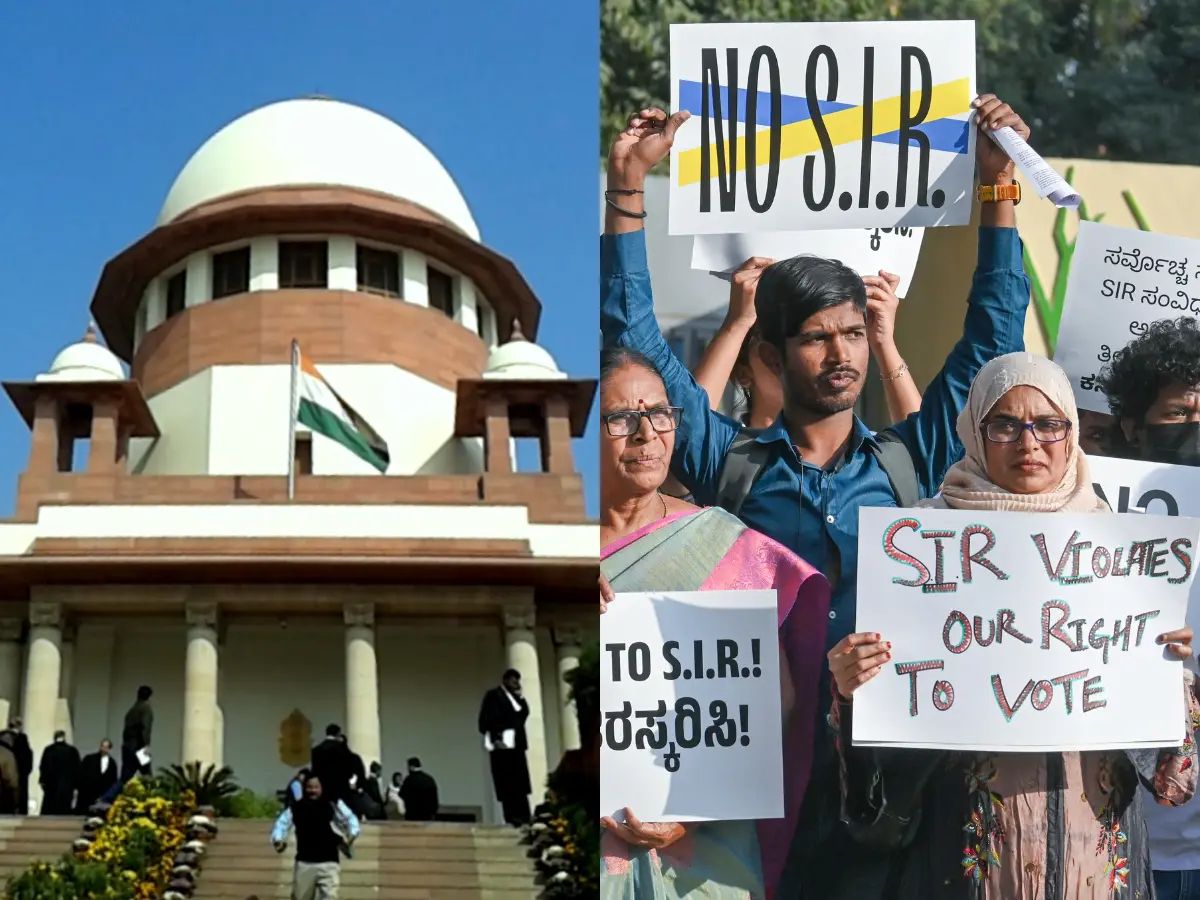
The Supreme Court on Friday (Jul 17) made it clear that removing a person's name from the electoral roll does not mean they lose their Indian citizenship, stressing that the Election Commission's powers are limited to maintaining voter lists. Hearing a petition linked to West Bengal's Special Intensive Revision (SIR) exercise, a Bench headed by Chief Justice of India Surya Kant reiterated that while the Election Commission of India (ECI) has the authority to prepare and revise electoral rolls, it cannot decide questions of citizenship.
SIR deletion doesn't equal losing Indian citizenship
"Our judgment (on Bihar SIR) is clear. The Election Commission of India has full control over the electoral roll. However, that does not result in loss of citizenship per se. They have a corresponding duty to refer it to the ministry of the Central government department for adjudication of the citizenship status," the Chief Justice observed.

The court issued notice on a petition alleging that lakhs of people in West Bengal have been denied access to welfare schemes after their names were deleted from the electoral rolls.
Petition flags denial of ration, cash benefits
Trending Stories
)
The Early Spring is proof not everyone can talk about their real feelings, and it is perfectly OK
)
UN votes to ‘correct the map’ as India backs fairer world view
)
Nigerian Navy discovers 99,000 litres of suspected stolen, illegally refined products as it intensifies anti-crude oil theft operations
)
Who is Aditi Paudel? 17-year-old becomes Japan's first literacy ambassador
)
Bengaluru: Officials find 40 kg expired chilli at chairman's club
)
Jaishankar rejects trade link to ending Ukraine war
)
Israeli strikes on Lebanon kill three, injure 23 despite truce
)
Alpine glacier was covered with sheep wool sheets to prevent melting. It worked
)
South Korea mulls deploying military assets to Strait of Hormuz
)
World's fifth-largest economy, British army can't afford to train
)
Breaking | Vance takes the podium: First White House briefing since Leavitt's exit
)
Taiwan raises 'concerns' over China's missile test
)
BRICS 2026: $1 trillion sovereign capital set to converge in Delhi for first iBRICS Summit
)
What is Iran's Pickaxe Mountain that Trump has again threatened to bomb?
)
UN votes to correct world map that visually shrank Africa for 450 years
)
Former NewJeans member Danielle launches YouTube channel, hints at new solo journey
)
Bangladesh batter Towhid Hridoy creates history with 350 not out in South Africa
)
Brendan Fraser’s transformation fuels The Mummy 4 excitement as fans welcome back Rick O’Connell
&im=FitAndFill=(700,400))
Krishna Janmashtami 2026: From Dhaniya Panjiri to Makhana Kheer- 5 best sweet dishes perfect for celebrating Lord Krishna’s birth
)
Donald Trump plans to travel to Ireland on Qatari-donated jet amid security concerns
)
Nazi-looted art to return to Jewish heirs
)
Eight killed in Kerala’s Thrissur after car rams into lorry parked on highway
&im=FitAndFill=(700,400))
Why Russian fighter jets use bulky, low-pressure tyres compared to US jets
)
FBI-wanted fraud accused arrested in Jalandhar over $600,000 scam
&im=FitAndFill=(700,400))
Why US tanks weigh over 20 tons more than Russian tanks
&im=FitAndFill=(700,400))
New Friday OTT releases (September 4, 2026): GDN, Dhamaal 4, Jagamae Sangeetham- Watch 6 new movies and TV shows on Netflix, Prime Video and more
)
Killing the Himalayas slowly: Human urine is melting a glacier on Mount Everest
The petition, filed by Prasenjit Bose of the West Bengal Pradesh Congress Committee, argues that deletion from the electoral roll should not automatically lead to exclusion from government welfare schemes such as the Public Distribution System (PDS), the Annapurna cash transfer scheme and other social benefit programmes.
Appearing for the petitioner, senior advocate Gopal Sankaranarayanan told the court that despite the Supreme Court's earlier clarification in the Bihar SIR case, the West Bengal government had issued multiple orders that effectively linked electoral roll deletion to the withdrawal of welfare benefits.
He argued that nearly 3.4 million appeals filed by voters excluded during the SIR exercise remain pending before appellate tribunals, leaving affected persons without access to essential benefits.
"The consequences of deletion now... PDS, Annapurna, caste certificates, verification," Sankaranarayanan submitted, adding that people were being deprived of government entitlements before any final determination of their legal status.
Supreme Court: ECI's role is limited
Previously, Justice Joymalya Bagchi, who was part of the Bench along with Justice V Mohana, reminded the petitioner that the legal position had already been settled in the court's Bihar SIR judgment.
"We are conscious of this. In our Bihar SIR judgment, we have clarified that the ECI, as soon as it takes a decision over voting rights, cannot decide citizenship. The ECI has a corresponding duty to refer the matter to the Ministry for adjudication under the Citizenship Act," Justice Bagchi observed.
When Sankaranarayanan argued that the court may not have anticipated that deleted voters would immediately lose access to welfare schemes, the Bench responded that the law governing the Election Commission's powers was already clear.
"Law is clear. ECI has control and superintendence over the electoral roll," the court observed.
Plea seeks faster disposal of 3.4 million appeals
The petitioner also urged the Supreme Court to ensure quicker disposal of the pending appeals. According to the plea, only 19 special tribunals are currently hearing challenges filed by voters whose names were marked under a category described as "logical discrepancy". The petition seeks an increase in the number of tribunals to at least 42, citing the huge backlog ahead of the West Bengal local body elections expected later this year.
Sankaranarayanan also sought greater transparency in the functioning of the tribunals, requesting that they publish their standard operating procedures and upload their orders online. "There should be a mechanism to ensure transparency. Tribunals should have websites, put out their SOPs and put up their orders," he told the court.

