
&imwidth=800&imheight=600&format=webp&quality=medium "Bringing the Cheetah home: A diplomat's account of India's landmark conservation effort")
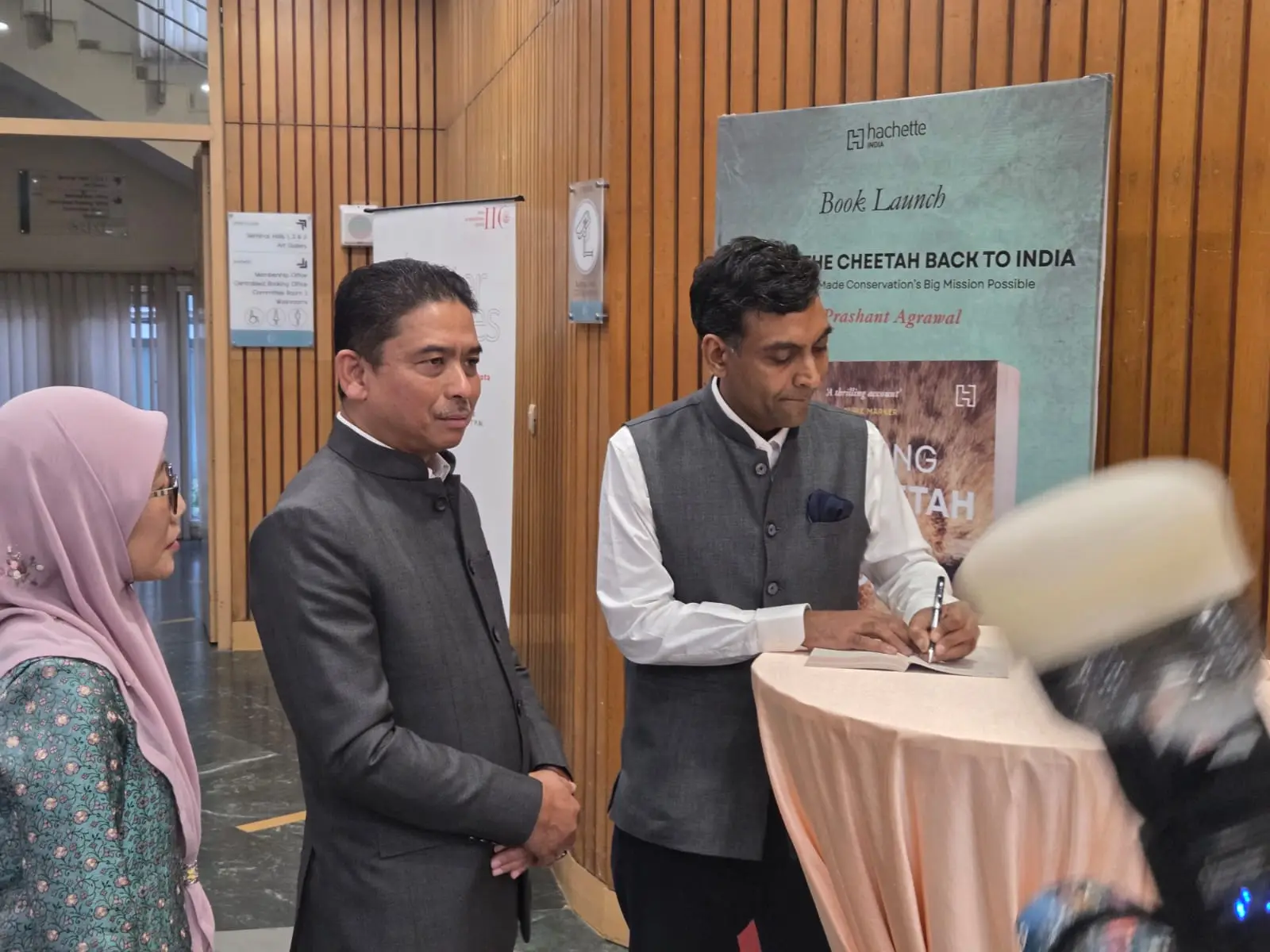
A new book by a senior Indian diplomat has shed light on the intricate behind-the-scenes diplomacy that helped bring cheetahs back to India after a 70-year absence, describing the project as a symbol of the country's civilisational ethos of harmonious coexistence with nature.
In Bringing the Cheetah Back to India: How Diplomacy Made Conservation's Big Mission Possible, Prashant Agrawal, who served as India's High Commissioner to Namibia during the critical translocation phase and is now Additional Secretary (South) in the Ministry of External Affairs, details the "whole of government" effort that made the ambitious reintroduction possible.
.

The cheetah, which once roamed parts of India but went extinct there in the 1950s, returned in September 2022 when animals from Namibia were flown to Kuno National Park in Madhya Pradesh. Further translocations from South Africa followed. Agrawal, who played a key role in negotiations with Namibian authorities and the Cheetah Conservation Fund, credits the project's success to sustained efforts on the ground and high-level political backing.
Also Read: India's Northeast faces forest crisis that its own agencies can’t explain | WION Exclusive
"We all know that the cheetahs were restored to India after their disappearance for about 70 years," Agrawal said.
Trending Stories
)
Mushtaq Khan dies at 56: When Welcome actor opened up about his salary for iconic role Ballu
)
US Supreme Court backs Trump administration's use of SAVE database to check voter citizenship
)
Heart of the Beast review: Brad Pitt leads a gripping tale of survival and loyalty
)
Outrage erupts after 3-year-old is married to 60-year-old man in Pakistan, link to her sister's murder being probed
)
Pakistan deploys over 20,000 security personnel as PTI vows march for Imran Khan's release
)
Asian Games: Shooting spree continues as India win silver in women’s 50m rifle 3P team event
)
‘Not just a local tragedy’: Nepal PM Shah warns UN of growing climate threat, says Nepal floods were 'a warning to the world'
)
OpenAI AI Agents hacked 4 websites before Hugging Face, researchers reveal
)
Pentagon quietly adds 37 wounded troops to Iran war tally without explaining when or how
)
Asian Games 2026: India women’s kabaddi team edge Iran 37-34 to clinch 3rd gold medal
)
Saudi Arabia still harbours intent to develop nuclear weapons, reveals US intelligence: Report
&im=FitAndFill=(700,400))
New Friday OTT releases (September 25, 2026): Don’t Be Shy, Hunkkaar: The Roar, Mango Pachcha- 6 movies and TV shows on Netflix, Prime Video and more
)
Yemen's war escalates: Saudi-backed leader calls for general mobilisation against the Houthis
)
‘Attack on Mecca a red line for Pakistan’: Shehbaz Sharif warns Houthis at UN
)
Tesla is preparing something big for Optimus: new Gen 3 models surface in app
)
Bias or safety concerns? Bengaluru CEO says firm will not hire men from UP, Bihar, Rajasthan, MP. Here's why
)
Did Hitler kill his niece Geli Raubal? Newly found records reopen a 95-year-old mystery
)
Indian diplomat Petal Gahlot raises deteriorating situation in Pakistan-occupied Kashmir in right of reply at UN
)
Nigeria Navy moves to boost oil security, tackle crude theft and infrastructure threats
)
Scientists detect first radio signals directly from faraway planet
)
‘It is all possible’: Putin weighs next steps on Ukraine talks, rules out Europe conflict
)
10,000 gather in support of 87-year-old forcefully evicted from home of 71 years
)
Trump rejects Iran's 7-day ceasefire proposal as US weighs renewed bombing after midterms: Report
)
Red Sea crisis: Houthis promise not to target European ships; UNSC condemns Saudi attacks
)
Gaza's war turned environmental damage into second crisis
)
Saudi oil exports surge despite Iran war
)
Trump-Xi summit wrap: Big pageantry, Iran talks, few major developments and more meetings planned
)
'Making history': Xi Jinping praises Trump as US-China leaders dine at White House
)
India's UN Envoy slams Pakistan: 'They claim security by day, terrorism by night'
)
Jay-Z rape case: Accuser says allegations were false, never met rapper
)
Myanmar training camp case: US national, 6 Ukrainians allowed to meet their families abroad
)
'FIRST LOOK from inside Noah’s Ark': Researchers share video from inside mysterious mound in Turkey
)
Cindy Crawford’s son Presley Gerber cremated as death probe continues
)
WATCH | As Shehbaz Sharif claims Pakistan’s ‘victory’ during 2025 conflict, Indian diplomat R Srinivas laughs at UN
)
‘Goal is to win it’: Virat Kohli confirms 2027 ODI World Cup will be his final tournament for India
)
'A terrorist country is asking me that question?': Jaishankar hits back at Pakistani journalist at UN; flags attacks on commercial shipping
)
US court backs Pentagon's decision to exclude Anthropic over Claude AI restrictions
The book chronicles the logistical, bureaucratic, and environmental challenges, from quarantine protocols and paperwork to weather conditions and international coordination , that tested the teams involved. It portrays the operation not merely as wildlife relocation but as a profound exercise in international friendship and ecological restoration.
Also Read: India's Green Mirage: Northeast is quietly losing its forest cover while India celebrates gains
Agrawal encourages readers to examine the epilogue, which highlights how the project has stabilised despite early hurdles, with notable successes in reproduction. As of early 2026, India's cheetah population has reached 53 individuals, including 33 cubs born in the country, a significant milestone indicating adaptation to their new habitat.
Beyond numbers, the diplomat frames the cheetah's return in broader cultural terms. "Cheetah is in many ways an indication of India's civilisational ethos, our civilisational approach for harmonious coexistence with all beings," he said. Restoring an apex predator, he argued, triggers wider ecosystem recovery and supports forest communities, creating a "win-win situation."
Agrawal's account offers an insider's perspective on how conservation diplomacy can bridge nations and revive lost natural heritage, positioning the cheetah's story as one of hope in global biodiversity efforts.
