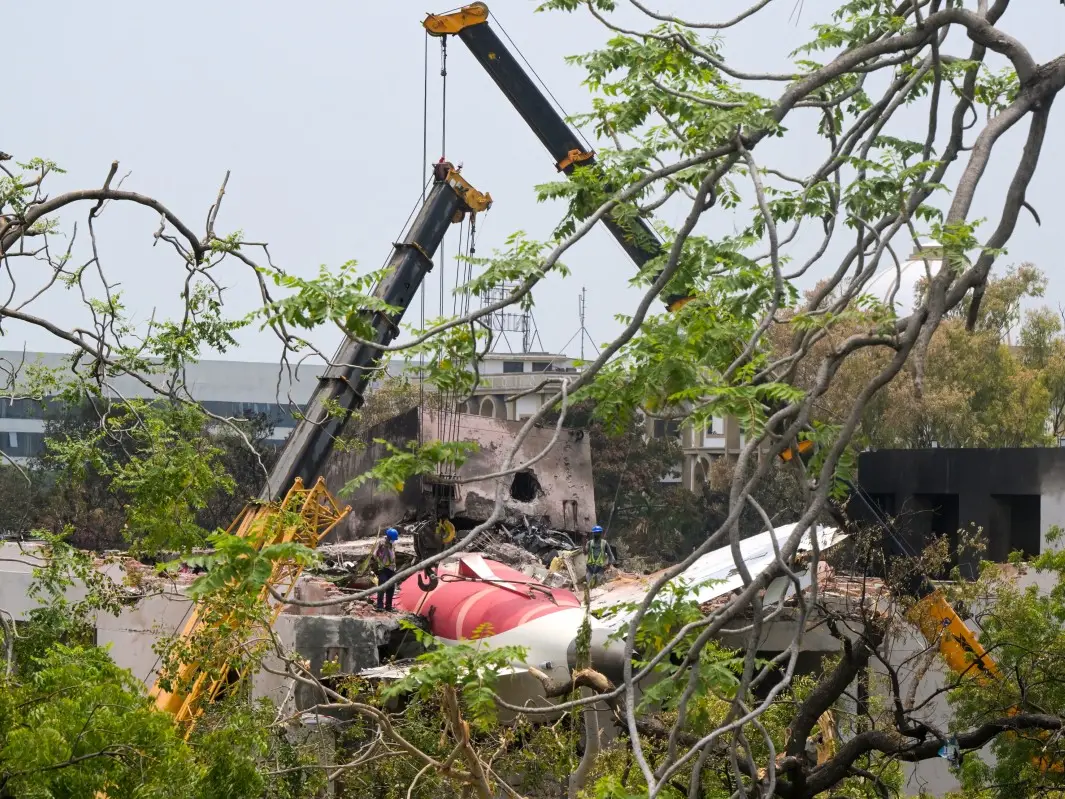
Air India crash: Experts assess AAIB report, float new 'fuel shut-off valve' theory

&imwidth=600&imheight=450&format=webp&quality=medium "Air India crash: Experts assess AAIB report, float new 'fuel shut-off valve' theory")
Air India news: Veteran pilot and aviation expert Amit Singh said the switch cannot turn off on its own.
Flight data recovered from the aircraft's Enhanced Airborne Flight Recorder (EAFR) revealed that the fuel cutoff switches for both engines were inadvertently moved from RUN to CUTOFF.
After assessing the AAIB's preliminary report, many aviation experts gave a clean chit of sorts to the pilots of the Air India plane that crashed last month, claiming they had acted within aviation norms. These experts blamed a technical fault in the plane for the crash that killed 241 passengers and crew, and 19 people on the ground. The agency today said in its report, citing the pilots' conversation in the cockpit, that the fuel switch had turned off, and both of them declined to have done that. The pilots attempted to restart the engines but failed, which, experts said, pointed to a grave issue with the engines themselves.
"From the report I have seen, there was no other reason for the aircraft to go down but the manufacturing part...It appears that the fuel was cut off on takeoff. The voice recorder makes it clear that neither the commander nor the co-pilot switched off the jet fuel switch. This is obviously some fault within the aircraft that the jet fuel switch turned off automatically," said aviation expert Sanat Kaul.
Ehsan Khalid, another aviation expert, explained how the fuel cut-off switch works.
"The fuel cut-off switch is a physical switch; it has to be moved from one position to another, and it has to be moved from that position back. There is no automation involved in it. What automation is involved is the fuel shut-off valve. It has transitioned from run to cut-off or ON to OFF, if that is what was being recorded, and if AAIB meant then it is a different thing, but fuel switches being moved up and down automatically does not happen. So, the AAIB report has made some of the answers right, some of the speculations are out of the window," he said.
Khalid backed the deceased pilots, saying they were right in trying to switch on the cut-off switch.
"Pilot action was 100 per cent right, they tried to revive the engine, which is further corroborated by the fact that there was some movement of the fuel cut-off switch. The fact remains that the engine power was lost without pilot input is confirmed," he said.
Trending Stories
&im=FitAndFill=(700,400)&imwidth=280&imheight=210&format=webp&quality=medium)
&imwidth=280&imheight=210&format=webp&quality=medium)
&imwidth=280&imheight=210&format=webp&quality=medium)
&imwidth=280&imheight=210&format=webp&quality=medium)
&imwidth=280&imheight=210&format=webp&quality=medium)
&imwidth=280&imheight=210&format=webp&quality=medium)
&imwidth=280&imheight=210&format=webp&quality=medium)
&imwidth=280&imheight=210&format=webp&quality=medium)
&imwidth=280&imheight=210&format=webp&quality=medium)
&imwidth=280&imheight=210&format=webp&quality=medium)
&imwidth=280&imheight=210&format=webp&quality=medium)
&imwidth=280&imheight=210&format=webp&quality=medium)
&imwidth=280&imheight=210&format=webp&quality=medium)
&imwidth=280&imheight=210&format=webp&quality=medium)
&imwidth=280&imheight=210&format=webp&quality=medium)

&imwidth=280&imheight=210&format=webp&quality=medium)
&imwidth=280&imheight=210&format=webp&quality=medium)
&imwidth=280&imheight=210&format=webp&quality=medium)
&imwidth=280&imheight=210&format=webp&quality=medium)
&im=FitAndFill=(700,400)&imwidth=280&imheight=210&format=webp&quality=medium)
&im=FitAndFill=(700,400)&imwidth=280&imheight=210&format=webp&quality=medium)
&imwidth=280&imheight=210&format=webp&quality=medium)
&im=FitAndFill=(700,400)&imwidth=280&imheight=210&format=webp&quality=medium)
&imwidth=280&imheight=210&format=webp&quality=medium)
&imwidth=280&imheight=210&format=webp&quality=medium)
&imwidth=280&imheight=210&format=webp&quality=medium)
&imwidth=280&imheight=210&format=webp&quality=medium)
&imwidth=280&imheight=210&format=webp&quality=medium)
&imwidth=280&imheight=210&format=webp&quality=medium)
&im=FitAndFill=(700,400)&imwidth=280&imheight=210&format=webp&quality=medium)
&imwidth=280&imheight=210&format=webp&quality=medium)
&imwidth=280&imheight=210&format=webp&quality=medium)
&imwidth=280&imheight=210&format=webp&quality=medium)
&imwidth=280&imheight=210&format=webp&quality=medium)
&im=FitAndFill=(700,400)&imwidth=280&imheight=210&format=webp&quality=medium)
&imwidth=280&imheight=210&format=webp&quality=medium)
&imwidth=280&imheight=210&format=webp&quality=medium)
&imwidth=280&imheight=210&format=webp&quality=medium)
He said the fuel control shut-off valve might have shut off.
"The aircraft took off without any problem, till 3 seconds after it lifted off, at 39 seconds, it left the ground, at 42 seconds, both engines lost power. The report says fuel cut-off switches, transitioned from run to cut-off in 1 1-second interval; thereafter engine continued to be in that position till the next 10 seconds, thereafter the switches transitioned from cut-off to run position. There is no aircraft mechanism that moves the control switches. What has moved is the fuel control shut-off valve...In my opinion, there is no way the switch can move on its own...The pilots did not do it," he added.
Veteran pilot and aviation expert Amit Singh said the switch cannot turn off on its own.
"They have ruled out every other thing, it is certain that both engines had shut down, they may have shut down because of the fuel control switches being selected off, how did they go off, because of technical defect, or human intervention, the design is such that it cannot automatically go on and off...Time will tell why it happened, there could be the contributory causes...Multiple effects can result in accidents; it has to be a very detailed investigation," he added.
Flight data recovered from the aircraft's Enhanced Airborne Flight Recorder (EAFR) revealed that the fuel cutoff switches for both engines were inadvertently moved from RUN to CUTOFF, one after the other within a 1-second interval. Within seconds, one pilot asked the other if he had switched off the fuel. The other replied, saying he didn't.