Delhi air pollution is a 'disaster', a major and avoidable 'cause of death', expert tells WION

Delhi air pollution
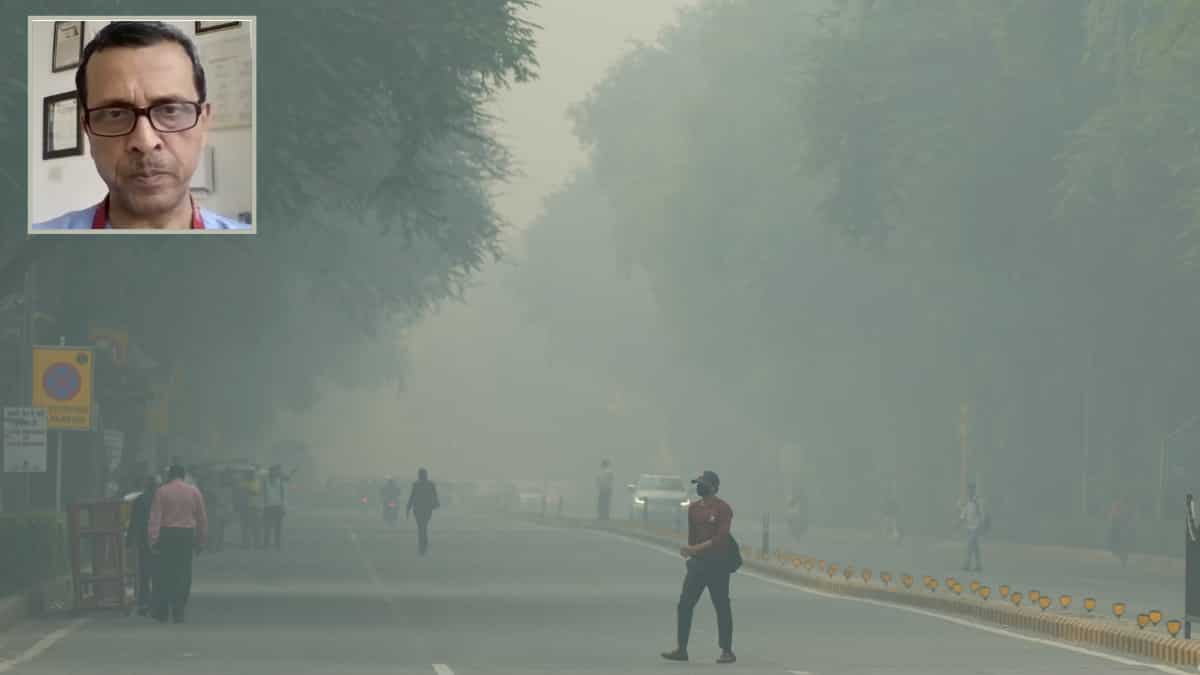
Pollution has made the air of India's capital New Delhi and the surrounding regions unbreathable. The toxic air poses multiple severe health complications to those who are breathing it, including children, adults elderly,and also animals.
Describing the conditions in one word, Dr Arvind Kumar of Medanta hospital called it a "disaster". The government and related agencies are trying to mitigate the effects by implementing several measures, but the quality of air has gotten worse in the past few days, with experts saying that it might deteriorate further.

To discuss the situation in-depth, and understand how it will put a long-term impact on our health, WION spoke to Dr Arvind Kumar, who is the chairman of the institute of chest surgery- chest Onco Surgery and lung transplantation at Medanta hospital in Gurugram.
The levels of air pollution in Delhi and rest of the north India today are at a disastrous level, Dr Kumar said while speaking to WION in a virtual interaction.Dr Kumar said,"No one can escape the ill effects of pollution. The quality of the air is disastrous and horrible."
"Last year, we used the term 'medical emergency', but now the situation has gone worse than a medical emergency," Dr Kumar said.
)
The Early Spring is proof not everyone can talk about their real feelings, and it is perfectly OK
)
UN votes to ‘correct the map’ as India backs fairer world view
)
Nigerian Navy discovers 99,000 litres of suspected stolen, illegally refined products as it intensifies anti-crude oil theft operations
)
Who is Aditi Paudel? 17-year-old becomes Japan's first literacy ambassador
)
Bengaluru: Officials find 40 kg expired chilli at chairman's club
)
Jaishankar rejects trade link to ending Ukraine war
)
Israeli strikes on Lebanon kill three, injure 23 despite truce
)
Alpine glacier was covered with sheep wool sheets to prevent melting. It worked
)
South Korea mulls deploying military assets to Strait of Hormuz
)
World's fifth-largest economy, British army can't afford to train
)
Breaking | Vance takes the podium: First White House briefing since Leavitt's exit
)
Taiwan raises 'concerns' over China's missile test
)
BRICS 2026: $1 trillion sovereign capital set to converge in Delhi for first iBRICS Summit
)
What is Iran's Pickaxe Mountain that Trump has again threatened to bomb?
)
UN votes to correct world map that visually shrank Africa for 450 years
)
Former NewJeans member Danielle launches YouTube channel, hints at new solo journey
)
Bangladesh batter Towhid Hridoy creates history with 350 not out in South Africa
)
Brendan Fraser’s transformation fuels The Mummy 4 excitement as fans welcome back Rick O’Connell
&im=FitAndFill=(700,400))
Krishna Janmashtami 2026: From Dhaniya Panjiri to Makhana Kheer- 5 best sweet dishes perfect for celebrating Lord Krishna’s birth
)
Donald Trump plans to travel to Ireland on Qatari-donated jet amid security concerns
)
Nazi-looted art to return to Jewish heirs
)
Eight killed in Kerala’s Thrissur after car rams into lorry parked on highway
&im=FitAndFill=(700,400))
Why Russian fighter jets use bulky, low-pressure tyres compared to US jets
)
FBI-wanted fraud accused arrested in Jalandhar over $600,000 scam
&im=FitAndFill=(700,400))
Why US tanks weigh over 20 tons more than Russian tanks
&im=FitAndFill=(700,400))
New Friday OTT releases (September 4, 2026): GDN, Dhamaal 4, Jagamae Sangeetham- Watch 6 new movies and TV shows on Netflix, Prime Video and more
)
Killing the Himalayas slowly: Human urine is melting a glacier on Mount Everest
Currently, desperate measures have been put in by the administration to improve the situation, but the air in different parts of the northern Indian region remains toxic.
As per the Central Pollution Control Board (CPCB) data, the 24-hour average air quality index (AQI) on Sunday (November 6) stood at 339 at 4pm IST. It dropped from 381 a day ago. On Friday, it was 447.
When it comes to Air Quality Index (AQI), it is considered "good" between zero and 50, between 51 and 100 is "satisfactory", 101 and 200 is "moderate", 201 and 300 is "poor", 301 and 400 is "very poor", and 401 and 500 is "severe".
Massive impact on our health
Dr Kumar said that "when you are exposed to such levels, the first impact is on the surface" of your body. Eyes, nose, lips, mouth, throat, skin, hair...these are exposed to the toxic air.
Dr Kumar said that people report issues like redness, burning sensation, watering and itchiness in the eyes. He mentioned, itching in the nose, soreness in the throat, metallic taste in the mouth, dry hair, dry skin, rashes in the skin, and itchy skin also happens.
Dr Kumar explained that an adult breathes 25,000 times in a day and every time, about 250cc to 350cc of air goes inside, around 10,000 litres in a day.
Therefore, with the air we breathe, tonnesof toxins go into our system, and thattoxins get deposited inside and they have short as well as long-term effects.
Impact of air pollution
Immediate impact
Dr Kumar said that on the breathing passage, the immediate effect is in the form of swelling in the windpipe, in the lining of the lungs. And when these "toxins get absorbed through the lungs into the blood", they can go everywhere, from the brain to the toe, "causing swelling" everywhere.
He said that in such scenarios, there is swelling in the brain, which is why we often get headaches when there's extreme pollution and it causes "hyperexcitability in children".
"There's swelling in the heart, there's swelling in the blood vessels... so people are having pre-mature hypertension. A lot of them have high heart rates, which is called tachycardia," Dr Kumar said, adding that people are having different problems in other organs also.
Short-term problems
Dr Kumar said that people also suffer from short-term effects like bronchiolitis, bronchitis, bronchial asthma and pneumonia caused in the lungs.
"You have all kinds of hyperexcitability, low IQ and other problems caused in the brain. You have pre-mature hypertension, irregular heartbeat, high heartbeat, etc in the heart. And other organs are also affected," he said.
Long-term problems
He noted that in long term, air pollution leads to "disastrous effects". In the brain, there is a 5%-10% higher incidence of brain attacks in adults. There is a 5%-10% higher incidence of heart attacks in adults. There are also problems occurring like hypertension and a high incidence of tuberculosis (TB) in the lungs.
Dr Kumar said that there are diseases like COPD and emphysema. And lung cancer is being reported more and more in non-smokers from polluted areas across the country and also in the global scenario.
'Air pollution leads to deaths'
Dr Kumar said that from head to toe, diseases are being reported due to air pollution. Also, disabilities and premature deaths are caused by it.
Dr Kumar said that the number of deaths caused by air pollution annually "far exceeds" the number of deaths caused by coronavirus (COVID-19), TB, malaria, HIV and some other diseases combined.
However, this major and avoidable cause of death gets little attention from people as well as the government, said the doctor adding that other causes get much more attention just because they are more "visible and direct".
The effects of air pollution are invisible and indirect, he said, explaining that there's nothing like "air pollution caused heart attack".
"So when a person dies of a heart attack, you will say he/she died of heart attack, but that attack was caused by air pollution, this fact doesn't get highlighted," he said.
He said also said that he is trying to highlight the point and inform people that air pollution is the primary cause of a lot of diseases we are dying of today, even though the visible cause is something else.
WATCH WION LIVE HERE
You can now write for wionews.com and be a part of the community. Share your stories and opinions with us here.