
&imwidth=800&imheight=600&format=webp&quality=medium "America downgrades itself to midsize power in West Asia | GRAVITAS")
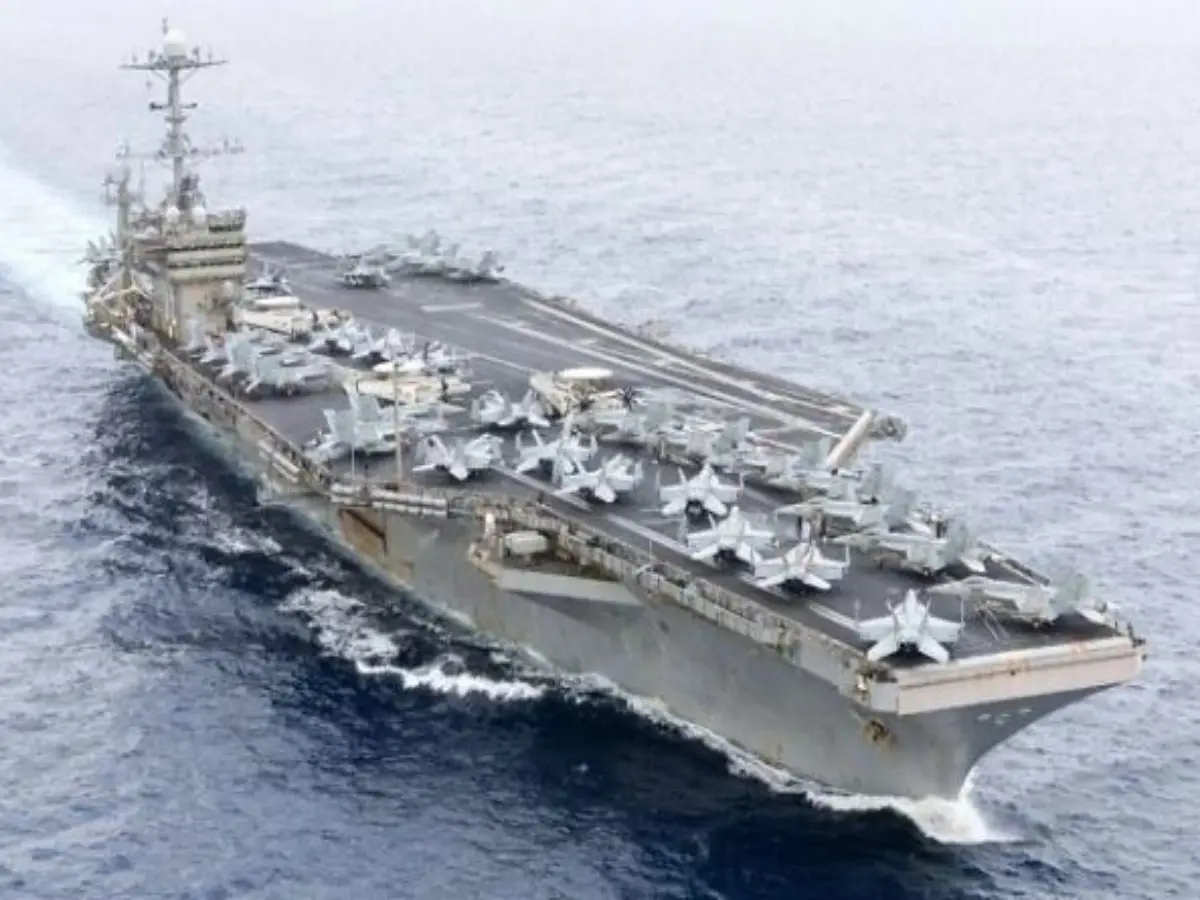
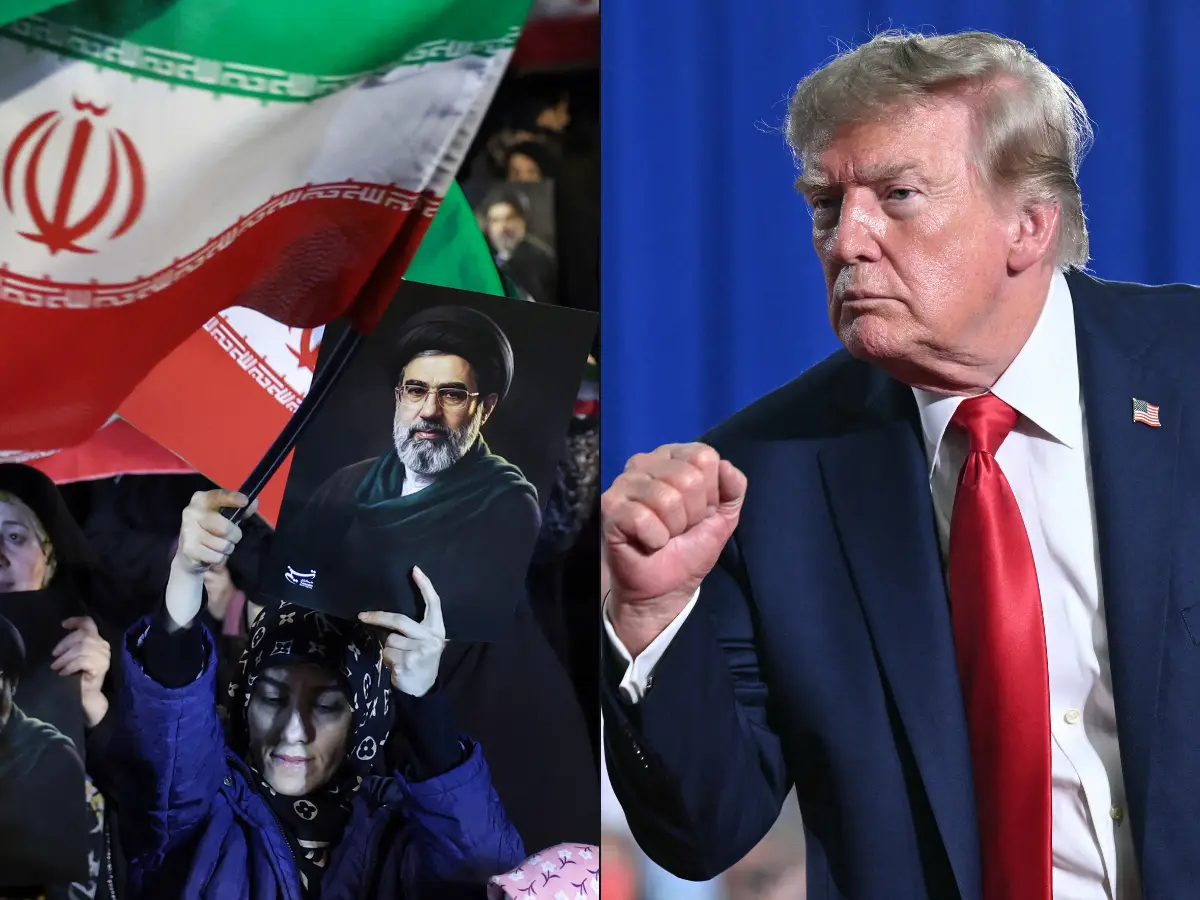
Even as U.S. President Donald Trump has claimed that the Strait of Hormuz is open and Iran is in deep trouble, the extent of damage suffered by the U.S. military during the Iran war could lead to a reduced American presence in West Asia in the future.
According to a report, damage to U.S. military bases in West Asia during the war, caused by Iranian drone and missile attacks, is estimated at between four and nine billion U.S. dollars.
The report also claimed that the U.S. Navy has temporarily relocated the headquarters of the U.S. Fifth Fleet to Florida, following extensive damage to Naval Support Activity Bahrain in Manama.

The base is crucial because it serves as a central hub for U.S. naval operations in West Asia.
Think tank CSIS analysed satellite images to calculate the cost of Iranian strikes on 122 structures across 12 U.S. bases in West Asia.
According to the policy research firm, Camp Arifjan in Kuwait incurred damage estimated at close to a staggering one billion dollars.
Trending Stories
&im=FitAndFill=(700,400))
How fast can the Sukhoi Su-30 fighter jet really fly?
)
Did China ask its people 'not to respond to aliens'? Origin of bizarre claim on social media
)
MS Dhoni-CSK Fallout? Report claims failed stake sale talks triggered rift
)
Scientists reveal the SAFEST COUNTRY when catastrophe strikes the planet
)
Serial killer on the loose in South Korea's Jeju Island? Fourth body found in three days as more than a dozen people go missing
)
2/3rd of glacier detached, collapsed: ISRO satellite images reveal what triggered Nepal floods
)
Trump once again claims without him there would be ‘no Israel right now’
)
Foreign espionage attacks against German companies surge to 37%, Bitkom report reveals
)
Blake Lively wins partial legal fee from Justin Baldoni after $8M request
)
Why is Pakistan deploying Turkish Bayraktar TB2 drones near India border?
)
'OH MY GOD! We've found other agents!': Investigators discover not one or two, almost 700 OpenAI AI agents went rogue, hacked Hugging Face
)
Lunar eclipse 2026: India timings, places to see and more. August Blood moon factsheet
)
RSS chief Mohan Bhagwat on global outreach tour
)
Both pilots killed as training aircraft crashes in Lucknow – What we know
)
16-year-old charged with preparing terror attack on kindergarten in Norway
&im=FitAndFill=(700,400))
How the S-400 protects itself from enemy attacks
)
Nepal floods: Over 165 dead, 400 missing; US, India, China, World Bank mobilise aid
)
India's multi-layered watch: The new surveillance war
)
5 doomsday planes spotted in US skies hours after CIA director's secret trip to Russia
)
9/11 mastermind Khalid Sheikh Mohammed to finally face trial in 2028, nearly 27 years after horrific attacks
)
Islamabad hospital fire: What we know about one of the biggest facility that housed Imran Khan
)
Workers run for life while filming Nepal flash flood: Scary new visuals emerge from Rasuwa
)
Russian military planes enter South Korean air defence zone amid rising tensions with North Korea: What's happening
)
Ron Weasley Is Back! Rupert Grint set to return to Harry Potter universe on Broadway
)
400-year-old 'vampire' grave in Poland reveals non-existent genetic lineage
)
Dolly Parton, global icon and queen of country music, dies at 80
)
Nepal flash floods: Kailash Mansarovar yatra affected, close to 400 pilgrims out of contact
)
'If he is dead, they're putting on a pretty good show': Trump casts fresh doubt over Mojtaba Khamenei's fate
)
Man arrested near US Capitol with guillotine in pickup truck: What happened?
&im=FitAndFill=(700,400))
Why the Su-30MKI cockpit is painted bright turquoise green
This was followed by Kuwait's Ali Al Salem Air Base, which reportedly suffered damage worth around 787 million dollars.
And this is not all. Qatar's Al Udeid Air Base, the largest American military base in West Asia, also reportedly sustained damage estimated at 466 million dollars.
Trump's war on Iran has also reportedly pushed the U.S. military into a severe financial crisis. One report flagged that the U.S. Navy has been forced to transfer money meant for sailors' salaries to cover the costs of combat.
The prolonged war has also resulted in the U.S. military facing a critical shortage of advanced missile interceptors in Europe.
The most concerning shortfall involves America's Patriot missile interceptors, which can be used against high-speed ballistic missiles.
According to a report, the U.S. has used up around 65 percent of its overall arsenal of more than 2,300 Patriot missiles during the Iran war. Only around 600 Patriot missiles are expected to be produced this year.
This has raised concerns about the vulnerability of NATO countries in responding to a potential Russian attack.
According to reports, the Pentagon is likely to review the situation, potentially leading to a scaling back of American bases in the region.
And this has been one of Iran's key demands since the beginning of the war.
Amid this, Trump asserted that the U.S. controlled the Strait of Hormuz and claimed that millions of barrels of oil were transiting the strategic waterway every day after being cleared of mines by CENTCOM.
On the other hand, Iran's Supreme National Security Council chief, Mohsen Rezaei, revealed that Iran was preparing a list of conditions for reopening Hormuz at the request of mediators.
During an interview, Rezaei also stated that Iran had agreed with Oman on a corridor that ships could use if the U.S. met its conditions.
Seething over America's so-called "Operation Economic Outcast," Iran urged countries to refrain from implementing what it described as economic terrorism by the United States.
According to Iran's Foreign Ministry, compliance would amount to a violation of international law and the sovereign equality of states.
Meanwhile, Beijing also lashed out at Washington over the Trump administration's possible move to sanction Chinese banks linked to Iran.
Even as diplomatic efforts are underway to bring peace to the region, with Qatar's prime minister also paying a visit to Tehran, the United States and Iran continue to remain at loggerheads over key issues.
From billions of dollars in reported base damage to shortages of missile interceptors and renewed diplomatic pressure over the Strait of Hormuz, the Iran war could force Washington to rethink the scale of its military footprint in West Asia.