

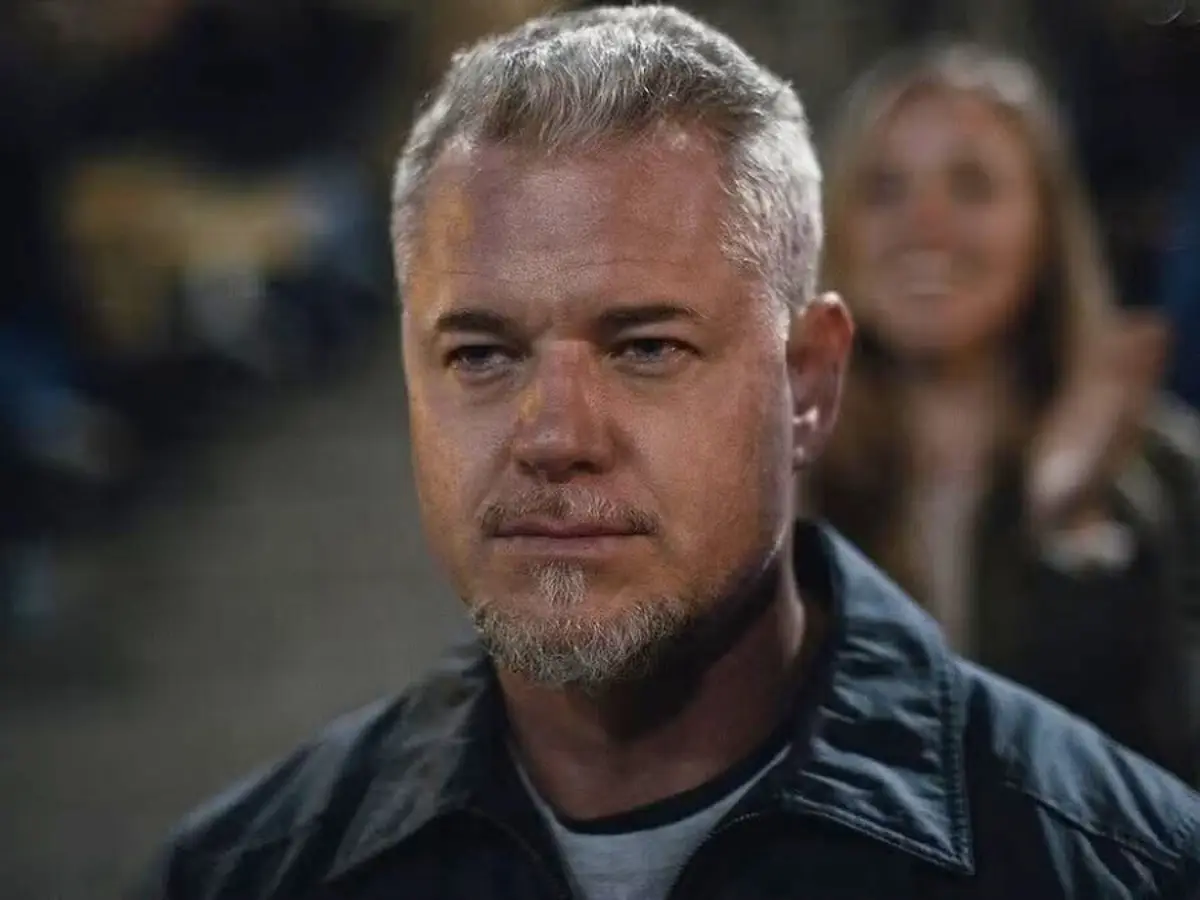
&imwidth=800&imheight=600&format=webp&quality=medium "What is ALS disease that led to Grey's Anatomy star Eric Dane's death? Know about causes, symptoms and more")
Actor Eric Dane, widely known for playing the charming Dr Mark Sloan in TV medical drama Grey’s Anatomy, died on Thursday at the age of 53. In April 2025, the popular TV actor revealed that he had been diagnosed with amyotrophic lateral sclerosis (ALS).
On Thursday, Dane’s family released a statement and said that the actor died peacefully earlier in the afternoon, surrounded by close friends, his wife, and daughters, Billie and Georgia. The statement read, "With heavy hearts, we share that Eric Dane passed on Thursday afternoon following a courageous battle with ALS. He spent his final days surrounded by dear friends, his devoted wife, and his two beautiful daughters, Billie and Georgia, who were the center of his world."
Dane was vocal about his ALS diagnosis. Last year, he revealed his diagnosis and stated, “I am grateful to have my loving family by my side as we navigate this next chapter."
Months later, in June 2025, Dane had revealed that he had lost functions in his right arm. While the actor continued raising ALS awareness, the disease spread fast and eventually claimed his life 10 months later.
Dane’s death had come as a shock to many, despite everyone knowing that ALS is fatal.
Trending Stories
&imwidth=180&imheight=135&format=webp&quality=medium)
Brendan Taylor overtakes Andy Flower to become Zimbabwe’s leading ODI run-scorer
&im=FitAndFill=(700,400)&imwidth=180&imheight=135&format=webp&quality=medium)
What is the real meaning behind Pete Hegseth's tattoos?
&imwidth=180&imheight=135&format=webp&quality=medium)
Kenyan cult leader found guilty over starvation deaths of nearly 200 children
&imwidth=180&imheight=135&format=webp&quality=medium)
Flying car race: Alef Aeronautics welcomes Tesla Roadster '11 years' later, but are the two models the same?
&imwidth=180&imheight=135&format=webp&quality=medium)
France is burning. Trump blames immigrants. But who is answering Europe's real questions? | The Verdict
&imwidth=180&imheight=135&format=webp&quality=medium)
Shastri backs Shami comeback; lauds Bhuvi and warns Bumrah on format workload ahead of World Cup
&imwidth=180&imheight=135&format=webp&quality=medium)
Netanyahu rival Benny Gantz quits Israel election race, vows to push for unity government
&imwidth=180&imheight=135&format=webp&quality=medium)
US Midterm 2026: What do opinion polls and prediction markets say less than two weeks before voting
&imwidth=180&imheight=135&format=webp&quality=medium)
WATCH | Albania protesters set Supreme Court on fire as anti-Rama riots escalate
&imwidth=180&imheight=135&format=webp&quality=medium)
Trump Commerce Secretary Howard Lutnick’s family fortune more than doubles to $7.3 billion, outpacing his boss
&im=FitAndFill=(700,400)&imwidth=180&imheight=135&format=webp&quality=medium)
Ghaziabad is world's fastest-growing city; Surat, Patna, Rajkot also feature on list
&imwidth=180&imheight=135&format=webp&quality=medium)
‘Spare India from anarchy’: Over 400 Indian-origin academics from MIT, Oxford condemn anti-CEC protests
&imwidth=180&imheight=135&format=webp&quality=medium)
Haunting of a New York brewery: Apparition caught on camera at 160-year-old establishment
&imwidth=180&imheight=135&format=webp&quality=medium)
Pakistan betrays Iran, shuts border, trade as Trump moves towards new war
&imwidth=180&imheight=135&format=webp&quality=medium)
PCB omits Atherton, Hussain from tri-series commentary panel over Imran Khan interview row
&imwidth=180&imheight=135&format=webp&quality=medium)
US Congressman Raja Krishnamoorthi describes foiled temple attack as ‘divine intervention’, criticises Vance and MAGA rhetoric
&imwidth=180&imheight=135&format=webp&quality=medium)
9/11 case: US Supreme Court rejects plea deal appeal by alleged mastermind Khalid Sheikh Mohammed
&imwidth=180&imheight=135&format=webp&quality=medium)
Girl 'dead' for 8 hours wakes up at her own funeral, dad insists she wasn't breathing
&imwidth=180&imheight=135&format=webp&quality=medium)
Pujara says 'Samson and Vaibhav cannot be in Playing XI' for India on NZ tour
&imwidth=180&imheight=135&format=webp&quality=medium)
One dead after shooting near mosque in Columbus, Ohio. Here's what we know so far
&imwidth=180&imheight=135&format=webp&quality=medium)
Watch: Trump predicts Netanyahu’s victory, says ‘You’re the man I want by my side’
&im=FitAndFill=(700,400)&imwidth=180&imheight=135&format=webp&quality=medium)
New OTT releases this week (October 19-25, 2026): Gajab Raat to Chaar Yaar-8 titles to watch during Dussehra week on Netflix, Prime Video and more
&imwidth=180&imheight=135&format=webp&quality=medium)
Baby orangutan rescued in India returns to Indonesia
&imwidth=180&imheight=135&format=webp&quality=medium)
India moves to buy 10,000 more AI chips for a national compute pool open to startups
&imwidth=180&imheight=135&format=webp&quality=medium)
'Whatever I can do to end this war': Trump floats China Summit with Putin and Xi, questions Zelensky's role in peace talks
&imwidth=180&imheight=135&format=webp&quality=medium)
WATCH | Viral video shows woman jogging past burning barricade amid Paris unrest, sparks online debate
&imwidth=180&imheight=135&format=webp&quality=medium)
'Paris is going to be a Muslim city very soon': Trump blames immigration for France unrest, urges Macron to tighten border policies
&imwidth=180&imheight=135&format=webp&quality=medium)
'We feel like Mr India': Gujarat’s undercover SHE team guard garba nights at Navratri
&imwidth=180&imheight=135&format=webp&quality=medium)
Cattle-feed bran in biscuits, detergent in milk: FSSAI acts against 3 companies
&imwidth=180&imheight=135&format=webp&quality=medium)
'It's a joy to see the makers bring it on such a grand scale': SS Rajamouli on Ramayana
&imwidth=180&imheight=135&format=webp&quality=medium)
Priest dies after crucifix falls on his head during livestreamed Mass in Ecuador | VIDEO
&imwidth=180&imheight=135&format=webp&quality=medium)
US midterm elections 2026: Early voting picks up pace ahead of November 3 polls
Dane’s death has brought back focus on ALS and how fast it can progress, leading to death.
WION spoke to Dr Dr Khushbu Goel, Head & Consultant - Stroke Care Programme & Management, Neurology, Manipal Hospitals, Dwarka, New Delhi, and asked about the causes, symptoms of the disease, and preventive measures that one can take if diagnosed.
What is ALS?
ASL or Amyotrophic Lateral Sclerosis, is a progressive, fatal neurodegenerative disease that destroys motor neurons in the brain and spinal cord, causing loss of voluntary muscle control. It mainly includes the motor neurons, which control voluntary muscles located in the brain and spinal cord. When these neurons die, the brain can no longer send signals to muscles, leading to muscle weakness, loss of voluntary movement, and eventual paralysis.
What causes ALS?
Most cases of ALS have no known cause and are known as sporadic. Experts have stated that both genetic and environmental factors often lead to the onset of ALS. According to a report in the Mayo Clinic, 5–10% of ALS cases have a known genetic cause and are often linked to a family history of ALS; such cases are known as familial ALS or hereditary ALS.
There is no cure for ALS so far. Once diagnosed, the goal of treatment is aimed at slowing the progress of the disease. It is fatal, with an average survival time of 3 to 5 years after symptoms start, though some live 10 years or more. The progression of the treatment depends on early detection and differs from person ti person.
Symptoms of ALS
According to Dr Goel, “early symptoms of ALS may include muscle spasms and rigidity, arm, leg, or hand weakness, trouble holding objects or walking, difficulty speaking or swallowing. As the disease progresses over time, people may also experience severe muscle weakness and paralysis, loss of the ability to speak, walk, or perform daily tasks, and breathing issues due to involvement of the respiratory muscles. However, as it may lead to physical decline, sensation typically remains normal, and cognitive functions are usually preserved.”
Is it fatal? Does it spread aggressively once diagnosed?
“Yes, ALS can be fatal,” says Dr Goel, and adds that “the progression varies among patients. The development of the disease depends on the site of onset, age, sex, genetic factors, and respiratory function. Limb-onset ALS, which begins in the arms or legs, generally develops more slowly, while bulbar-onset ALS, affecting speech and swallowing, tends to advance more rapidly. Early involvement of the respiratory muscles is associated with a poorer diagnosis. ”
Goel adds that survival rates range from two to five years after diagnosis, but with careful and comprehensive management, some patients may live for ten years or longer.
It is important to clarify that ALS is not a contagious disease and does not spread among individuals.
Is there any way to take precautions or safeguard oneself?
Nutrition: It is essential to have proper nutrition in ALS to avoid weight loss and muscle atrophy. A high-calorie and high-protein diet is necessary to fulfil the energy requirements. Drinking plenty of water is also important to support digestion, circulation, and overall health.
Physical Activity: Exercise must be done in a balanced manner to prevent muscle overuse. Vigorous exercise can worsen muscle fatigue and weakness. Gentle and supervised physiotherapy can also help maintain mobility and flexibility.
Respiratory Care: Breathing function should be checked periodically because weakness of the respiratory muscles is a significant concern in ALS patients. If symptoms like shortness of breath, difficulty breathing when lying flat, a weak cough, or morning headaches occur, medical advice should be immediately sought. Early treatment for breathing difficulties can greatly improve survival and comfort.
Psychological Support: Living with ALS can be emotionally trying for both the patient and the caregiver. Counselling and mental health support can help cope with anxiety, depression, and emotional distress. Support groups can help patients and their families connect with others who have similar experiences and provide valuable information on how to improve their quality of life.

