The Book of Body Positivity author: Obesity is not a person's fault but of society

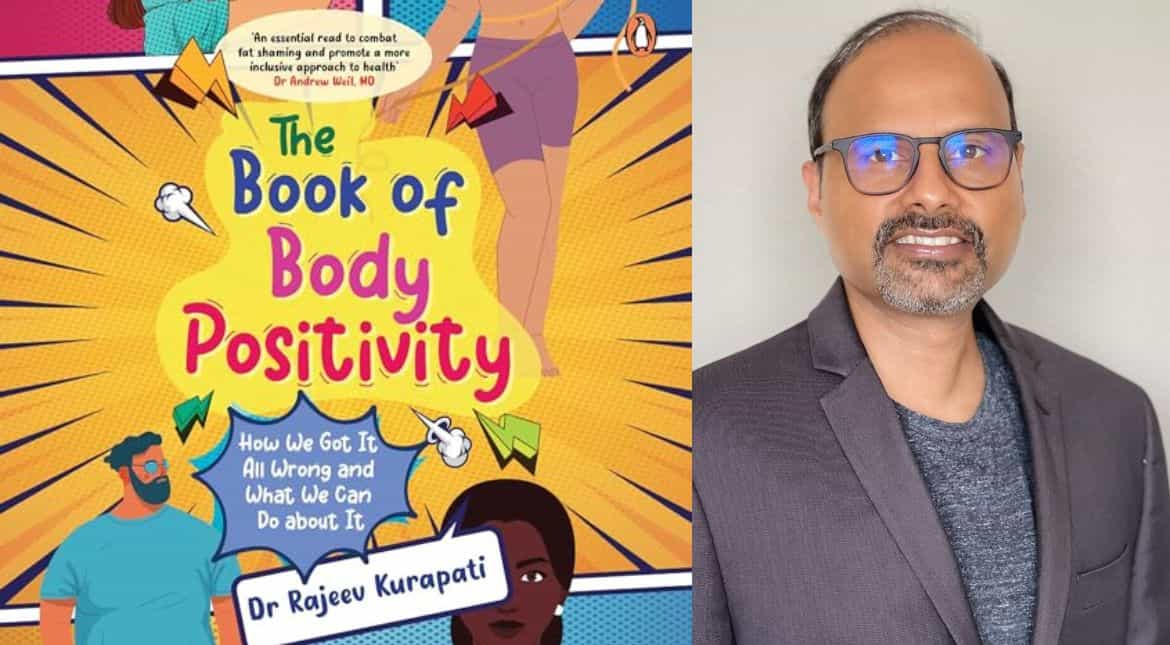
Author of The Book of Body Positivity
Obesity can no longer be ignored as just another lifestyle issue. With a staggering 42 per centof the total US population suffering from obesity and close to 70 per cent of people being labelled overweight, it’s time we actively looked at our lifestyle and made some pertinent changes that can give us a quick turnaround in terms of health and happiness. US-based physician Dr Rajeev Karupati recently dropped an audio book called The Book of Body Positivity on Audible exploring the link between obesity, lifestyle and medicine. Exploring his inspiration behind the book, the medical expert and author spoke to WION about the message he wants to give out to those who want to lead a healthy life.
Here are the edited excerpts from the chat:
Obesity is not the individual's fault but of society

Q: What was the thought and inspiration behind writing The Book of Body Positivity?
A: I'm board-certified in obesity, lifestyle medicine, and family medicine. This book, The Book of Body Positivity, was motivated by a desire to address a pressing issue in society now – the problem of obesity and the stigma associated with it. Unlike other diseases like high blood pressure, diabetes, heart disease, kidney failure, liver problems and more, obesity is a disease that shows up physically. And obesity, by definition, is a medical condition. We don't stigmatise people who have diseases like high blood pressure, or diabetes, right? We don't shame them. Unfortunately, we shame people who have this medical condition called obesity.
Anyone who looks bigger,the medical community defines them as obese, based on their size. There are two problems with this. As long as the medical community defines obesity based on the size of the person and not based on what goes on within the body, we have a problem because 70% of the population is overweight and of the remaining 30%, some are malnourished.
&imwidth=180&imheight=135&format=webp&quality=medium)
'I am not going to be watching it': JD Vance on livestream of Nidal Hasan's firing squad execution
&imwidth=180&imheight=135&format=webp&quality=medium)
UK navy hit by espionage scandal: Sailor accused of spying for Russia | Gravitas
&imwidth=180&imheight=135&format=webp&quality=medium)
Katie Zacharia likely to succeed Karoline Leavitt as Trump's White House press secretary
&imwidth=180&imheight=135&format=webp&quality=medium)
Delhi on high alert for CJP protest: Delhi police to use body cams to 'prove whether we did anything’; Pink Force, RAF, 35,000 personnel deployed
&imwidth=180&imheight=135&format=webp&quality=medium)
‘Never-ending flow of cheap labour’: JD Vance hits back at Indian-origin Congresswoman over US green card curbs for major tech companies
&imwidth=180&imheight=135&format=webp&quality=medium)
Panama president declares ‘major disaster’ after powerful 7.7-magnitude earthquake; over 80 aftershocks recorded
&imwidth=180&imheight=135&format=webp&quality=medium)
‘250? Cool.’: Shai Hope takes swipe at Shubman Gill’s Instagram caption after Ranchi T20I masterclass
&imwidth=180&imheight=135&format=webp&quality=medium)
‘Ruh Roh’: Top US official mocks ‘Indian market collapse’ claim after Trump’s IT curbs. But did it? | FACT CHECK
&im=FitAndFill=(700,400)&imwidth=180&imheight=135&format=webp&quality=medium)
Fastest-growing Asian economies in 2026: Who tops the chart? Where does India rank?
&imwidth=180&imheight=135&format=webp&quality=medium)
'I ended 8 wars': Trump slams Nobel Peace prize decision, claims award was his due
&imwidth=180&imheight=135&format=webp&quality=medium)
Dhurandhar: The Revenge album submitted for Grammy consideration; But what does it mean?
&imwidth=180&imheight=135&format=webp&quality=medium)
Houthis continue direct hits on Saudi targets, Türkiye and Pakistan missing in action | Gravitas
&imwidth=180&imheight=135&format=webp&quality=medium)
J&K Government orders major police reshuffle, transfers 100 officers across UT
&imwidth=180&imheight=135&format=webp&quality=medium)
New York protests erupt as Trump administration defends ICE shooting
&imwidth=180&imheight=135&format=webp&quality=medium)
Delhi protest: Metro curbs, train cancellations, traffic diversions as protesters seek CEC Gyanesh Kumar’s resignation
&imwidth=180&imheight=135&format=webp&quality=medium)
Powerful 7.7 magnitude earthquake strikes Panama, tsunami warning issued
&imwidth=180&imheight=135&format=webp&quality=medium)
Hurricane Isaias makes landfall in Florida as Category 2 storm with winds of 105mph, threatens Gulf Coast with life-threatening surge
&imwidth=180&imheight=135&format=webp&quality=medium)
Trump has a new 'enemy': Anyone who calls it 'artificial intelligence'. Here's what we wants instead
&imwidth=180&imheight=135&format=webp&quality=medium)
Adéla gives KATSEYE’s Lara Raj and Megan Skendiel a shout-out at Fonda Theatre in LA
&imwidth=180&imheight=135&format=webp&quality=medium)
'Modi is a dictator': Abhijeet Dipke claims govt 'scared' of youth, slams stringent measures ahead of CJP Jantar Mantar protest
&im=FitAndFill=(700,400)&imwidth=180&imheight=135&format=webp&quality=medium)
New Friday OTT releases (October 9, 2026): Reporting Live, Animals, Take Charge of My Heart- 6 new titles coming on Netflix, JioHotstar and more
&imwidth=180&imheight=135&format=webp&quality=medium)
Trump announces Russian diesel deal as Zelensky criticises move
&imwidth=180&imheight=135&format=webp&quality=medium)
‘Right to protest must be protected, but...’: Delhi Police reveals why it denied CJP permission for October 10 Jantar Mantar protest
&imwidth=180&imheight=135&format=webp&quality=medium)
Pakistan denies reports of PAF jets being used in attacks against Iran-backed Houthis in Yemen
&imwidth=180&imheight=135&format=webp&quality=medium)
New York ICE shooting sparks protests as Mamdani to call on Trump to halt ICE operations
&imwidth=180&imheight=135&format=webp&quality=medium)
IND vs WI: West Indies set record for highest successful run chase in T20Is against India
&imwidth=180&imheight=135&format=webp&quality=medium)
All 22 Indian seafarers safe in attack on Panama-flagged tanker off UAE coast
&imwidth=180&imheight=135&format=webp&quality=medium)
Ryan Reynolds’ private messages reveal his blunt views on Justin Baldoni from Blake Lively’s legal case
&im=FitAndFill=(700,400)&imwidth=180&imheight=135&format=webp&quality=medium)
Rakul Preet Singh birthday special: 7 times the Ramayana actress served glamorous looks

Kamal Haasan slams Elon Musk over Starlink delay row: 'Indian people, will decide our own future - not Western'
&im=FitAndFill=(700,400)&imwidth=180&imheight=135&format=webp&quality=medium)
Food shortages, suicide attempts and more: USS Abraham Lincoln returns to US after 321 day deployment — What happened aboard the US carrier?
&imwidth=180&imheight=135&format=webp&quality=medium)
OpenAI shuts down Russian, Iranian influence operations using ChatGPT to spread propaganda
&imwidth=180&imheight=135&format=webp&quality=medium)
SC questions closure of 57 Delhi Metro stations, asks Centre to resume services in regulated manner
&imwidth=180&imheight=135&format=webp&quality=medium)
'Even Indira Gandhi didn't do this': Abhijeet Dipke, Saurav Das and Ashutosh Ranka detained from inside their flight | Watch video
&imwidth=180&imheight=135&format=webp&quality=medium)
‘We will end ICC’: US sanctions International court, threatens to cripple hours after Navi Pillay wins Nobel Peace Prize
&imwidth=180&imheight=135&format=webp&quality=medium)
US midterm elections 2026: What a blue wave or blue tsunami could mean for Trump
&imwidth=180&imheight=135&format=webp&quality=medium)
Trump honours Microsoft CEO Satya Nadella with top technology honour amid immigration scrutiny
Another cause of concern is the stigma attached to being overweight. We have torecognise that it is not an individual's problem but of the society.As a society, we created this. We didn’t have this issue some 50-60 years ago.In my book, I provide causes of this growing obesity and solutions to it.
Not all people are obese but have adiposity
Q: What do you hope listeners can take away from this audiobook?
A: The book addresses both the medical and the psychosocial impact of fat-shaming. I advocate replacing the word obesity with adiposity. In other words, obesity right now is defined based on the size of the person. What I propose in this book is currently how we define obesity should be changed to a screening test. For example, if a person's BMI (body mass index) is a certain number and it is higher, that person is called obese. Instead, if we change the name to adiposity, the person has more adiposity, which means that the person has more abnormal fat tissue.
In my book, I also address the causes of obesity. For example, from food lovers, we have become a society of food addicts because of the content they put in the food. If the food industry makes us food addicts, how can we blame anindividual for it? I also talk about the direct link between age and food habits. With age, we engage in fewer activities but we continue to eat the same food as before. This leads to weight gain. I discuss other such things in my book.
Q: What would you suggest someone struggling with obesity?
A: We have to recognise multiple socio-dynamic factors, family and outside influences that make a person obese. You have to recognise that it is not the individual's fault, but it is the individual's responsibility to recognise what is causing them. That responsibility should be there but the blame should not be on the individual.
Q: How do you feel about the importance of accessibility in lieu of the audio adaptation of your book?
A: If you hear a book, you get direct exposure to what the author is saying through the medium of listening. It is as if the author is directly talking or speaking to you and advising you. You can listen to small bits of information. You can listen for 5-10 minutes or longer if you have the time. You can go back and re-listen to them. It's so easy.

