How to keep your cervix healthy: Cervical Health Awareness Month Special

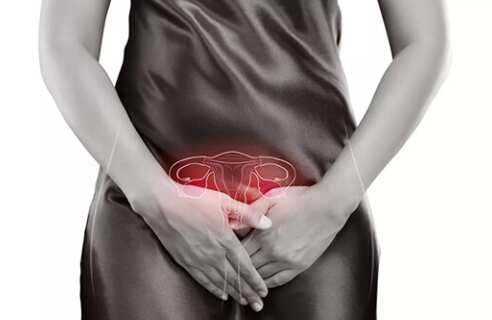
Easy tips to keep the cervix healthy: Cervical Health Awareness Month
January is considered Cervical Health Awareness Month and with a staggering number of young women falling prey to cervical cancer, it’s only imperative we understand how to take care of our cervix the right way. The mouth of the uterus is referred to as the cervix. The cervix and vagina produce normal discharge which comprises of mucus, dead cells and some bacteria. Normal healthy discharge is colourless or white, has no odour and is not itchy. It helps in moistening the vagina and in lubrication.
The amount and consistency changes in every woman’s body in response to the varying hormones. Any alterations from this in terms of volume, colour, odour or itchiness could suggest infection with yeast, bacteria, or parasites. Use of chemicals (as in washes) or allergies to condoms can cause irritation. These disturb the delicate balance maintained in the vaginal ecosystem. Non-infectious causes could include the use of tampons or unclean sex toys that are left behind for long periods or even a deficiency of hormones (after menopause) that decreases the resistance to infection.
Dr Gayathri Karthik Nagesh, HOD & Consultant - Obstetrics & Gynaecology, Manipal Hospital Old Airport Road spoke to WION about the need to keep the cervix healthy and suggested tips to maintain good cervical health.

Some of the most easy to follow steps are:
• Wash the outside and dab dry from front to back.
• Avoid the use of chemicals for douching.
• Avoid prolonged use of tight-fitting clothes.
• Annual checks with the gynaecologist.
While we all fret at the thought of visiting a doctor, it’s not so bad always. Every woman should get at least a full body health checkup once a year including visiting a gynaecologist to ensure all body parts are working fine and need no external attention. Even more so in India as according to GLOBOCAN (Global Cancer Observatory) statistics, a quarter of the world’s cervical cancer patients hail from India. But the good news is, that cervical cancers are preventable.
&imwidth=180&imheight=135&format=webp&quality=medium)
US troop deaths in Iran war on rise? Pentagon reveals latest toll
&imwidth=180&imheight=135&format=webp&quality=medium)
Lula campaign accuses Meta of election interference after social media content blocked
&imwidth=180&imheight=135&format=webp&quality=medium)
100,000 strikes in 3 years: How October 7 redefined Israel's war
&imwidth=180&imheight=135&format=webp&quality=medium)
‘Your people don’t even let us near it’: IAF chief’s blunt response on US F-35; India yet to decide on Russia’s Su-57
&imwidth=180&imheight=135&format=webp&quality=medium)
Saudi Arabia's King Khalid International Airport attack kills 12, injures 309; India calls it 'unacceptable'
&imwidth=180&imheight=135&format=webp&quality=medium)
‘Never-ending flow of cheap labour’: JD Vance hits back at Indian-origin Congresswoman over US green card curbs for major tech companies
&imwidth=180&imheight=135&format=webp&quality=medium)
Panama president declares ‘major disaster’ after powerful 7.7-magnitude earthquake; over 80 aftershocks recorded
&imwidth=180&imheight=135&format=webp&quality=medium)
HYBE’s Weverse Con India sets ticket sale date for March 2027 festival
&imwidth=180&imheight=135&format=webp&quality=medium)
Messi scores twice in Inter Miami return following final match for Argentina
&imwidth=180&imheight=135&format=webp&quality=medium)
CJP's Abhijeet Dipke, Ashutosh Ranka, Saurav Das released 22 hours after flight detention
&imwidth=180&imheight=135&format=webp&quality=medium)
'Unwarranted interference': India slams UN human rights office over remarks on Delhi protests
&imwidth=180&imheight=135&format=webp&quality=medium)
'Jantar Mantar not the story of India': BJP's Sambit Patra claims 'anarchists' tried to hold Delhi captive
&imwidth=180&imheight=135&format=webp&quality=medium)
3rd T20I Preview: Another run-fest on cards as India face West Indies in Indore
&imwidth=180&imheight=135&format=webp&quality=medium)
Nicolas Cage refuses AI waiver for Spider-Noir, hints at Amazon exit and True Detective role
&imwidth=180&imheight=135&format=webp&quality=medium)
Riyadh airport hit in missile attack, dozens injured; 5 in intensive care
&imwidth=180&imheight=135&format=webp&quality=medium)
'Spent Rs 2,000 cr to elect Trump': Elon Musk bought US President's loyalty by writing the biggest political cheque in human history
&imwidth=180&imheight=135&format=webp&quality=medium)
Powerful 7.7 magnitude earthquake strikes Panama, tsunami warning issued
&imwidth=180&imheight=135&format=webp&quality=medium)
US mid-term elections: What are PACs - Unique American System that lets corporates shape voting
&imwidth=180&imheight=135&format=webp&quality=medium)
'Ouch!!! That must hurt': Kangana Ranaut hails Kamal Haasan's sharp reply to Elon Musk over Starlink row
&imwidth=180&imheight=135&format=webp&quality=medium)
Barry Manilow cuts short Las Vegas comeback show, cancels next concert over Bronchitis
&imwidth=180&imheight=135&format=webp&quality=medium)
Hamas used double agents, deceived Israel to carry out October 7 massacre
&imwidth=180&imheight=135&format=webp&quality=medium)
Bigg Boss 20: Who is Manish Goel? Meet the new wild card contestant on Salman Khan’s show
&imwidth=180&imheight=135&format=webp&quality=medium)
Portugal Federation confirms Cristiano Ronaldo’s return to national team despite suspension
&imwidth=180&imheight=135&format=webp&quality=medium)
Kim Kardashian brings glamour to Singapore Grand Prix while supporting boyfriend Lewis Hamilton
&imwidth=180&imheight=135&format=webp&quality=medium)
‘Time for Ukraine to get a new president’: Trump lashes out at Zelensky over Russia strikes
&im=FitAndFill=(700,400)&imwidth=180&imheight=135&format=webp&quality=medium)
Amitabh Bachchan @ 84: A look at his most iconic on-screen avatars - Anthony Gonsalves, Vijay Kumar and more
&imwidth=180&imheight=135&format=webp&quality=medium)
BTS’ RM raises privacy concerns over drones, lasers outside hotel amid Lima concert, urges fan respect
&imwidth=180&imheight=135&format=webp&quality=medium)
Thai queen becomes first reigning monarch to fly jet solothailand #queen #wion
&im=FitAndFill=(700,400)&imwidth=180&imheight=135&format=webp&quality=medium)
Food shortages, suicide attempts and more: USS Abraham Lincoln returns to US after 321 day deployment — What happened aboard the US carrier?
&imwidth=180&imheight=135&format=webp&quality=medium)
Rahul Gandhi calls Modi, Shah ‘cowards’ amid CJP protest crackdown in Delhi
&imwidth=180&imheight=135&format=webp&quality=medium)
‘Had he known, would have been here’: CJP Chief Abhijeet Dipke denied news of grandmother's death, family claims
&imwidth=180&imheight=135&format=webp&quality=medium)
Delhi Police arrest 4 men seen in viral video allegedly assaulting women protesters during CJP protest
&imwidth=180&imheight=135&format=webp&quality=medium)
Where are Abhijeet Dipke, Ashutosh Ranka, Saurav Das? CJP gives big update after flight detention
&imwidth=180&imheight=135&format=webp&quality=medium)
Putin conveys Iran’s proposal to Trump, offers to take Tehran’s enriched uranium
Cervical Health Awareness Month! Understanding HPV vaccination
The question is how? The expert suggests:
Screening tests:
Regular screening with the Pap smear test is an excellent preventive method. It is a simple and painless test performed in the outpatient clinic. The cervix is visualised with a small instrument and a small brush or wooden spatula is just scraped on the cervix and sent to the lab. It takes just a few minutes to perform and the reports can tell if it is normal, pre-malignant or if cancer cells are there. Self-testing kits are also available, but not freely available in India.
Most cervical cancers seem to result from long-standing papilloma virus infections.
Vaccination:
Since most cervical cancers are associated with papilloma virus infections, they are amenable to being neutralised by suitable vaccines, which are now available and all women between 15 and 45 years of age are recommended to take them. Two doses are recommended for adolescents before sexual exposure while others need to take three doses- 2 and 6 months after the first dose. There are practically no side effects.
Practice safe sex:
The usage of condoms goes a long way in preventing sexually transmitted infections including the papilloma virus.

