

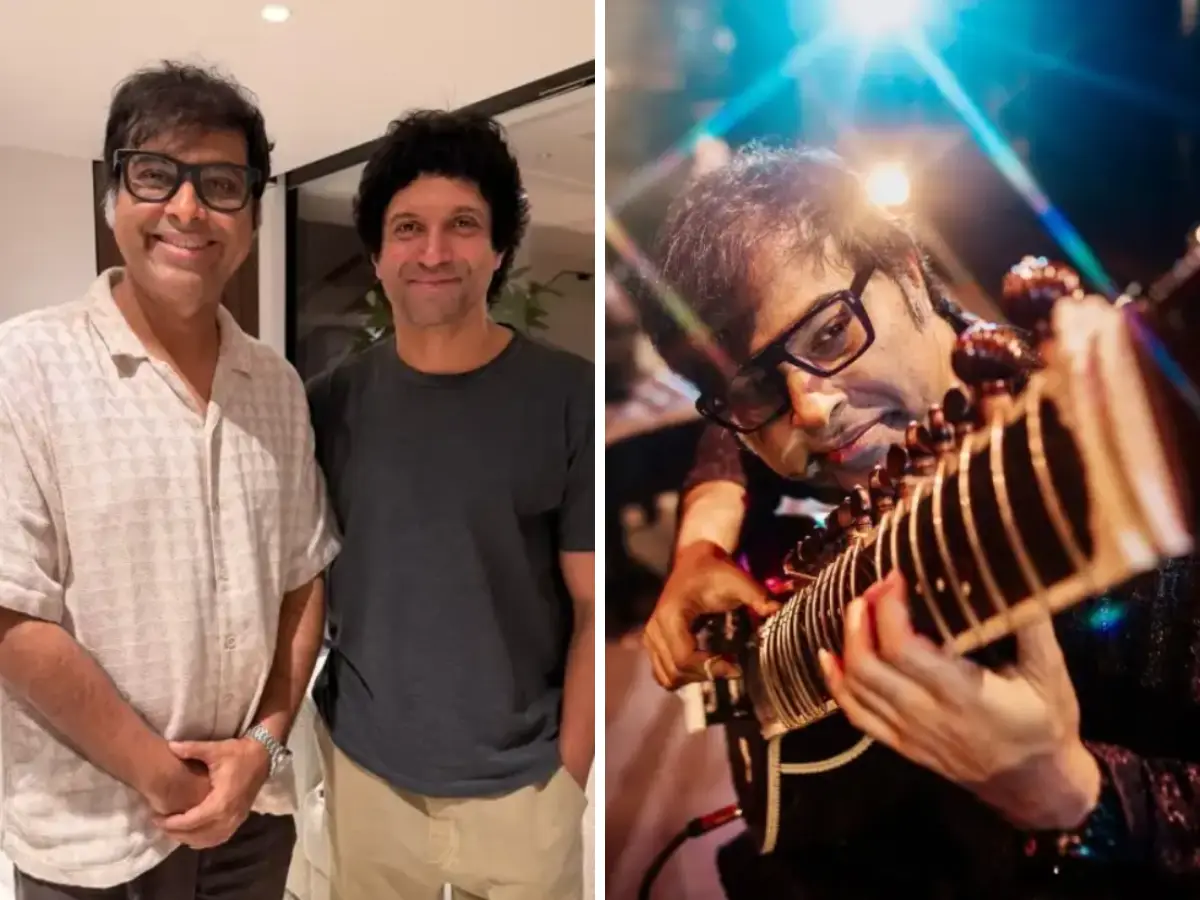
&imwidth=800&imheight=600&format=webp&quality=medium "Meet Purbayan Chatterjee: Sitarist behind Bandish Bandits’ viral track and Farhan Akhtar’s Hollywood prep")
Internationally acclaimed sitarist Purbayan Chatterjee feels the younger generation is quite interested in classical music, contrary to popular belief. Chatterjee’s sitar piece in Prime Video web series Bandish Bandits 2 went viral on social media, bringing a new kind of audience and fan following for the musician. Chatterjee feels classical music needs to be presented in such a way that it connects with the audience.
Chatterjee’s calendar is busy. He is on a multi-city tour in India, taking his music and new album Feathered Creatures to a wider audience and performing live. He is also collaborating on The Beatles Biopic and has been instrumental in training Farhan Akhtar, who is all set to play Pandit Ravi Shankar in the film series by Sam Mendes. WION chatted up with Purbayan Chatterjee about his music, new album and recreating Pandit Ravi Shankar’s music on screen.
Excerpts from the interview:
1) Tell us about your new album, Feathered Creatures.
Feathered Creatures is probably one of the most adventurous musical journeys I’ve taken so far. It’s a collaboration with the phenomenal Mark Lettieri from Snarky Puppy, and the music moves freely between raga, groove, progressive harmony, funk, electronica and complete musical mischief. We weren’t trying to “fuse” genres in a calculated way, we simply allowed our musical languages to coexist naturally. What excites me most is that the sitar isn’t treated like an exotic guest appearance here. It drives the narrative. Sometimes it whispers like an old khayal vocalist, and sometimes it behaves like it secretly joined a rock band after midnight. The album is cinematic, emotional and rhythmically restless, much like modern life itself, except hopefully with better tuning.
2) You are also collaborating on The Beatles Biopic, where Farhan Akhtar is playing the late Pandit Ravi Shankar. How did the project happen for you? Are you nervous about recreating Pandit Ravi Shankar’s music on screen?
Trending Stories
&imwidth=180&imheight=135&format=webp&quality=medium)
Cornell University suspends fraternity parties over 2024 gang rape allegations
&imwidth=180&imheight=135&format=webp&quality=medium)
Ken Paxton's Dubai night out with two US fugitives sparks political storm as Texas Senate race tightens
&imwidth=180&imheight=135&format=webp&quality=medium)
New Delhi rejects Beijing’s claims and remarks on Ladakh location naming exercise
&imwidth=180&imheight=135&format=webp&quality=medium)
‘My president, I mean my husband’: Trump's new press secretary Katie Zacharia's first briefing goes off the rails in 14 minutes
&imwidth=180&imheight=135&format=webp&quality=medium)
Sidhu Moose Wala’s younger brother wins hearts by recreating late singer’s signature move at Toronto Hologram Show
&imwidth=180&imheight=135&format=webp&quality=medium)
1,500 drones illuminate Mumbai sky as Cordelia Cruises unveils second ship, Cordelia Sky
&imwidth=180&imheight=135&format=webp&quality=medium)
France accuses Musk of ‘online harassment’ of European leaders, warns of poll interference
&imwidth=180&imheight=135&format=webp&quality=medium)
OpenAI employee arrested by FBI after allegedly hiding recording device in office
&imwidth=180&imheight=135&format=webp&quality=medium)
'Don't ever mess with nature!': Trump’s tiger attack post triggers social media backlash as victim's family issues heartbreaking tribute
&imwidth=180&imheight=135&format=webp&quality=medium)
Delhi Police arrest Cockroach Janta Party's Saurav Das, Ashutosh Ranka, Ajinkya Shinde in Jantar Mantar case, to be produced before court
&imwidth=180&imheight=135&format=webp&quality=medium)
'Turn approver, resign, we'll forgive you': Rahul Gandhi claims receiving messages from CEC Gyanesh Kumar
&imwidth=180&imheight=135&format=webp&quality=medium)
Saudi Arabia strikes Yemen oil sites as Houthi missiles target Riyadh; 'limited fire' breaks out at Aramco
&imwidth=180&imheight=135&format=webp&quality=medium)
Pope Leo XIV diagnosed with lung cancer after surgery, Vatican says 'successful surgery and recovering'
&imwidth=180&imheight=135&format=webp&quality=medium)
Russian woman and Bihar boy's love story goes viral after she reaches India to marry him
&imwidth=180&imheight=135&format=webp&quality=medium)
Robot gropes girl, makes thrusting movements in bizarre crime in Germany
&imwidth=180&imheight=135&format=webp&quality=medium)
Ranabaali: Vijay Deverakonda, Rashmika Mandanna film gets U/A certificate with zero cuts
&imwidth=180&imheight=135&format=webp&quality=medium)
Trump accuses Houthis of driving up oil prices before US midterms, warns of consequences
&imwidth=180&imheight=135&format=webp&quality=medium)
CMs Vijay-Naidu meet in Vijayawada, discuss water sharing, river-linking
&imwidth=180&imheight=135&format=webp&quality=medium)
Netanyahu wants to join Saudi's war on Houthis, but Crown Prince denies: Report
&imwidth=180&imheight=135&format=webp&quality=medium)
Blasts heard in Sanaa as Saudi-led coalition warns civilians to evacuate; Houthis vow retaliation
&imwidth=180&imheight=135&format=webp&quality=medium)
China's counter-surveillance industry booms amid heightened espionage fears | Gravitas
&im=FitAndFill=(700,400)&imwidth=180&imheight=135&format=webp&quality=medium)
New OTT releases this week (October 12-18, 2026): Sacrifice, Koffee with Karan S9, Roadies Rebirth- 6 titles coming on Netflix, JioHotstar and more
&imwidth=180&imheight=135&format=webp&quality=medium)
Girl 'dead' for 8 hours wakes up at her own funeral, dad insists she wasn't breathing
&imwidth=180&imheight=135&format=webp&quality=medium)
US Midterms 2026: In Alaska, cost-of-living anxiety meets strangest ballot in high-stakes Senate race
&imwidth=180&imheight=135&format=webp&quality=medium)
‘How many people did she illegally bring from Somalia?’ Trump targets Ilhan Omar, questions her net worth
&imwidth=180&imheight=135&format=webp&quality=medium)
Trump reconsidering calling off Nidal Hasan's execution livestream. Here's why
&imwidth=180&imheight=135&format=webp&quality=medium)
MI5 chief warns Russia is UK’s ‘aggressor number one’ as Iran and AI threats grow
&imwidth=180&imheight=135&format=webp&quality=medium)
Marco Rubio to visit India next week, focus on energy cooperation and strategic ties
&imwidth=180&imheight=135&format=webp&quality=medium)
UK school ditches technology, shifts from screen to pen and paper for learning
&imwidth=180&imheight=135&format=webp&quality=medium)
'Ouch!!! That must hurt': Kangana Ranaut hails Kamal Haasan's sharp reply to Elon Musk over Starlink row
&imwidth=180&imheight=135&format=webp&quality=medium)
Pakistan to chair UN-backed global Borrowers’ Platform as its own debt burden mounts, triggers sarcastic reactions on social media
&imwidth=180&imheight=135&format=webp&quality=medium)
Measles kills again: 6 dead in Pennsylvania as America faces its worst outbreak in decades | Gravitas
&im=FitAndFill=(700,400)&imwidth=180&imheight=135&format=webp&quality=medium)
Navratri 2026: 9 days, 9 forms of Goddess Durga and 9 colours- Check the complete list
&imwidth=180&imheight=135&format=webp&quality=medium)
Anupam Kher joins Ranbir Kapoor's Ramayana as Jatayu, new poster unveiled
When a project connected to Pandit Ravi Shankar and The Beatles enters your life, the first reaction is excitement… and the second is mild panic. Ravi ji wasn’t just a musician; he was a cultural bridge between East and West. Recreating that world carries enormous responsibility. I was contacted through Anurag Rao, via Shankar Mahadevan ji, because Farhan Akhtar wanted to learn the sitar for the role. Farhan and I met, and later, my student Ruthvik Rao began working with him regularly. Even today, Farhan occasionally calls me about tuning configurations or nuances of the instrument, and I’m genuinely impressed by how seriously he has approached the role. Portraying a towering personality like Pandit Ravi Shankar is never easy, but I’m very proud that his legacy is reaching mainstream cinema in such a meaningful way.
3) Your upcoming six-city India tour brings together an incredible ensemble with Rakesh Chaurasia, Ojas Adhiya and Shikhar Naad. What excites you most about collaborating with this line-up, and what can audiences expect from the musical experience?
This line-up is dangerous in the best possible way. Rakesh Chaurasia brings breathtaking melodic fluidity, Ojas Adhiya has remarkable rhythmic maturity, and Shikhar Naad adds an entirely different percussive energy and sonic texture. What excites me most is unpredictability. Indian classical music is at its finest when it’s alive in the moment, not over-rehearsed into politeness. Audiences can expect deep ragas, high-energy rhythmic conversations, spontaneous improvisation, and moments where we genuinely surprise each other on stage. Also, with this many rhythmic minds involved, there’s a real possibility that even the tanpura may start improvising.
4) Your piece in Bandish Bandits went viral back when it was released. What was the feedback that you got? And how did you come on board for the series?
The response was overwhelming because it reached people far beyond the traditional classical music audience. I had teenagers messaging me saying, “I don’t know what raga this is, but why am I emotional?” which is honestly one of the best compliments a musician can receive. One of the most special moments was when Shankar Mahadevan ji told me that “Garaj Garaj” had become almost like an anthem for college-going youngsters across the country. That really showed me that Indian classical music can still connect deeply with younger audiences without compromising its essence. I’m extremely grateful to Shankar Mahadevan ji, Soumil Shringarpure and Anand Tiwari for giving me the opportunity to contribute to such a powerful project, and also for making the central character of the series a sitar player.
5) At a time when attention span has been limited to a reel, do you feel the youth is disassociating from classical music?
I actually think the opposite is happening. The format has changed, but curiosity hasn’t disappeared. Young listeners consume music differently today, faster, visually and algorithmically, but when they encounter authenticity and emotional depth, they still respond powerfully. The challenge for classical musicians is not whether young people have patience. The challenge is whether we are presenting the art form in a language that feels alive today. You can’t blame someone for scrolling past a badly presented masterpiece. Even Beethoven would probably need decent lighting and subtitles in 2026. I’ve seen packed concerts, viral raga clips, and young musicians obsessing over tala structures online. Classical music isn’t dying, it’s simply changing clothes.
6) Who has been your biggest inspiration in music? And how has it reflected in your work?
My biggest inspirations begin with the great masters of Indian classical music, especially Pandit Ravi Shankar, Pandit Nikhil Banerjee, Ustad Vilayat Khan, and, of course, my own gurus and lineage, who taught me that music is a lifelong spiritual and intellectual discipline, not merely performance. At the same time, I’ve been deeply influenced by artists outside the traditional classical ecosystem, musicians like Chick Corea, Pat Metheny, Zakir Hussain, Jordan Rudess, and several artists from jazz, progressive rock and world music. Those influences reflect in the way I approach harmony, arrangement and sonic storytelling. I’ve never believed that tradition and experimentation are enemies. To me, tradition is like strong WiFi; if the connection is stable, you can travel anywhere.

