After Prada's Kolhapuri slippers, Fendi's Rs 8 lakh 'Gujarati mirror work bag' sparks outrage

&imwidth=600&imheight=450&format=webp&quality=medium "After Prada's Kolhapuri slippers, Fendi's Rs 8 lakh 'Gujarati mirror work bag' sparks outrage")
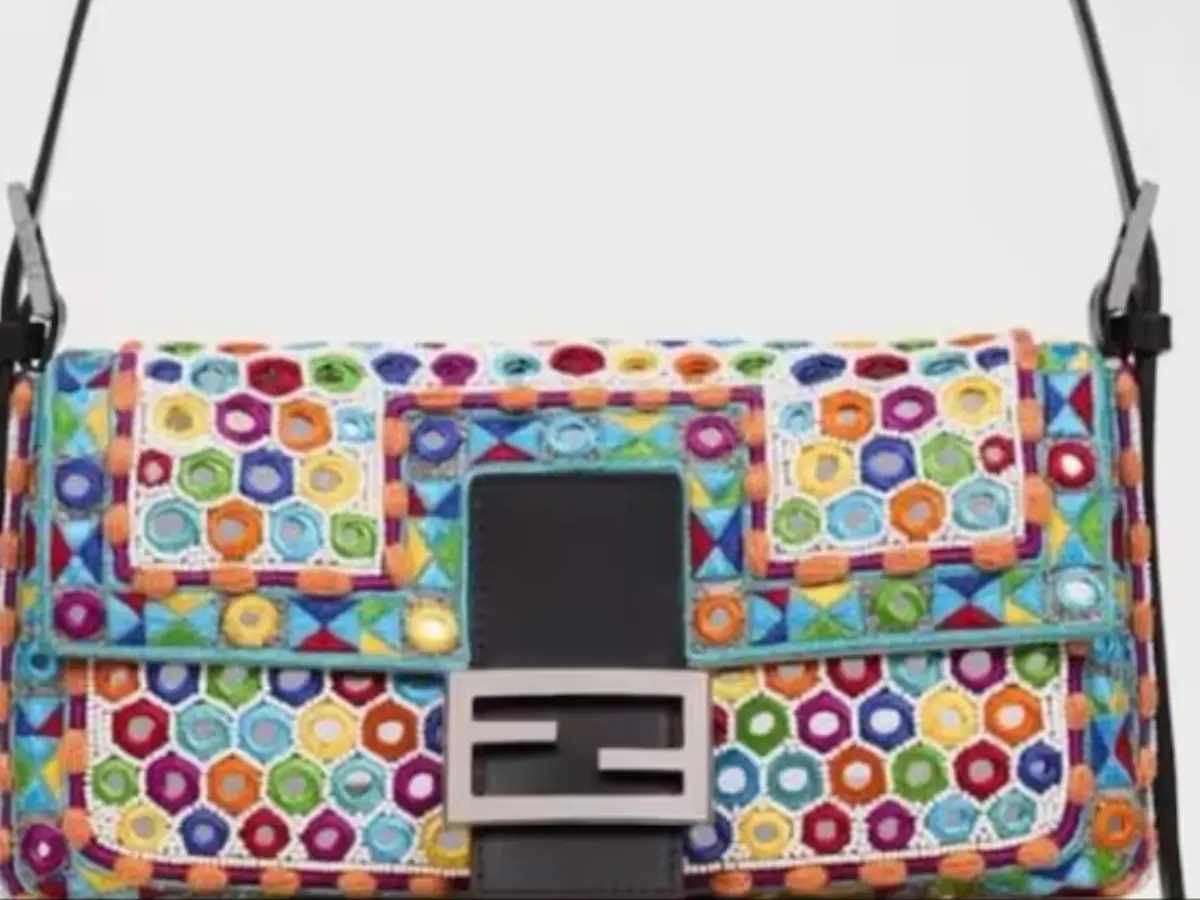
Fendi's bag Photograph: (X/Harsh Goenka)
India's culture continues to inspire the global fashion market as luxury brands continue to make products inspired by our desi heritage. But what they are doing, yet again, is not acknowledging the source of their inspiration.
India is known for its vibrant culture, and time and again, the West has shown interest in the craftsmanship of the South Asian country. And this comes months after Prada triggered controversy over its version of the Kolhapuri chappal; it is now Fendi that is selling embroidered bags with mirrors and beads, which many are finding similar to Gujarati embroidery, and that too with a huge price tag.
India's culture continues to inspire the global fashion market as luxury brands continue to make products inspired by our desi heritage. But what they are doing yet again is not acknowledging the source of their inspiration.
Fendi is selling a Gujarati bag at a price in lakhs
If you go for a stroll in an Indian market, or even street shopping in Gujarat, you can buy embroidered bags for Rs. 500 to Rs. 1,000, and slightly more when the embroidery has outstanding detailing. But have you ever thought of buying it in lakhs? And this is what luxury fashion house Fendi is doing.
This came to attention after the brand launched its new bag that they are selling as the “Baguette 26424: Multicolour Re Edition bag with embroidery and mirrors."
Trending Stories
)
)
)
)
)
)
)
)
)
)
)
)
)
)
)
)
)
)
)
)
)
)
)
&im=FitAndFill=(700,400))
)
)
)
)
)
)
)
)
)
)
)
Soon after, the bag caught the attention of netizens, with many slamming how the brand failed to respect Indian craftsmanship and the work of artisans.
Indian industrialist Harsh Goenka also called out the brand.
Calling it a Navratri bag, Goenka called out the brand for charging $10,000 (Rs 8.3 lakhs) for a design that is available on the streets of Gujarat and Rajasthan. Above all, they have chosen not to credit the Indian artisans behind this craft.
Sharing the picture of the bag, he wrote,'''After the Prada Kolhapuri chappal scandal, here comes the Fendi 'Navratri" bag. Charging ₹8.3 Lakhs for a design that looks exactly like a ₹500 bag available in the streets of Gujarat. And zero credit to Indian artisans. When will luxury brands stop colonising our crafts?''
Responding to Goenka, the Bitcoin founder Kiran Mazumdar-Shaw called out the Italian brand of cultural appropriation and repackaging India’s traditional craft.
“This is a case of cultural appropriation & not in good taste. Repackaging India’s traditional craft as luxury, without credit to the artisans who created and preserved it, undermines our authentic talent and heritage.” she tweeted.
She added, “Indian craftsmanship deserves recognition, not imitation.”
Commenting on the bag, one user wrote,''This shows that the west lack the rich art and creativity which Indian artisans possess .''
Another user wrote,''Imitation is the sincerest form of flattery; however I fully support the fact that credit must be given where it’s due. And in this case the financial credit is due.''
Has Fendi given credit to Indian craftsmanship or not?
For this particular bag, no post crediting Indian roots has been found. However, the brand has previously shared a video crediting Indian craftsmanship. In April, the brand shared a video of how a similar design was made.
Sharing the video, "When craftsmanship becomes design. Discover how sequins, beads, and mirrors are transformed into unique works of art through the skilled hands of Chanakya artisans," it added
So, while they have not given credit for this particular bag, they have earlier highlighted the craftsmanship of the Chanakya artisans.

