Who's That Knocking at My Door: Martin Scorsese's raw and personal directorial debut

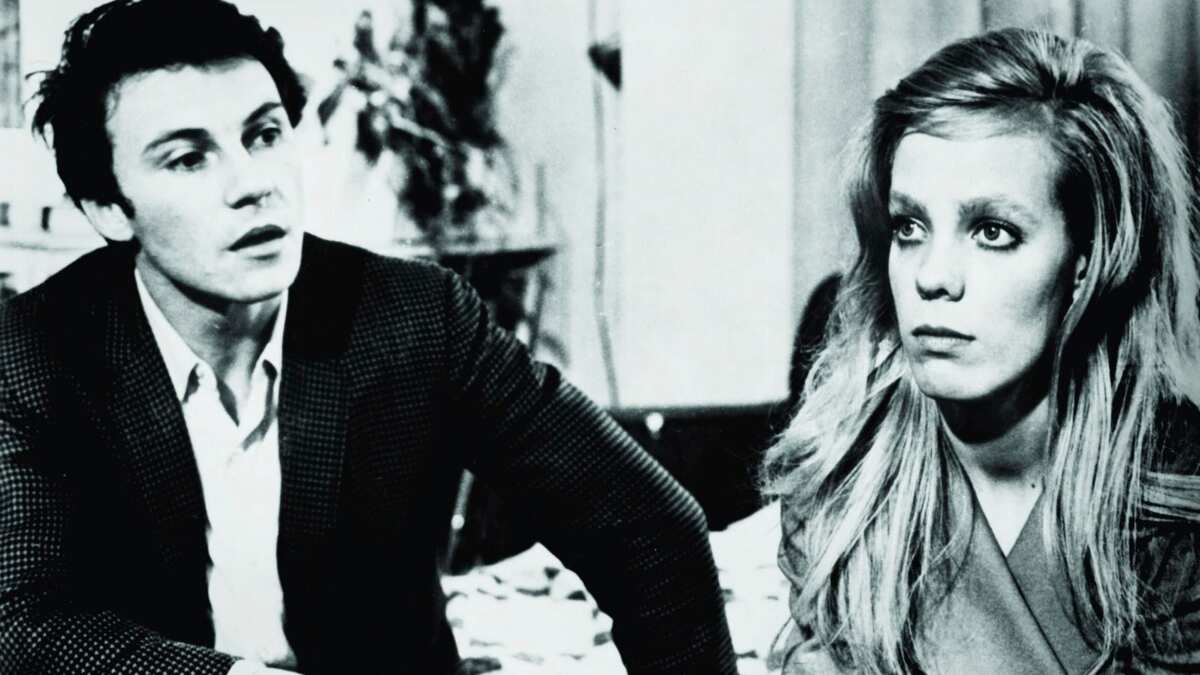
Who's That Knocking at My Door captures the raw, unvarnished emotions of youth in turmoil.
This is first in a series of articles that I call #EssentialScorseseFilms. It is a celebration of the iconic director's cinematic legacy before Killers of the Flower Moon. While Martin Scorsese's prolific career has spanned decades and produced a plethora of remarkable films, I recognise that it is impossible to cover them all within the confines of this series. Therefore, I have chosen to focus on his major works that have, I believe, have come to embody the essence of Scorsese's unparalleled artistry.
Also Read |Explained | Osage Indian Murders that inspired Martin Scorsese's Killers of the Flower Moon
In just a matter of weeks, the cinematic world will once again bear witness to the genius of Martin Scorsese, as his highly anticipated film Killers of the Flower Moon blooms onto screens across the globe. As we eagerly await the arrival of the movie, let us explore his directorial debut, Who's That Knocking at My Door.

In the dimly lit streets of New York City, amidst the clamor of the 1960s, a young Martin Scorsese embarked on a journey that would forever alter the landscape of American cinema. With Who's That Knocking at My Door, this aspiring filmmaker unveiled hisdeeply personal directorial debut, a poignant exploration of love, guilt, and the human condition.
The film opens with the harsh, staccato sounds of a subway, setting the tone for the gritty, urban tale that follows. Scorsese, still in his infancy as a director, thrusts us into the world of J.R., a restless and morally conflicted young man, played with haunting authenticity by a then-unknown Harvey Keitel. J.R. navigates the cacophony of city life with a sense of disconnection, a stark reflection of Scorsese's own experiences growing up in the vibrant yet turbulent neighborhoods of Manhattan's Little Italy.
)
Did India risk its US trade deal despite softer stance at BRICS?
)
Pakistan puts Pak Rs 70 lakh bounty on UN terrorist Masood Azhar; move draws skepticism in Delhi
)
First naval drone battle? Ukraine says Sargan 3000 sank Russian unmanned boat
)
Practical Magic 2 breaks Spidey spell over North American box office
)
'Huge destructive power': North Korea calls its latest missile launches 'live-fire drill' even as US dismisses 'immediate threat'
&im=FitAndFill=(700,400))
Meet top 5 batters fastest to 3000 runs in T20Is
)
‘Let’s go’: Newly declassified videos show dramatic rescue of US Air Force officers downed in Iran
)
Delhi’s balancing act: BRICS serves as a stage for West Asia diplomacy
&im=FitAndFill=(700,400))
Why European Meteor missiles use ramjet engines compared to standard US solid rockets
)
Iran, India agree to deepen humanitarian and political ties, President Pezeshkian says
)
‘Want to reset ties with India, have engagement based on mutual interests,’ says Bangladesh minister
)
Trump says Canada eager to reach a deal, it could come ‘fairly soon’ if Ottawa treats US farmers better
)
Turkish Airlines plane flies through a storm three times, triggering severe turbulence
&im=FitAndFill=(700,400))
Why Chinese PL-15 air-to-air missiles use dual-pulse motors compared to European interceptors
)
China thinned Himalayan troop presence in 2025, India defence report says; terms border situation 'stable'
)
800 million years old - Scientists discover 'fingerprints' of supercontinent Gondwana in ancient rocks
)
Russia proposes to build 360 kmph Ivolga FG trains in India: What happened on sidelines of BRICS
)
Israeli minister calls to strip Gaza film directors of citizenship
)
China discovers vast gold and silver 'mine' in the Pacific with unheard-of deposits
)
Russian drone hits Warsaw-bound train near Polish border, Zelensky accuses Moscow of ‘deliberate’ targeting
)
War is making Russia stronger? How Ukraine is shaping Moscow’s next generation of weapons
)
Plane carrying prominent figure crashes at Libya’s Misrata airport: Report
)
NEET-UG to move to computer-based test soon, NTA DG says ‘CBT is the future’
)
Woman removes all her clothes on American Airlines flight, performs 'indecent acts'; arrested
)
Liam Neeson sparks romance rumours after holding hands with Stella Stocker at TIFF 2026
&im=FitAndFill=(700,400))
New OTT releases this week (September 14-20, 2026): Lust Stories 3, Waiting Hai, Irumudi- 5 new titles coming on Netflix, Prime Video and more
)
Indian importers urge Bangladesh to lift export ban on 'Hilsa' fish ahead of Durga Puja
)
Did China give Iran intel before US base strike that killed 3 troops? Trump says, 'You’re right...'
)
Meghan Markle shares first glimpse of family life with Prince Harry and children in UK
)
Crude oil prices jump more than $107 per barrel following Houthi attacks on Saudi
&im=FitAndFill=(700,400))
From Rinku Singh to Mayank Yadav, 5 players dropped from India’s squad for Afghanistan T20Is
)
PM Modi and China's Xi offered to help resolve Russia-Ukraine war: Kremlin
)
Women's Asia Cup 2026: India denied trophy once again despite winning the title
)
Humans may lose control of AI: Anthropic CEO calls for slowdown, Altman, Musk back him
As the narrative unfolds, we are drawn into J.R.'s tormented psyche, a place where Catholic guilt and the allure of the streets converge. Scorsese's direction is both visceral and intimate, a testament to his unflinching commitment to storytelling. The camera, at times handheld and unsteady, seems to breathe alongside the characters, capturing the raw essence of their emotions. It is as if we are voyeurs to their innermost thoughts and desires.
Also Read |Why Quentin Tarantino, Martin Scorsese, et al. are right about Marvel movies
The film's central conflict arises when J.R. falls in love with a nameless girl (Zina Bethune), an ethereal presence who contrasts sharply with the harsh realities of his world. Their love affair becomes a symbol of purity amidst the chaos, a fleeting respite from the relentless pull of the streets. Scorsese explores the fragility of love, painting it as a sanctuary in a world where betrayal and brutality lurk around every corner.
Through the lens of Who's That Knocking at My Door, Scorsese examines the struggle between tradition and modernity, morality and temptation, innocence and corruption. He confronts his own Catholic upbringing head-on, examining the complexities of faith and guilt that have shaped his identity. The film's imagery, often suffused with religious iconography, reflects the inner turmoil of its characters, as they grapple with their sins and seek redemption.
Also Read |Martin Scorsese calls for 'fight back' against comic book movie culture: We've got to save cinema
Scorsese's debut is a cinematic rite of passage, a work that captures the raw, unvarnished emotions of youth in turmoil. It's a testament to the power of a filmmaker's personal experiences transmuted into art, a harbinger of the brilliance that would define his illustrious career. Who's That Knocking at My Door stands as a timeless reminder that cinema has the capacity to reveal the depths of the human soul, and in Scorsese's hands, it becomes an evocative journey through the labyrinthine streets of passion and redemption.
WATCH WION LIVE HERE
You can now write for wionews.com and be a part of the community. Share your stories and opinions with us here.