'The Rings of Power' backlash explained: Was JRR Tolkien racist?


Ismael Cruz Córdova as Arondir in 'The Rings of Power'.
'The Lord of the Rings: The Rings of Power' premiered with two episodes on September 2. The series, a prequel to JRR Tolkien's iconic fantasy novel 'The Lord of the Rings' and Peter Jackson-directed film trilogy, has received positive reviews with a rating of 84 per cent on the review aggregation site Rotten Tomatoes. But the user ratings on the site and on IMDB are less than flattering. But this is likely not due to a general consensus among the viewers. On the contrary, the dismal ratings are a result of the ever-prevalent phenomena called 'review-bombing' by a small minority of fans who are disgruntled about the show not exclusively being populated by white actors.
Why? Let me explain.
Tolkien, the man behind 'The Lord of the Rings'

English author JRR Tolkien is remembered as the father of fantasy fiction. His landmark works 'The Hobbit' and 'The Lord of the Rings' pretty much made the fantasy genre what it is today. Among the authors he influenced are JK Rowling and George RR Martin. With Middle-earth, the setting of his stories, Tolkien created a detailed world full of multiple races, locations, and even myths -- basing much of it on Norse mythology. And not just that, Tolkien created entire languages with their own grammar and syntax -- a task possible because he was also a noted philologist.
Accusations of racist undertones in Tolkien's works
)
Why asking questions could be more important than memorising answers
)
BRICS Summit 2026 full schedule: Day-wise agenda, timings and key issues - All you need to know
)
BRICS Summit 2026: Iran's Pezeshkian praises PM Modi at BRICS
)
Osama Bin Laden ‘planned’ to target India, CIA reveals dozens of declassified documents
)
BRICS rejects EU carbon tax as ‘punitive’, ‘discriminatory’; warns of burden on Global South
)
Why dehydration is the hidden cause of travel fatigue on long flights
)
Top 5 places to visit in Goa beyond its famous beaches
)
'He is popular...': Malaysian PM Anwar Ibrahim's praise for PM Modi during bilateral meeting | WATCH
)
BRICS Summit 2026: 30+ countries seek BRICS membership
)
Frustrated man demolishes his kitchen after thousands flock to see Mother Mary his wife spotted on the wall
)
BRICS Summit 2026: PM Modi, Xi reach key consensus on ties, China to assume BRICS chairmanship in 2027
)
Trump says Canada eager to reach a deal, it could come ‘fairly soon’ if Ottawa treats US farmers better
)
From drones to KAAN fighters: Turkey outlines 229% surge in defence spending amid regional shifts
)
‘Partners, not rivals’: Xi outlines four point plan for stronger India-China ties
)
Could staying indoors all day affect your health?
&im=FitAndFill=(700,400))
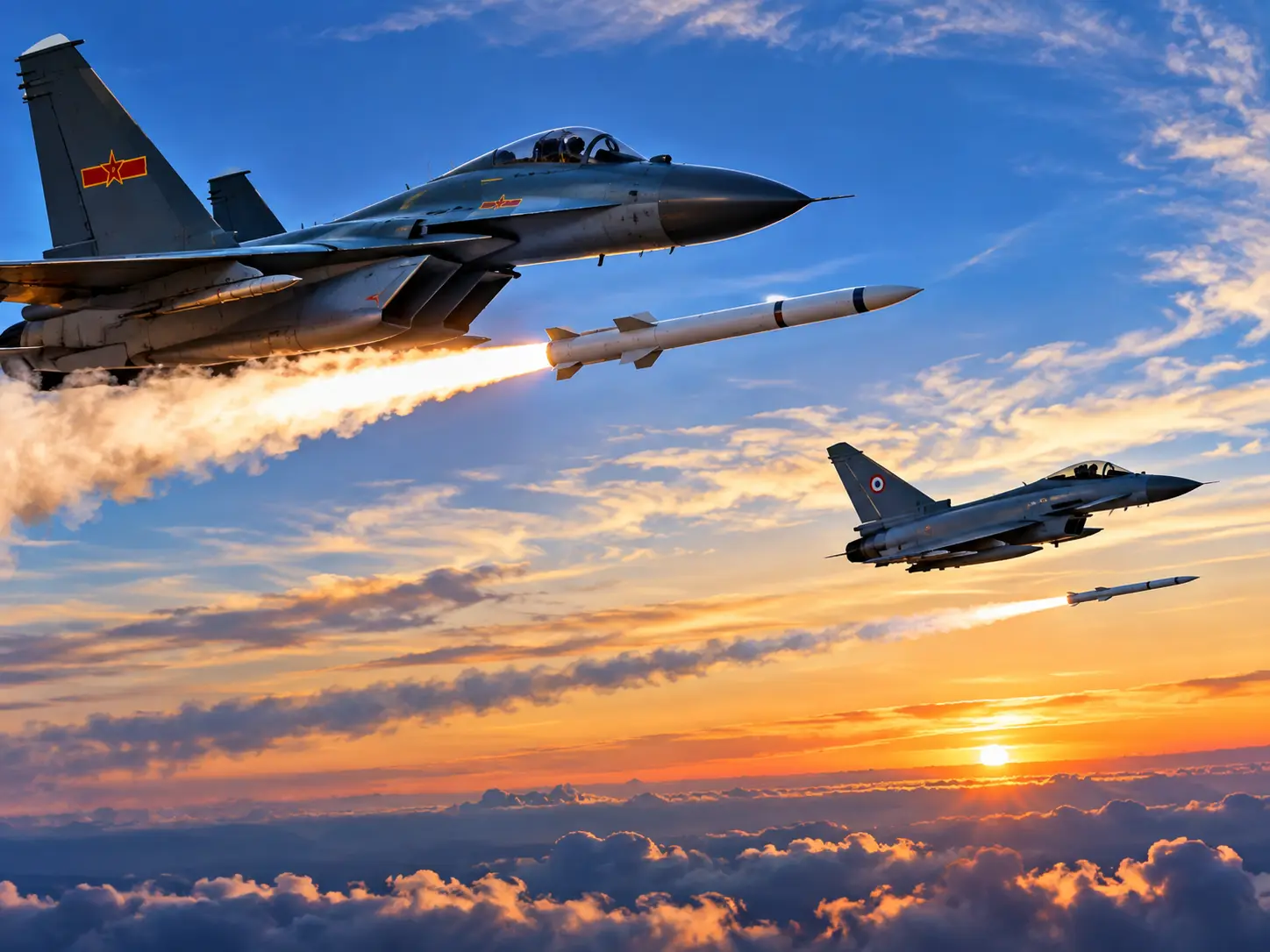
Why Chinese PL-15 air-to-air missiles use dual-pulse motors compared to European interceptors
)
Why going digital does not always mean becoming more efficient
)
800 million years old - Scientists discover 'fingerprints' of supercontinent Gondwana in ancient rocks
)
BRICS stitches climate into its trade and growth agenda, experts say
&im=FitAndFill=(700,400))
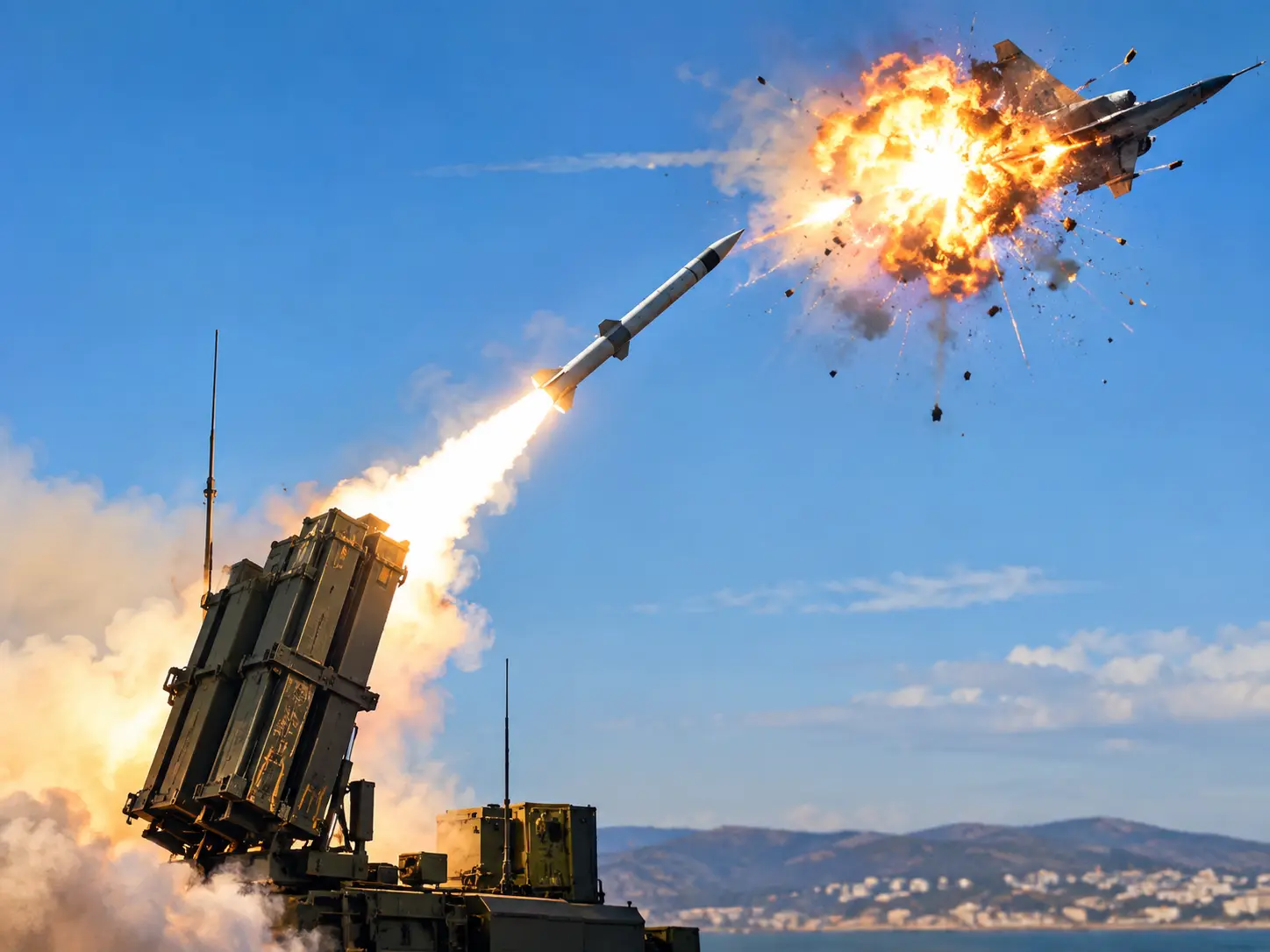
Why do air defence missiles explode near their target instead of hitting it?
)
Israel spent nearly $470,000 on PM's hair, makeup since 2019, data shows
)
From severe mobility problems to recovery: Madhuri the elephant’s journey of wildlife care
)
BRICS Summit day 1: New Delhi declaration adopted with full consensus, big diplomatic win for India
)
From India, Putin warns Europe against sending troops to Ukraine, Zelensky expresses willingness to meet him at G20 Summit
)
Did Iran President Pezeshkian touch feet of Hindu spiritual leader at Delhi event as shown in viral video?
)
9-year-old Chennai prodigy clears Cambridge IGCSE grade 10 exams
)
Why does your body need time to adjust after a long journey?
)
Baba Vanga's first prophecy for 2027 is out, and straight out of science fiction
)
Why does your skin need protection from UV rays?
)
How does the loss of forests affect the way wildlife lives and moves?
)
IND vs AFG, 1st T20I: When and where to watch live streaming in India?
)
BRICS Summit: China resumes Guangzhou-New Delhi flight, issues 'good-neighbourliness' remark ahead of Xi-Modi meet
)
Why do wild animals need quiet places to survive?
)
Humans may lose control of AI: Anthropic CEO calls for slowdown, Altman, Musk back him
For all his incredible achievements, Tolkien's works were said to be suffused with conscious or unconsciously racist. For instance, the elves in his writings were said to be wisest and fairest of all beings, the most perfect creations of Eru Ilúvatar. They were also literally the fairest. They were also morally perfect. The men, who were not so fair, were prone to evil. Same with dwarves, who many saw as a representation of the "gold-digging" trope that has been seen in fiction as a thinly-veiled reference to Jews. But races with darker skin, like orcs, were wholly evil and corrupt and violent, and had no redeeming qualities whatsoever.
But another school of thought, towards which I incline, argues that in Tolkien's stories characters were more defined by class rather than literal races. Also, that Tolkien at least did not intend racist divisions of races is illustrated by the fact that Tolkien could not decide on the origin of orcs. Were they an actual race? An artificial creation? We don't know, but no origin of orcs is 'canon'. It is said that Tolkien's worldview, derived from catholicism, could not fathom beings who did not have free will (if they were solely created to commit evil deeds, for instance). But neither could hundreds and thousands of them could choose to be evil, could they? Thus, Tolkien remained unable to solve the orc dilemma.
Tolkien's letter to a German publisher asking for evidence that he is not a jew
Even the harshest of Tolkien critics would agree that the themes of his stories did not align with a lot of xenophobic prominent Europeans of that time, including the British. That he was implacably against Nazism can be gleaned from a letter he sent to a German publisher who wanted to ensure Tolkien was not a jew.
He responded by saying, "Thank you for your letter. I regret that I am not clear as to what you intend by arisch. I am not of Aryan extraction: that is Indo-Iranian; as far as I am aware none of my ancestors spoke Hindustani, Persian, Gypsy, or any related dialects. But if I am to understand that you are enquiring whether I am of Jewish origin, I can only reply that I regret that I appear to have no ancestors of that gifted people. My great-great-grandfather came to England in the eighteenth century from Germany: the main part of my descent is therefore purely English, and I am an English subject — which should be sufficient. I have been accustomed, nonetheless, to regard my German name with pride, and continued to do so throughout the period of the late regrettable war, in which I served in the English army. I cannot, however, forbear to comment that if impertinent and irrelevant inquiries of this sort are to become the rule in matters of literature, then the time is not far distant when a German name will no longer be a source of pride. Your enquiry is doubtless made in order to comply with the laws of your own country, but that this should be held to apply to the subjects of another state would be improper, even if it had (as it has not) any bearing whatsoever on the merits of my work or its sustainability for publication, of which you appear to have satisfied yourselves without reference to my Abstammung."
The trouble with 'The Rings of Power'
'The Rings of Power' does not specifically adapt any of Tolkien's works. Instead, it expands upon the lore and world-building he did in the appendices attached 'The Lord of the Rings'. As the subtitle of this JD Payne and Patrick McKay creation suggests, the series is based on the forging of Rings of Power, and is thus set during the Second Age when Sauron was an individual and not a flaming eye he became in the Third Age. 'The Lord of the Rings', on the other hand, and Peter Jackson's immensely successful and multiple Academy Award-winning trilogy of movies, centred around the War of the Ring, when Frodo and his allies took on the might of the Dark Lord and destroyed the One Ring.
'The Rings of Power' has done the unpardonable sin of casting actors of colour in a few roles instead of white. It is another matter that a majority of the actors are still white. The biggest controversy has been generated by Ismael Cruz Córdova's Arondir, a silvan elf. Certainly, Tolkien was a man of his time and had prejudices that were common then. But he was still progressive for his time as he did not support the Nazism that many of his countrymen were doing. If were alive today his stories will surely be more diverse to represent the demographics in western countries.
Whining about actors of colour in Middle-earth adaptations is not just racist, it is also against the spirit of these stories in which multiple races come together to fight a common enemy,