Semicon 2.0: India pushes to build the chips powering its defence future

&imwidth=600&imheight=450&format=webp&quality=medium "Semicon 2.0: India pushes to build the chips powering its defence future")
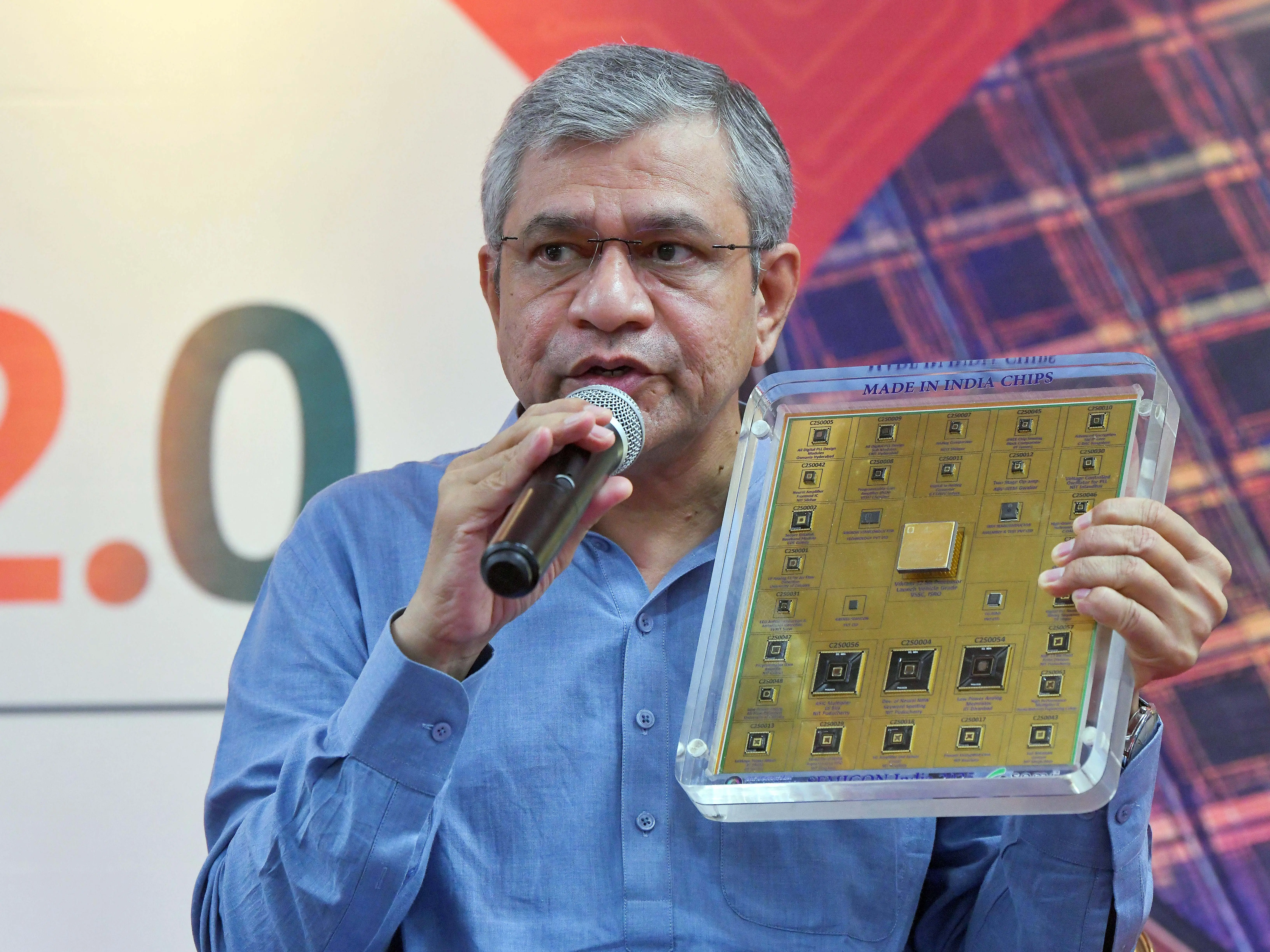
Union Minister for Electronics and Information Technology Ashwini Vaishnaw speaks during the launch of Semicon 2.0 at Rail Bhawan, in New Delhi on Monday. Photograph: (ANI)
The Semicon 2.0 scheme aims to strengthen India’s domestic semiconductor ecosystem and support the development of critical chips, sensors and components for next-generation defence systems.
India is accelerating efforts to build a domestic semiconductor ecosystem that could eventually provide the critical electronics, sensors and chips powering its next generation of defence systems.
The government notified the ambitious Semicon 2.0 scheme on August 31, 2026, with an outlay of ₹1.275 lakh crore. The programme seeks to expand India’s semiconductor ambitions beyond manufacturing by supporting the entire ecosystem, including chip design, equipment, materials, advanced packaging, research and skilled manpower.
The strategic implications extend well beyond the electronics industry. Modern drones, missiles, surveillance systems and other military platforms increasingly depend on sophisticated semiconductors and sensors for navigation, processing, targeting and autonomous functions.
Speaking on WION’s Defence Pulse, Rajendra Chodankar, Chairman and CEO of RRP Group of Companies, said India is moving towards addressing these critical requirements.
“India is making some bold steps,” Chodankar said, pointing to the expansion of the semiconductor programme. He said Semicon 2.0 promises wider coverage of “equipment, materials, training and skills”, helping create a broader domestic ecosystem.
India has developed considerable expertise in integrating complex systems, but Chodankar believes the next leap must happen at the component level.
“India is very good at system integration and assembly. When it comes to critical technologies, we need to really get into the component level,” he said, adding that sensors are particularly strategic.
Chodankar believes sustained focus over the next three years could significantly strengthen India’s ability to develop its own electronic chips.
Trending Stories
)
)
)
)
)
)
)
)
)
)
)
)
)
)
)
)
)
)
&im=FitAndFill=(700,400))
)
)
)
&im=FitAndFill=(700,400))
)
&im=FitAndFill=(700,400))
&im=FitAndFill=(700,400))
)
Under India’s first semiconductor programme, 12 manufacturing units have been approved involving investments exceeding ₹1.64 lakh crore, while Micron, Kaynes and CG Semi have begun commercial production. Twenty-four startup and MSME design projects have also received financial support.
For Chodankar, the next priority is clear: domestic component manufacturing and ownership of critical technologies.
“We need to have our own fabs,” he said. “Critical technologies at the component level are the need of the hour.”
For India’s defence sector, Semicon 2.0 could therefore become about much more than chips. It could help build the technological foundation for a more self-reliant generation of intelligent weapons and military systems.