Analysis: Is T20 format ruining Test cricket?

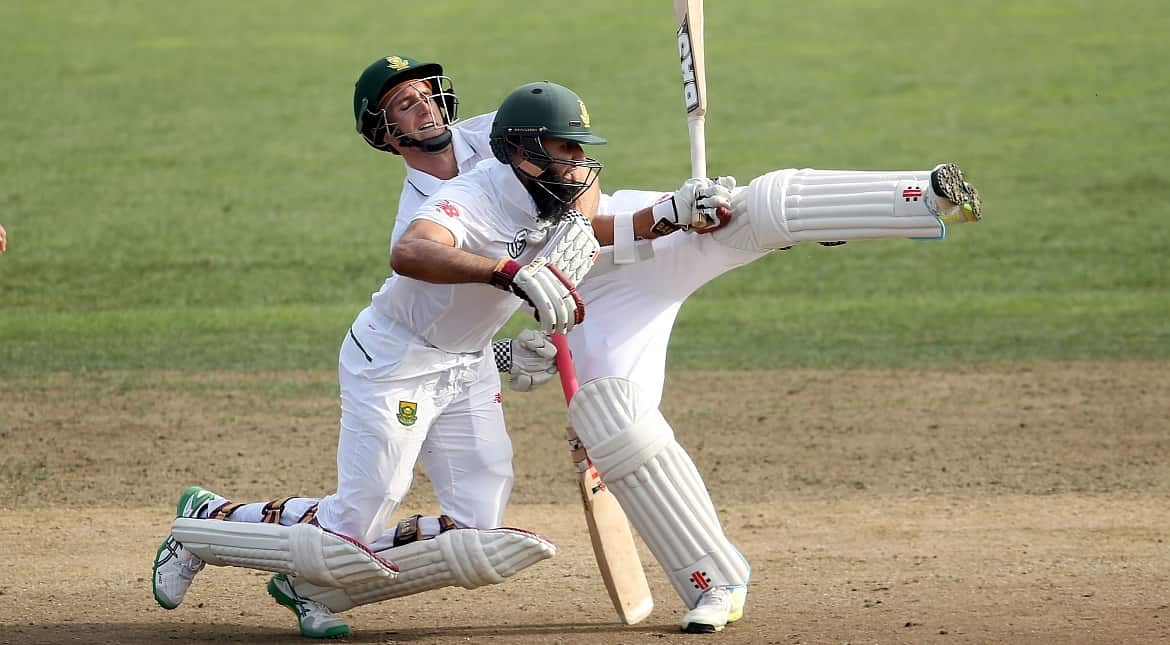
test cricket fumbles
With the Indian Premier League starting this week, we find out whether Twenty20 matches are changing the way cricketers play Test matches
The dust hasn't settled yet on India's 2-1 Test series win over Australia, butthe country's cricketers are already busy preparing themselves for another season of the Indian Premier League. With the huge number of Twenty20 (T20)matches being played nowadays, is it influencing the way cricketers play the longer format of Test cricket? We look at 25 years of Test cricket data to find out.
Fewer runs totals over 600
One way to see if there has been any effect is to look at the kind of runs totals teams are putting up in Test cricket now. Given how frenetic T20 matches are, are teams losing the capability and patienceto put up huge totals in Tests?


See data here.Source: Cricketarchive.com
Looking at the kind of runs totals Test-playing nations have been amassing in their first innings over the past 20 years, we see that the past five years, ie. 2012-2016, have seen only 15 runs totals over 600. This is a decline from the 24 runs totals over 600 in the previous five-year periods of 2002-2006 and 2007-2011.
)
What is Hyrox, in news for athlete who soiled herself, but kept running and using common equipment?
)
'Definitely feel bad for yourself': Kuldeep Yadav opens up on India Test snubs
)
Saudi turns to Israel for intelligence help as Houthi attacks intensify: Report
)
US Treasury yields cross 5% as Scott Bessent warns of ‘global issues’ impacting bonds
)
IND vs AFG, 2nd T20I: Reddy, Samson shine as India defeat Afghanistan by 7 wickets to clinch series
)
Amid AI safety fears, OpenAI, Anthropic and Google move to create standards body
)
A big shift in modern air power & control
&im=FitAndFill=(700,400))
New OTT releases this week (September 14-20, 2026): Lust Stories 3, Waiting Hai, Irumudi- 5 new titles coming on Netflix, Prime Video and more
)
Trump Calls AI Security Concerns A 'Hoax' | Verdict
)
471 years ago, a prophecy warned of 'immortal lone brain'. Some think it was about AI
)
‘We are sharing some difficult news’: Oracle begins fresh round of job cuts
)
UPI rule change: 0.4% MDR on merchant payments above ₹2,000; consumers unaffected
)
3 wild dogs, 1 epic journey: African brothers trek 4,000 km through Zambia to find a partner
)
800 million years old - Scientists discover 'fingerprints' of supercontinent Gondwana in ancient rocks
)
Exclusive - Directors of Declassified: Operation Sindoor reveal how they got Ajit Doval and what was the trickiest part
)
Trump's name cannot return to Kennedy Center, US judge rules
)
India’s imports from Russia jump 57% in five months; China remains top import source
)
Delhi schools receive bomb threats in Punjabi, security checks find nothing suspicious
)
‘US military task force aiding Saudi Arabia forces with intel, planning support’: Official
)
China's property crisis deepens as investment plunges nearly 20%
)
Russia proposes to build 360 kmph Ivolga FG trains in India: What happened on sidelines of BRICS
)
West Bengal IPS officer Bushra Bano transferred after objections to ‘Assalamualaikum’, ‘Inshallah’
)
1,200 Indian and US troops begin high-altitude and desert drills
&im=FitAndFill=(700,400))
Why European Meteor missiles use ramjet engines compared to standard US solid rockets
)
'She married her brother': Ilhan Omar faces criminal probe over immigration fraud claims
)
Spanish officer sent home from NATO base over affair with 'Russian spy' | Gravitas
)
Elephants hide behind trees, stage surprise attack on poachers targeting rhinos in South Africa
)
Who is Kalyan Bainsla, accused in the Gurugram hit-and-run case involving woman biker?
)
Ex-CIA officer caught with gold bars worth $40 million seeks plea deal | Gravitas
)
2026 El Niño will create new extreme weather patterns. Worse, no one can predict them
)
Saudi Arabia discovers 110 million tonnes of Uranium-rich ore in Madinah region
)
Top military commanders from US, Israel, and 7 Arab nations held secret meeting on Iran War
)
Extreme warming in Indian Ocean added 695 billion tons of ice to Antarctica ice sheet
)
Bitter Zelensky snubs Trump for playing politics with Ukraine war | Gravitas
&im=FitAndFill=(700,400))
Why Chinese PL-15 air-to-air missiles use dual-pulse motors compared to European interceptors
)
Imran Khan’s sons accuse Asim Munir of holding ‘personal grudge’ against imprisoned father
There is no way to be certain that this decline is down to T20 cricket but it'sworth asking the question.
Batsmen still putting up double-and triple centuries
Teams as a whole may be putting up lower runs totals, but that doesn't seem to have affected individual batsmen.

See data here.Source: Cricketarchive.com
Looking at how many times batsmen have scored a double-or triple century over the past 20 years, we see that the number has gone up over the past five years. It went up from 40 in 2007-2011 to 49 in 2012-2016.
The run rate has gone up
Let's look at this further by looking at the rate at which runs are being scored in Test matches. The assumption being that if the frenzy of T20 is creeping into Test cricket, than the run-rate would be higher than it was in the past.

See data here.Source: Cricketarchive.com
If we see how many runs are scored for every 90 overs, a team would score 293 runs in 2016, compared to 268 in 1991. The runs scored per 90 overshas gone up to around the 300-run markbut it's been that way since2002, a few years before T20 cricket started becoming popular.So this upward trend may not have much to do with the shorter format.
There are sixes more often now
Again, the logic is that if the T20 format is affecting batsmanship, we should see people more willing to take risks, be less conservativeand go for sixes in Test matches.

See data here. Source: Cricketarchive.com
So if we look at the frequency with which sixes are being scored, the data shows that in 2016, there was an average of one six every 44 overs. This is down significantly from 1992 when it was a six every 105 overs.
But the number of overs to see a six first went under 50 overs back in 2004, before T20 matches werebeing played internationally. So, again, the growth of T20 may not have much to do with how often we're seeing sixes now.
Wickets are falling more often
The idea is that if the T20 format is speeding up the pace of Test cricket, we should be seeing wickets fall more frequently now.

See data here.Source: Cricketarchive.com
In 2016, you would have to wait an average of around 10 overs to see a batsman getting out. This is down from the average of 12 overs back in 1993. But this figurefor the number of overs between dismissals has been around10 since the mid-1990s. So again, this trend may have little to do with T20 cricket.
Fewer batsmen are getting run out
So if Test cricket is getting more frenetic because of the impact of T20 cricket, we should be seeing more mix-ups between batsmen, more confusion and more run outs right?

See data here.Source: Cricketarchive.com
Not really, according to the data. The percent of dismissals that are run outs has actually gone down over the years. 4.4 % or around one in 25 dismissals was a run out back in 1999. In 2016, 2.6%, or around one in 40 dismissals was a run out.
Not as many maiden overs
Again the assumption is that if we're seeing more runs because of the influence of T20, we should be seeing fewer maiden overs being bowled.

See data here. Source: Cricketarchive.com
We are definitely seeing fewer maiden overs being bowled compared to the late 1990s. In 2016, 18.7% of overs bowled in test matches were maiden overs, compared to 25.5% in 2000. But here too, the downward trend started in 2004, when it first went under the 20% mark and came before the growth in T20 cricket.
Fewer test matches are being drawn
Another way to check if test cricket has been affected, is to look at whether Test matches havesped up so much that we areseeing fewer draws thanwe used to.

See data here.Source: Cricketarchive.com
That is certainly borne out by the evidenceas last year saw 15% of Test matches being drawn, the lowest percentage since 2002.
Conclusion
After looking at the data from these different angles, we can definitely say that test cricket has changed from 25 years ago. But whether these changesaredown to the growth in T20 cricket is open to debate.
(WION)