UK growth stalls in June as job cuts continue, inflation eases sharply

&imwidth=600&imheight=450&format=webp&quality=medium "UK growth stalls in June as job cuts continue, inflation eases sharply")
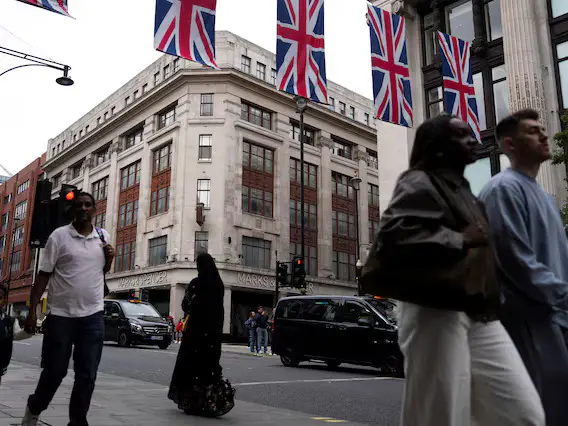
Pedestrians walk past the Marble Arch branch of British retailer Marks & Spencer Plc in central London, Britain, May 18, 2025. Photograph: (Reuters)
UK Composite PMI Output Index rose slightly to 50.7 in June from 50.3 in May signalling sluggish expansion of the economy and bolsters case for BoE rate cuts.
The UK economy showed only modest signs of growth in June, with the latest Flash Purchasing Managers’ Index (PMI) data pointing to stagnant activity, falling employment, and cooling inflation, reinforcing expectations that the Bank of England (BoE) will cut interest rates again as early as August. The HCOB Flash UK Composite PMI Output Index, compiled by S&P Global, rose slightly to 50.7 in June from 50.3 in May, barely above the 50.0 mark that separates expansion from contraction.
The figure suggests GDP growth of just 0.1 per cent for the second quarter, offering little momentum after April's contraction and keeping the economy firmly in a low-growth environment.
Weak demand, job cuts signal fragile outlook
Despite the uptick, the data painted a picture of broad-based weakness, particularly in employment and sentiment. UK businesses continued to shed jobs in June amid weak demand, higher costs, and low confidence. While the rate of job losses moderated slightly compared to earlier in the year, it remained significant, with companies citing efforts to cut costs in response to subdued activity and the lingering effects of higher staffing costs, such as National Insurance contributions and minimum wage increases introduced in last year’s budget.
The services sector showed a marginal improvement, helping to offset a continued decline in manufacturing output, which contracted for the eighth consecutive month. While new orders rose for the first time since November, the gain was minor, and export orders in services fell sharply, marking one of the steepest drops since the pandemic.
Business sentiment, which had rebounded slightly in May, deteriorated again in June, remaining well below the long-term average. Firms cited domestic policy uncertainty, geopolitical instability—particularly in West Asia—and concerns over US trade protectionism as key factors weighing on confidence.
Trending Stories
&imwidth=280&imheight=210&format=webp&quality=medium)
&imwidth=280&imheight=210&format=webp&quality=medium)
&imwidth=280&imheight=210&format=webp&quality=medium)
&imwidth=280&imheight=210&format=webp&quality=medium)
&imwidth=280&imheight=210&format=webp&quality=medium)
&imwidth=280&imheight=210&format=webp&quality=medium)
&imwidth=280&imheight=210&format=webp&quality=medium)
&imwidth=280&imheight=210&format=webp&quality=medium)
&imwidth=280&imheight=210&format=webp&quality=medium)
&imwidth=280&imheight=210&format=webp&quality=medium)
&imwidth=280&imheight=210&format=webp&quality=medium)
&imwidth=280&imheight=210&format=webp&quality=medium)
&imwidth=280&imheight=210&format=webp&quality=medium)
&imwidth=280&imheight=210&format=webp&quality=medium)
&imwidth=280&imheight=210&format=webp&quality=medium)
&imwidth=280&imheight=210&format=webp&quality=medium)
&imwidth=280&imheight=210&format=webp&quality=medium)
&imwidth=280&imheight=210&format=webp&quality=medium)
&imwidth=280&imheight=210&format=webp&quality=medium)
&imwidth=280&imheight=210&format=webp&quality=medium)
&imwidth=280&imheight=210&format=webp&quality=medium)
&imwidth=280&imheight=210&format=webp&quality=medium)
&imwidth=280&imheight=210&format=webp&quality=medium)
&imwidth=280&imheight=210&format=webp&quality=medium)
&imwidth=280&imheight=210&format=webp&quality=medium)
&im=FitAndFill=(700,400)&imwidth=280&imheight=210&format=webp&quality=medium)
&imwidth=280&imheight=210&format=webp&quality=medium)
&imwidth=280&imheight=210&format=webp&quality=medium)
&imwidth=280&imheight=210&format=webp&quality=medium)
&imwidth=280&imheight=210&format=webp&quality=medium)
&imwidth=280&imheight=210&format=webp&quality=medium)
&imwidth=280&imheight=210&format=webp&quality=medium)
&imwidth=280&imheight=210&format=webp&quality=medium)
&im=FitAndFill=(700,400)&imwidth=280&imheight=210&format=webp&quality=medium)
&imwidth=280&imheight=210&format=webp&quality=medium)
Inflation cools, strengthening rate cut case
Amid the economic malaise, there was a significant easing of inflationary pressures, particularly in the services sector. Selling price inflation dropped to its lowest level since February 2021, as companies faced intensified competition and resorted to heavier discounting. With price increases for manufactured goods also moderating, the PMI’s combined inflation gauge now suggests that consumer price inflation may be back near the BoE’s 2 per cent target. This cooling inflation backdrop, coupled with weak growth and ongoing job losses, has strengthened the case for further monetary easing. While the BoE held its key interest rate steady at 4.25 per cent at its June 19 meeting, three of the nine Monetary Policy Committee members voted in favour of a cut.
The bank has already cut rates four times since August 2024, and analysts expect two more cuts in 2025, likely in August and November, as policymakers attempt to stimulate a faltering economy without reigniting inflation.
“Near-stalled growth, a sharply cooling labour market, and fading inflationary pressure present a strong case for more easing,” said Chris Williamson, Chief Business Economist at S&P Global. “The June PMI data give the BoE room to move.”