Sipping success: Japan's whisky revolution pours a century of craft into global glasses

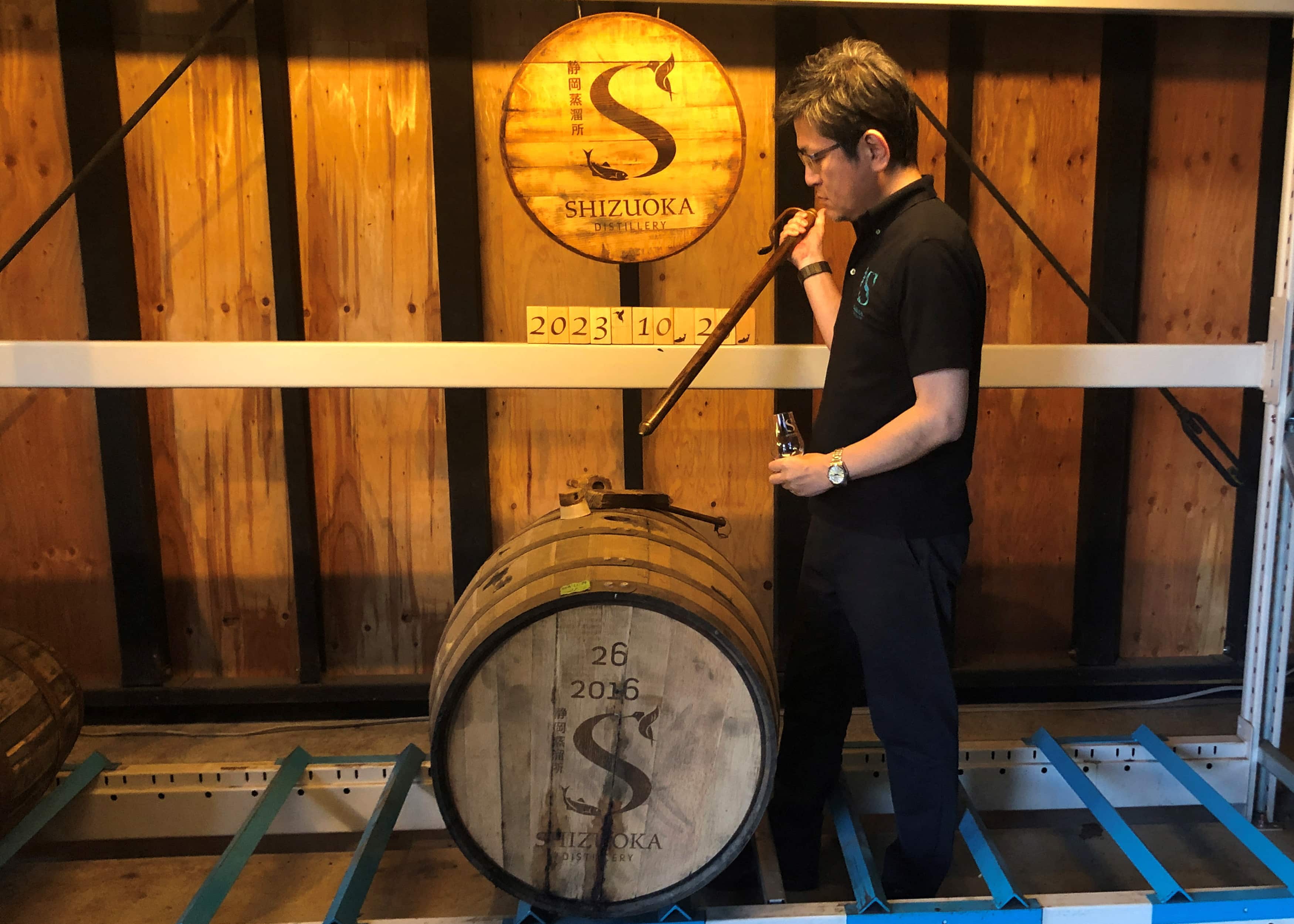
Taiko Nakamura samples whisky barreled
In the heart of Japan's Shizuoka region, Shizuoka Distillery stands as a pioneer in the country's burgeoning independent whisky movement. Fuelled by cedar from nearby forests, the distillery embraces innovation, including the world's only wood-fuelled blaze beneath a whisky still. As Japan commemorates a century of whisky making since Suntory's inception in 1923, the industry has exploded, boasting over 100 licensed distilleries – double the number a decade ago.
Crafting ambitions: A global journey
Inspired by a Scottish distillery, Taiko Nakamura founded Shizuoka Distillery in 2016 with a vision to share Japanese whisky globally. Despite their modest scale compared to industry giants like Suntory, smaller players like Nakamura's embrace world-class ambitions, contributing to the diversification of Japan's whisky landscape.

Craft boom and quality surge
The craft whisky surge in Japan catalysed around 2008, marked a shift from being perceived as Scotch imitators to international award-winners. By 2015, global demand outpaced supply, leading to soaring prices. Industry leaders Suntory and Nikka responded by investing billions to ramp up production, emphasising quality over quantity.
Welcoming new players: A harmonious blend
&imwidth=180&imheight=135&format=webp&quality=medium)
'Hell of a beautiful a**': Trump compliments Nicki Minaj as rapper joins him in Michigan rally
&imwidth=180&imheight=135&format=webp&quality=medium)
'Hire the robot, fire the human': Bill Gates's words hint at a bleak future
&imwidth=180&imheight=135&format=webp&quality=medium)
Israel elections: Record voter turnout in decades as Opposition edges ahead of Netanyahu in early projections
&imwidth=180&imheight=135&format=webp&quality=medium)
'You Still Can't...': Yuvraj mocks Abhishek Sharma after 35-ball 100 in 3rd T20I vs New Zealand
&imwidth=180&imheight=135&format=webp&quality=medium)
Delhi traders urge Rahul Gandhi to postpone INDIA bloc rally once again
&imwidth=180&imheight=135&format=webp&quality=medium)
Maurene Comey, daughter of ex-FBI director James Comey, was unlawfully fired as federal prosecutor, judge rules
&imwidth=180&imheight=135&format=webp&quality=medium)
‘After Breaking Bad, Prison Break has begun in Tamil Nadu’: Stalin turns sarcastic in slamming Vijay govt over Theni jailbreak
&imwidth=180&imheight=135&format=webp&quality=medium)
India invites Pakistan, along with other SCO member countries for SCO Civilisational Dialogue in Delhi
&imwidth=180&imheight=135&format=webp&quality=medium)
Hijack scare unfolds on United flight over suspicious text message. Here is what happened
&imwidth=180&imheight=135&format=webp&quality=medium)
Police called after 3-year-old scores 10 goals in 12 minutes at Florida youth soccer game
&im=FitAndFill=(700,400)&imwidth=180&imheight=135&format=webp&quality=medium)
New OTT releases this week (October 26-November 1, 2026): Baththa, Akka, The One About Matthew Perry- 7 titles coming on Netflix, Prime Video and more
&imwidth=180&imheight=135&format=webp&quality=medium)
Supreme Court seeks Centre's response to DNPA's challenge to DPDP Act
&imwidth=180&imheight=135&format=webp&quality=medium)
US weighs lifting sanctions on Russia’s state-backed investment fund after diesel deal: Report
&imwidth=180&imheight=135&format=webp&quality=medium)
'Already tired of his 9-to-5': Baby born with a moustache becomes internet sensation, video goes viral | Watch
&imwidth=180&imheight=135&format=webp&quality=medium)
‘Food poisoned by meat’: Trump mocks James Talarico over campaign absence, as former Texas Chief Justice endorses Democrat
&imwidth=180&imheight=135&format=webp&quality=medium)
Trump says he will accept midterm results ‘if they’re honest’, refers to his veto powers
&imwidth=180&imheight=135&format=webp&quality=medium)
Russia, Iran eye joint oil and gas projects as Pezeshkian, Putin hold talks in Moscow
&imwidth=180&imheight=135&format=webp&quality=medium)
US midterms 2026: Trump says Venezuela could ‘maybe someday soon’ become 51st US state, calls Venezuelan oil shipment a ‘gift'
&imwidth=180&imheight=135&format=webp&quality=medium)
Storm Boelo’s fierce winds push passenger plane onto grass in UK, terrifying landing caught on cam
&imwidth=180&imheight=135&format=webp&quality=medium)
Brazil's Flavio Bolsonaro flees to US after presidential election defeat to Lula
&imwidth=180&imheight=135&format=webp&quality=medium)
52 years later, DNA evidence links serial killer Ted Bundy to 1974 murder of 17-year-old
&imwidth=180&imheight=135&format=webp&quality=medium)
Democrats allege 'desperate efforts to cover up' Trump's involvement in Jeffrey Epstein sex crimes, release 50-page report
&imwidth=180&imheight=135&format=webp&quality=medium)
'Complete lack of confidence' in Netanyahu, says Eisenkot after Opposition leads in exit polls; Arab parties make gains
&imwidth=180&imheight=135&format=webp&quality=medium)
'She is a beautiful woman': Trump mocks Mexican President Sheinbaum, mimics her voice at US Midterms rally
&imwidth=180&imheight=135&format=webp&quality=medium)
Mitchell Starc leads Australia’s fightback with six-wicket haul on day 1 of Cape Town Test
&imwidth=180&imheight=135&format=webp&quality=medium)
France protests: Demonstrators may pay up to €10,000 for riot damage under new bill
&imwidth=180&imheight=135&format=webp&quality=medium)
'I've done my work sincerely': AR Rahman on facing backlash over Ramayana soundtrack
&imwidth=180&imheight=135&format=webp&quality=medium)
Uganda arrests its 'worst serial killer and cannibal' who hacked 38 people to death
&imwidth=180&imheight=135&format=webp&quality=medium)
Israel elections 2026: What happens if Netanyahu loses | Gravitas
&imwidth=180&imheight=135&format=webp&quality=medium)
'Shove that ballroom up your a**': Trump heckled at Mississippi rally over White House ballroom renovations | WATCH
&imwidth=180&imheight=135&format=webp&quality=medium)
'This is America. Back up': Shouting match breaks out between US and Cuban officials at UN | WATCH
&imwidth=180&imheight=135&format=webp&quality=medium)
Trump accused of 'brutal' rape by ex-Miss Switzerland; Beatrice Keul alleges 'Don's best friend' Epstein facilitated assault in 1993
&imwidth=180&imheight=135&format=webp&quality=medium)
Syria and Jordan vow to maintain good relations following deadly strikes over church attack
&imwidth=180&imheight=135&format=webp&quality=medium)
Israel polls: Highest early turnout since 1973; Netanyahu’s Likud alleges fraud, ‘attempt to steal’ election
&imwidth=180&imheight=135&format=webp&quality=medium)
'He is a red flag': Ex-India strength and conditioning coach on Rohit's fitness regime
Chief blender Shinji Fukuyo of Suntory welcomes the influx of new distillers, offering guidance to startups, and highlighting the collective goal of maintaining and improving Japanese whisky's overall quality. Foreign investments, such as Diageo's stake in Komasa Kanosuke Distillery, further highlight the industry's global appeal.
Regulating success: Japanese whisky standards
Recognising the need to preserve the integrity of Japanese whisky, the Japan Spirits & Liqueurs Makers Association implemented new labelling standards in 2021. While non-legally binding, these guidelines require adherence to specific production criteria, ensuring authenticity. This move aims to prevent poor-quality products from tarnishing Japan's whisky reputation.
From tradition to regulation: Guiding principles
To be labelled Japanese whisky, certain criteria must be met, including the use of malted grains, Japanese water extraction, in-country saccharification, fermentation, and distillation, maturation in Japanese wooden casks for at least three years, bottling in Japan at a minimum strength of 40% ABV, allowance of plain caramel colouring, and restrictions on labelling references to Japan.
Historical roots and global growth
Japanese whisky traces its origins to 1923 when Masataka Taketsuru and Shinjiro Torri embarked on a journey to master whisky making. Today, with around 24 distilleries, Japan ranks as the fourth-largest whisky producer globally. The industry's global market size reached $600.2 million in 2020, with projections of a 9.4% CAGR by 2025.
Popularity soars: A global whisky phenomenon
Japanese whisky's popularity skyrocketed internationally, driven by factors like the emphasis on master blenders, iconic movie moments, and numerous awards. Japan, now the fourth-largest whisky producer globally, has witnessed surging demand, particularly in the Asia-Pacific region, France, China, the U.S., and the Philippines.
Crafting the future of Japanese whisky
As Japanese whisky continues its global ascent, the industry faces challenges and opportunities. With a commitment to quality, adherence to new standards, and a rich history blending tradition with innovation, Japan's whisky makers are poised to shape the future of this beloved spirit on the world stage.
WATCH WION LIVE HERE