Meta's stock falls as higher AI spending, modest revenue forecast disappoint investors


A logo of Meta Platforms Inc
Meta Platforms, the parent company of Facebook and Instagram, faced a downturn in its stock value on Wednesday as it revealed projections of increased expenses and revenue figures below market expectations.
According to Reuters, the announcement prompted a loss of about $200 billion in its market capitalisation, with shares falling by approximately 15 per cent in after-hours trading.
This decline saw Meta's market cap plummet to around $1 trillion, noting one of the most substantial single-day losses in market value for a US company.

The drop was slightly away from the record set on February 3, 2022, when Meta suffered a $232 billion one-day loss.
Meta's discouraging performance rippled through the tech industry, with shares of Alphabet and Microsoft also experiencing declines in extended trade.
Concerns increased among investors that the growing costs associated with the race in artificial intelligence (AI) might be outweighing the projected benefits for these tech giants.
&im=FitAndFill=(700,400)&imwidth=180&imheight=135&format=webp&quality=medium)
‘0-100km/h in 1 second Tesla Roadster’: Why tyre grip becomes a problem when cars accelerate this fast
&imwidth=180&imheight=135&format=webp&quality=medium)
Up to 1 million satellites in orbit? the space race raising questions about who controls space
&imwidth=180&imheight=135&format=webp&quality=medium)
US sanctions Cuban state-owned bank BICSA over alleged financial links to Iran
&imwidth=180&imheight=135&format=webp&quality=medium)
Majid Majidi's new film Midday Meal takes top prize at Asia's biggest film festival
&imwidth=180&imheight=135&format=webp&quality=medium)
Russian woman and Bihar boy's love story goes viral after she reaches India to marry him
&imwidth=180&imheight=135&format=webp&quality=medium)
Arijit Singh 9-city India stadium tour to start from January: Check venue and ticket prices
&imwidth=180&imheight=135&format=webp&quality=medium)
'A new space debris solution for global customers’: Samtel CEO Puneet Kaura on India-Japan partnership
&imwidth=180&imheight=135&format=webp&quality=medium)
Billy Joel's health update: Why the singer can't drive or perform right now?
&imwidth=180&imheight=135&format=webp&quality=medium)
Ukraine blinded: Musk deflects blame on Trump, Putin sharpens attack | Gravitas
&imwidth=180&imheight=135&format=webp&quality=medium)
Oregon school shooting: 16-year-old identified as suspect after at least four killed, including three children
&imwidth=180&imheight=135&format=webp&quality=medium)
Who is Abu Dhabi royal Mahrah Al Nahyan, found unconscious on London street with toddler after cocaine use
&imwidth=180&imheight=135&format=webp&quality=medium)
US-Iran War: Trump eyes mother of all bombs; Iran in crosshairs

Not Khan but Pal: Why did Imran Khan choose his mother's surname over his father's? Family tree explained
&imwidth=180&imheight=135&format=webp&quality=medium)
Russia-Ukraine War: Putin vows retaliation against Ukraine
&imwidth=180&imheight=135&format=webp&quality=medium)
'Turns out the future does have flying cars': Musk's Tesla unveils 'flying' sports car with SpaceX technology | Watch
&imwidth=180&imheight=135&format=webp&quality=medium)
‘He told me clearly...’: Yuzvendra Chahal reveals why Rohit Sharma dropped him from India’s 2023 WC squad
&imwidth=180&imheight=135&format=webp&quality=medium)
Australian woman charged for adding snail poison to lover's curry at work
&im=FitAndFill=(700,400)&imwidth=180&imheight=135&format=webp&quality=medium)
Inside the Peshawar school tragedy: 34 dead, building's condition under scrutiny and owner arrested. Here's what all happened
&im=FitAndFill=(700,400)&imwidth=180&imheight=135&format=webp&quality=medium)
‘No traffic jams for Tesla owners’: How Elon Musk’s new flying car is different from regular cars?
&imwidth=180&imheight=135&format=webp&quality=medium)
‘My president, I mean my husband’: Trump's new press secretary Katie Zacharia's first briefing goes off the rails in 14 minutes
&im=FitAndFill=(700,400)&imwidth=180&imheight=135&format=webp&quality=medium)
World's 7 most innovative countries in 2026 REVEALED: Did India make the list? | In Pics
&imwidth=180&imheight=135&format=webp&quality=medium)
Trump says Zelensky 'not a good guy' amid fresh Russia-Ukraine tensions | Watch video
&imwidth=180&imheight=135&format=webp&quality=medium)
Earthquake measuring 7 magnitude strikes Russia’s Kamchatka Peninsula
&imwidth=180&imheight=135&format=webp&quality=medium)
Was Trump in danger at Alaska rally? Viral video shows Secret Service agents reacting
&imwidth=180&imheight=135&format=webp&quality=medium)
'Will stand with Pakistan in case of war with US': Rajasthan BJP chief's remark sparks row
&imwidth=180&imheight=135&format=webp&quality=medium)
US midterms 2026: FBI investigates suspicious mailings containing 'unknown substance' sent to election offices
&imwidth=180&imheight=135&format=webp&quality=medium)
Durga Puja 2026: Kajol kicks of celebrations along with mother Tanuja, sister Tanishaa and cousin Ayan Mukerji
&im=FitAndFill=(700,400)&imwidth=180&imheight=135&format=webp&quality=medium)
Inside Tesla's Roadster: 10 features of Elon Musk's 'flying car' that push the limits of electric vehicles | In Pics
&imwidth=180&imheight=135&format=webp&quality=medium)
India’s naval priorities: Ex-Navy Chief calls for third aircraft carrier, more warships and submarines
&imwidth=180&imheight=135&format=webp&quality=medium)
Netanyahu defies Trump, blocks Gaza military base for Board of Peace | Gravitas
&imwidth=180&imheight=135&format=webp&quality=medium)
Saudi Arabia executes Two Bangladesh nationals over immoral act
&im=FitAndFill=(700,400)&imwidth=180&imheight=135&format=webp&quality=medium)
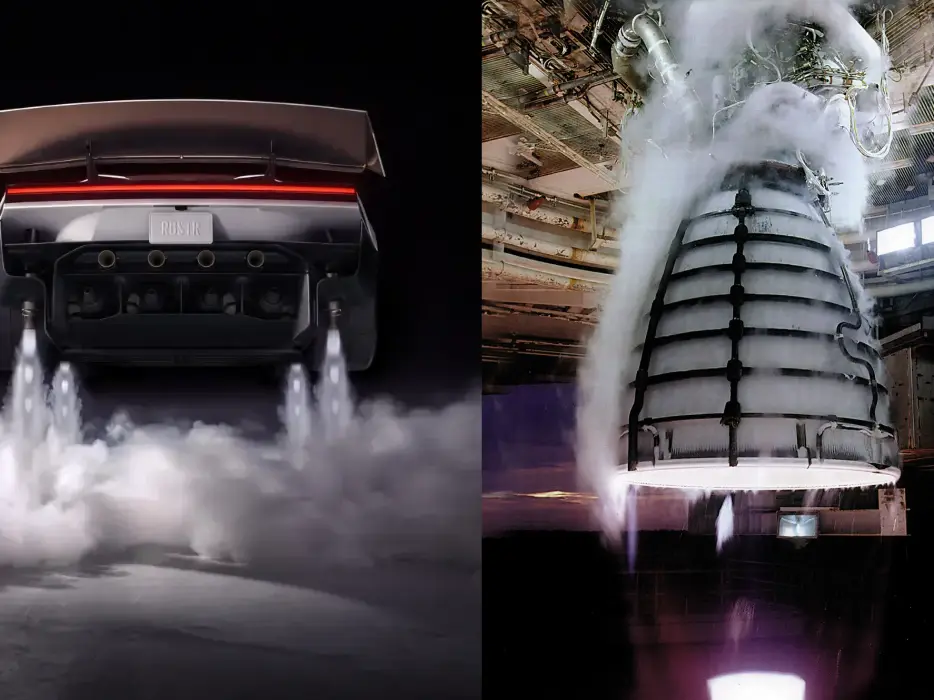
Tesla Roadster's thrusters vs rocket engines: What's the difference?
&imwidth=180&imheight=135&format=webp&quality=medium)
Mumbai: CJP brings Tricolour protest to Azad Maidan after weeks of demonstrations

US ends automatic work permit extensions; Indian workers lose 540-day safety net: What it means
&imwidth=180&imheight=135&format=webp&quality=medium)
'Ukraine must get all it needs to protect civilians and infrastructure': Macron
&imwidth=180&imheight=135&format=webp&quality=medium)
Portland stabbing: Multiple people reportedly stabbed hours after deadly Bend school shooting
&im=FitAndFill=(700,400)&imwidth=180&imheight=135&format=webp&quality=medium)
New Friday OTT releases (October 16, 2026): DC, Sacrifice, Aasha- 6 new movies and TV shows coming on Netflix, Zee 5, Prime Video and more
This apprehension comes ahead of Alphabet and Microsoft's financial reports scheduled for Thursday.
The company disclosed its revenue forecast for the April-June quarter, estimating it to range between $36.5 billion and $39 billion, with a midpoint of $37.8 billion.
However, these figures fell short of analysts' projections, which averaged at $38.3 billion.
Meta attributed the anticipated increase in expenses to support investments in new AI products and the requisite computing infrastructure.
Moreover, it indicated a continued upward trajectory in spending into the next fiscal year, with the total expense forecast for 2024 raised to $96 billion-$99 billion.
Additionally, Meta adjusted its 2024 capital expenditure projection to a range of $30 billion-$40 billion, up from the previous estimate of $35 billion-$37 billion.
CEO Mark Zuckerberg highlighted the company's quest to expand its investment portfolio in AI, acknowledging that these endeavours would precede substantial revenue generation from the new products.
Mark Zuckerberg's remarks and the quarterly results tempered the optimism surrounding Meta's AI ventures, especially after a string of highly successful quarters for the social media giant.
While the company's AI investments hold significant potential, investors remain cautious, wary of the extended timeline for returns on these investments.
However, analysts note that Meta's entrenched user base across its existing platforms could provide a competitive edge in the AI landscape, particularly concerning eventual monetisation through its advertising ecosystem.
Despite the focus on advancing AI technologies, Meta continues to enhance its advertising capabilities, incorporating AI tools and short video formats to drive revenue growth.
However, analysts caution that Meta must not neglect its core advertising activities amidst its ambitious AI initiatives.
The company's Reality Labs division, oriented towards the metaverse, fell short of expectations in the first quarter, recording sales of $440 million.
While this represented a 30 per cent increase year-on-year, it failed to meet the anticipated revenue of $475 million.
Additionally, Reality Labs incurred a loss of $3.8 billion in the quarter, on track to match the $16 billion loss incurred over the course of 2023.
Zuckerberg outlined potential monetization strategies for Meta's AI chatbot, including its integration into business messaging and customer support services.
Furthermore, Meta stands to potentially benefit from regulatory pressures on its competitor TikTok, which faces the prospect of a US ban.
However, Meta's CFO Susan Li refrained from assessing the business impact of this development on its rival.
Despite the market's reaction to its projections, Meta released a first-quarter revenue of $36.5 billion, in line with expectations.
The company's daily active people (DAP) metric, used to track unique users across its apps, grew by 7 per cent, slightly lower than the 8 per cent growth recorded in the preceding quarter.
Meta also opted to disclose only the DAP figure for user growth, foregoing the previous practice of breaking out numbers for its flagship social network Facebook.
(With inputs from Reuters)