Iron ore dips from 5-month high on supply, China steel policy under lens

&imwidth=600&imheight=450&format=webp&quality=medium "Iron ore dips from 5-month high on supply, China steel policy under lens")
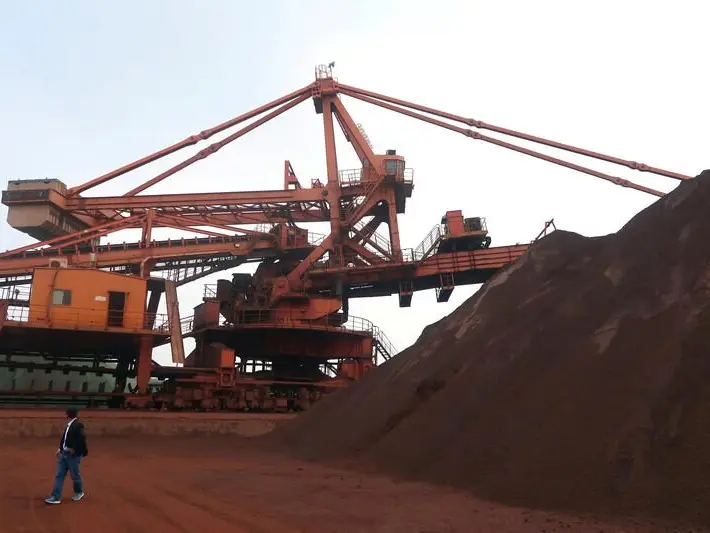
A man walks by an iron ore blending site at Dalian Port, Liaoning province, China Photograph: (Reuters)
Global iron ore prices declined on Wednesday, retreating from a five-month peak due to increasing supply from Brazil's Vale SA and shifting demand signals from China.
Global iron ore prices eased on Wednesday, pulling back from a five-month high, as investors responded to rising supply from Brazil’s Vale SA and weighed shifting demand signals from top importer China. In Singapore, iron ore futures dropped to $104.25 per tonne, after falling as much as 1.6 per cent earlier in the day.
This comes after a sharp rally over the previous two sessions, when prices surged more than 4 per cent, driven in part by optimism around China’s infrastructure push, including a massive dam project in Tibet. However, fresh supply-side data and regulatory noise have now tempered those gains.
Vale output surges
Brazil’s mining giant Vale SA reported that it had produced 83.6 million tonnes of iron ore in the April–June quarter, its highest second-quarter output since 2021. The company noted that although production was up, sales lagged behind output, prompting it to offer a wider mix of ore grades to match varied market demand amid stressed steelmaker margins.
Australia’s Fortescue Ltd., another major global supplier, is due to report its production numbers on Thursday, adding further market anticipation around global supply trends.
China’s steel sector in flux
Trending Stories
)
)
)
)
)
)
)
)
)
)
)
&im=FitAndFill=(700,400))
)
)
)
)
&im=FitAndFill=(700,400))
)
)
)
)
)
)
)
)
)
)
)
)
)
)
)
)
)
)
)
Despite July’s modest gains, iron ore is still recovering from a prolonged five-month slide. Prices had tumbled earlier this year due to a combination of weak Chinese construction activity, high port inventories, and tighter financing for property developers.
But Beijing has since signalled a shift in tone. Authorities are pushing for supply-side reforms in the steel sector, which could boost mills’ profitability and, by extension, raw material prices. At the same time, however, these reforms include curbs on overproduction, a policy that may end up dampening overall iron ore demand.
“Policy signals point to renewed supply restrictions,” wrote Bloomberg Intelligence analysts including Michelle Leung. They noted that daily average crude steel output in China may “keep falling,” continuing a decline seen in early July. Iron ore’s trajectory now hinges on how these opposing forces play out: greater regulatory discipline and fiscal stimulus versus weaker actual steel production.
Steel and coal under pressure
In Shanghai, futures for rebar and hot-rolled coil, key finished steel products also fell in tandem with iron ore. Meanwhile, coking coal futures spiked in Dalian, after Chinese regulators vowed to crack down on overproduction, echoing their efforts in the steel sector.
With both supply and policy dynamics in flux, traders are likely to remain cautious.
(With inputs from the agencies)