
&imwidth=800&imheight=600&format=webp&quality=medium "'For Rs 250 per hour': How Indians are selling their future to American AI companies")
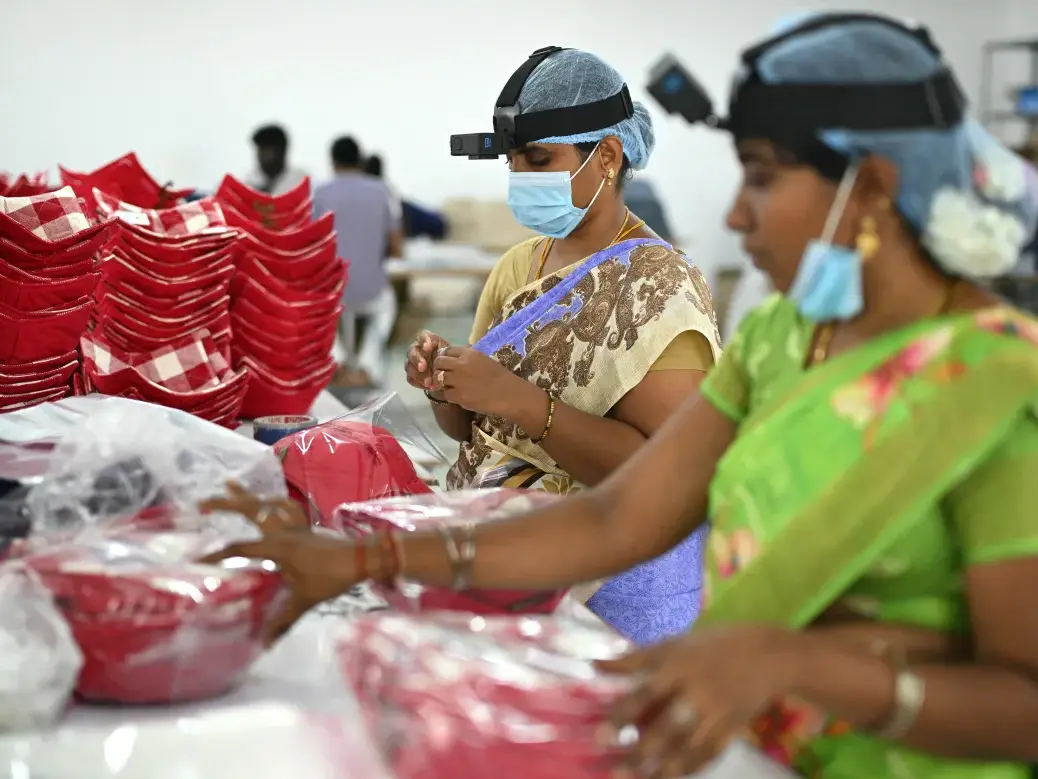
Every time a chatbot gives a polished answer or a humanoid robot demo goes viral, there's an invisible workforce behind it - and increasingly, a large part of that workforce is in India. For wages that can work out to just a couple of dollars an hour, Indian workers are doing the repetitive, unglamorous labour of labelling data, correcting AI outputs, and even acting out tasks on camera so robots can learn to mimic them.
A Booming But Invisible Industry
India's data annotation industry has grown explosively - from roughly $250 million in 2020-21 to a market expected to cross $7 billion by 2030. That growth is being driven almost entirely by demand from US AI labs, which need vast amounts of human-labelled data to train and fine-tune their models. The work itself is mundane: tagging images, transcribing audio, rating chatbot responses, and flagging errors - millions of small tasks that, stitched together, make large AI models usable.

The Wage Gap Is Stark
While American annotators working on similar tasks for the same companies have reportedly earned between $15 and $25 an hour, workers in India, Kenya, the Philippines and Venezuela doing comparable work have been paid as little as $1 to $3 an hour - a figure that, converted, lands in the range of roughly Rs 100 to Rs 250 an hour. Major US AI labs rarely hire these workers directly; instead, they go through specialist contracting platforms, which in turn route the work to whichever country offers the cheapest labour at any given time. If workers in one country push back on pay, the platforms simply shift the work elsewhere - keeping wages low and workers replaceable.
Training The Robots That Could Replace Them
Trending Stories
)
Why asking questions could be more important than memorising answers
)
Did India risk its US trade deal despite softer stance at BRICS?
&im=FitAndFill=(700,400))
How 2nm technology improves iPhone performance
&im=FitAndFill=(700,400))
Shahid Kapoor to Rajkummar Rao: Actors who rule both theatres and OTT
)
BRICS Summit 2026: Trump wants to weaken BRICS, but maybe doing the opposite
&im=FitAndFill=(700,400))
Meet top 5 batters fastest to 3000 runs in T20Is
)
Did BRICS Summit 2026 prove that an 11-member bloc with India and China in it can still agree on key issues?
)
Top 5 places to visit in Goa beyond its famous beaches
)
Delhi’s balancing act: BRICS serves as a stage for West Asia diplomacy
&im=FitAndFill=(700,400))
Why European Meteor missiles use ramjet engines compared to standard US solid rockets
)
'He is popular...': Malaysian PM Anwar Ibrahim's praise for PM Modi during bilateral meeting | WATCH
)
Iran, India agree to deepen humanitarian and political ties, President Pezeshkian says
)
‘Want to reset ties with India, have engagement based on mutual interests,’ says Bangladesh minister
)
BRICS Summit 2026: PM Modi, Xi reach key consensus on ties, China to assume BRICS chairmanship in 2027
)
UK breakup on the cards? Scotland, Wales and Northern Ireland push for independence
)
Russia-Ukraine-US talks in October? Kremlin says not ruling out possibility of trilateral
)
Trump says Canada eager to reach a deal, it could come ‘fairly soon’ if Ottawa treats US farmers better
)
The Verdict | Africa is too big to remain a guest at the BRICS table
)
‘Partners, not rivals’: Xi outlines four point plan for stronger India-China ties
&im=FitAndFill=(700,400))
Why Chinese PL-15 air-to-air missiles use dual-pulse motors compared to European interceptors
)
'It’s going to be a war': Ben Shelton on facing Zverev in US Open title clash
)
NATO under Russian threat? Drone strikes just 2 km from Poland, narrow escape for former UK PM, CIA chief
)
Trump defends Lincoln Memorial pool amid NYT report blaming renovation flaws, not vandalism
)
BRICS Summit: New Delhi declaration adopted with full consensus, big diplomatic win for India
)
800 million years old - Scientists discover 'fingerprints' of supercontinent Gondwana in ancient rocks
)
Russian drone hits Warsaw-bound train near Polish border, Zelensky accuses Moscow of ‘deliberate’ targeting
)
War is making Russia stronger? How Ukraine is shaping Moscow’s next generation of weapons
)
BRICS Summit 2026: Russia-India-China grouping never formalised
)
9-year-old Chennai prodigy clears Cambridge IGCSE grade 10 exams
)
Indian importers urge Bangladesh to lift export ban on 'Hilsa' fish ahead of Durga Puja
)
Humans may lose control of AI: Anthropic CEO calls for slowdown, Altman, Musk back him
)
US diplomat accused of possessing child abuse images secretly flown out of UK by US Marines
)
BRICS Summit 2026: Modi-Xi moment highlights India-China thaw at BRICS
)
Why does your skin need protection from UV rays?
)
PM Modi and China's Xi offered to help resolve Russia-Ukraine war: Kremlin
)
Akram, Afridi, Mushtaq tear into PCB after Pakistan’s Test series collapse in UK
Perhaps the most striking part of this story is the newest frontier: humanoid robots. Companies have begun hiring Indian workers - often in factory settings - to wear lightweight cameras and perform everyday tasks, generating ‘egocentric’ video data that is then used to teach robots how to do that same work. One such operation, Egolab.AI - whose India arm is based in Bengaluru - partners with factories across the country, including garment manufacturers, to collect this kind of footage from workers for robotics projects worldwide. In effect, some workers are now being paid small sums to record themselves doing the jobs that the resulting AI and robotics systems may eventually be used to automate.
No Safety Net, Constant Surveillance
Most of these workers are classified as independent contractors rather than employees, which means they fall outside standard protections like minimum wage enforcement, paid leave, or severance. India's existing labour laws, including the Code on Wages, were not designed for piece-rate, task-by-task digital work and struggle to regulate it. On top of low pay, workers describe intense surveillance - every click, keystroke and submission tracked - and a constant fear of being silently removed from a platform for a single mistake, with no manager or appeals process to turn to.
The Bigger Picture
AI companies in Silicon Valley are valued in the hundreds of billions of dollars, built in large part on the unglamorous, low-paid work happening in places like India. As India positions itself as a hub for the global AI economy - with government summits, mega data centre deals and ambitious adoption targets - this other side of the story rarely gets the same spotlight: a growing number of Indians whose daily work is to make foreign AI systems smarter, faster and more capable, often for a fraction of what the same work pays elsewhere in the world.
