Honda heralds revolutionary battery technology to double EV range

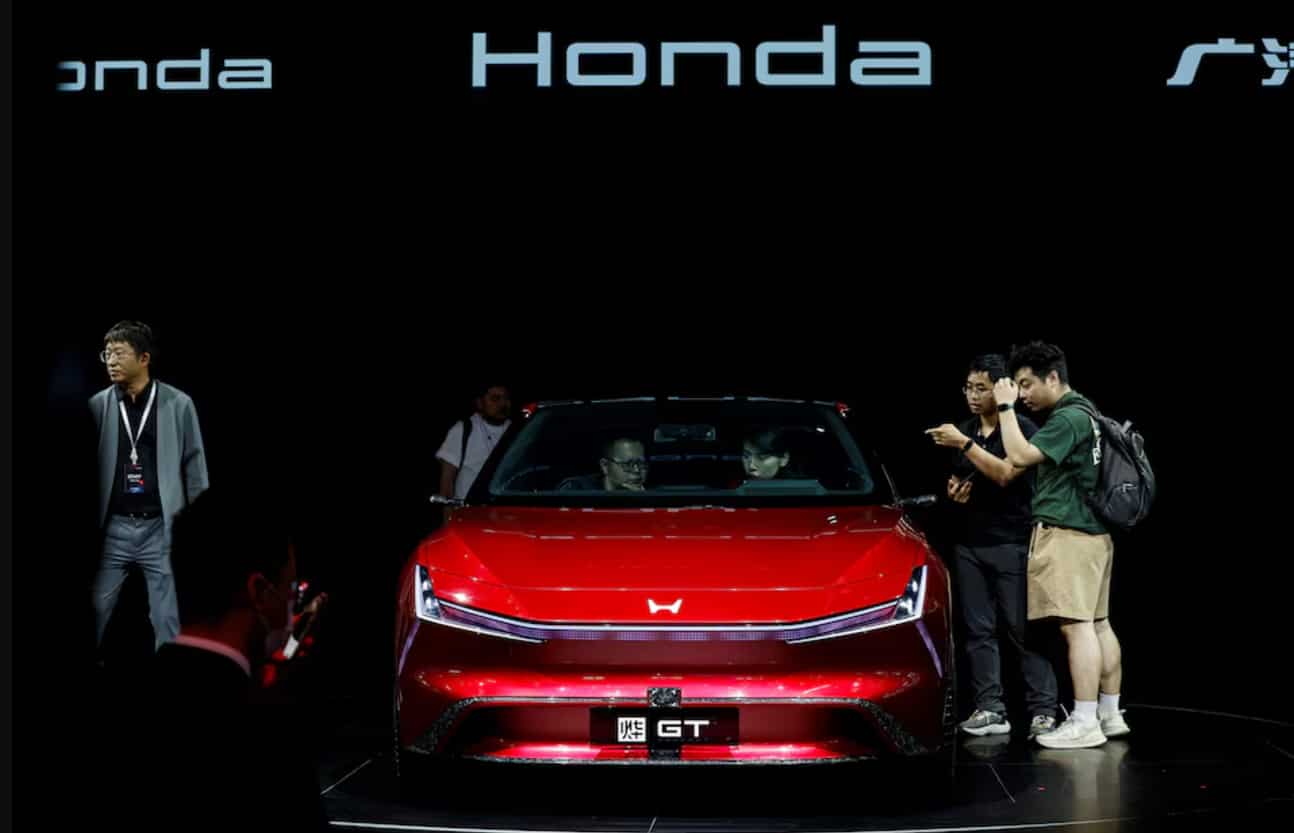
Honda EV
Honda Motor has revealed ambitious plans to dramatically enhance the driving range and efficiency of its electric vehicles through pioneering all-solid-state battery technology.
Keiji Otsu, President of Honda R&D, disclosed at a press conference near Tokyo that the automotive manufacturer aims to double the driving range of its electric cars by the late 2020s through the implementation of this innovative battery technology. The development represents a potential quantum leap in electric vehicle capabilities, with projections suggesting an even more impressive 2.5-fold range increase by the 2040s.
The company is making substantial investments to bring this technological breakthrough to fruition, committing 43 billion yen (approximately £277 million) to establish a pilot production line in Tochigi, northern Japan. Notably, nearly half of this investment is supported by Japanese government subsidies, underscoring the national strategic importance of advanced battery technologies.

Set to commence operations in January, the pilot production line represents more than just an incremental improvement. Otsu outlined ambitious targets that extend beyond range enhancement, including a 50% reduction in battery size, a 35% weight reduction, and a 25% cost decrease within the next five years.
This technological innovation arrives at a critical juncture for the electric vehicle market. Global automotive manufacturers and battery suppliers have been actively pursuing solid-state battery development as a potential solution to current limitations in EV technology. The new technology promises to address key challenges such as battery longevity, safety, and affordability at a time when electric vehicle growth is showing signs of deceleration.
"It's a game-changer of the EV era," Otsu emphatically stated, highlighting the transformative potential of the technology. The all-solid-state batteries are set to replace traditional liquid-state lithium-ion batteries, offering a fundamentally different approach to energy storage in electric vehicles.
&imwidth=180&imheight=135&format=webp&quality=medium)
'Hell of a beautiful a**': Trump compliments Nicki Minaj as rapper joins him in Michigan rally
&imwidth=180&imheight=135&format=webp&quality=medium)
Telangana unveils AI avatar of IT minister D Sridhar Babu at Hyderabad DevFest 2026
&imwidth=180&imheight=135&format=webp&quality=medium)
Who is Eyal Zamir, Israeli army chief, who reportedly clashed with Netanyahu over Iran?
&imwidth=180&imheight=135&format=webp&quality=medium)
US Midterms: Trump targets Norway over Nobel Peace Prize snub, likens Abdul El-Sayed to 9/11 hijackers
&imwidth=180&imheight=135&format=webp&quality=medium)
Fire breaks out at Delhi’s North Block, thick black smoke seen | VIDEO
&imwidth=180&imheight=135&format=webp&quality=medium)
US midterms 2026: Election workers face rising threats, vote-counting process under pressure
&im=FitAndFill=(700,400)&imwidth=180&imheight=135&format=webp&quality=medium)
Armoured vehicles vs main battle tanks: What is the real difference?
&imwidth=180&imheight=135&format=webp&quality=medium)
Pahalgam, Gulmarg record season’s first sub-zero temperatures as winter chill intensifies in Kashmir
&imwidth=180&imheight=135&format=webp&quality=medium)
IND vs NZ: Tilak Varma sets world record with most T20I catches in a year
&imwidth=180&imheight=135&format=webp&quality=medium)
FIR filed against opposition MPs for ‘trespassing’ amid Jamia Millia students’ protest
&imwidth=180&imheight=135&format=webp&quality=medium)
Can Putin cheat death? All about his daughter’s billion-dollar quest for immortality
&im=FitAndFill=(700,400)&imwidth=180&imheight=135&format=webp&quality=medium)
How do army night-vision systems see in almost complete darkness?
&imwidth=180&imheight=135&format=webp&quality=medium)
Daler Mehndi controversy: Mika Singh’s team confirms Subodh Uniyal’s apology
&imwidth=180&imheight=135&format=webp&quality=medium)
Netanyahu warns Israelis of ‘existential threat’ from Iran, posts AI image of nuclear strike
&imwidth=180&imheight=135&format=webp&quality=medium)
Brazil re-elects factory worker Lula for fourth term; Indian PM Modi congratulates 'dear friend'
&imwidth=180&imheight=135&format=webp&quality=medium)
Pakistan airline PIA unveils new crew uniforms, faces online criticism
&imwidth=180&imheight=135&format=webp&quality=medium)
‘That is a miss’: Ravi Ashwin questions Sooryavanshi’s demotion to No. 3 in 2nd T20I vs NZ
&im=FitAndFill=(700,400)&imwidth=180&imheight=135&format=webp&quality=medium)
Why does this fighter jet have a golden window that looks like alien technology?
&im=FitAndFill=(700,400)&imwidth=180&imheight=135&format=webp&quality=medium)
New OTT releases this week (October 26-November 1, 2026): Baththa, Akka, The One About Matthew Perry- 7 titles coming on Netflix, Prime Video and more
&imwidth=180&imheight=135&format=webp&quality=medium)
Elon Musk’s Grok releases first AI-generated Odyssey episode, months after promising ‘historically accurate’ full-length film
&imwidth=180&imheight=135&format=webp&quality=medium)
'Already tired of his 9-to-5': Baby born with a moustache becomes internet sensation, video goes viral | Watch
&imwidth=180&imheight=135&format=webp&quality=medium)
Rahul Gandhi’s convoy collides with ambulance on UP expressway | VIDEO
&imwidth=180&imheight=135&format=webp&quality=medium)
Serbia’s student-led movement defeats Vucic’s party after 14 years in power: Why it matters
&imwidth=180&imheight=135&format=webp&quality=medium)
'I promised Gautam & Kotak Sir that...': Tilak Varma opens up on match-winning mindset against NZ
&imwidth=180&imheight=135&format=webp&quality=medium)
‘Saddam Hussein opened a cheesecake factory’: Obama mocks Trump’s White House renovations; defends Abdul El-Sayed
&im=FitAndFill=(700,400)&imwidth=180&imheight=135&format=webp&quality=medium)
Why do some fighter jets have two engines while others use one?
&imwidth=180&imheight=135&format=webp&quality=medium)
Formula 1: Mercedes' Kimi Antonelli one race and ninth spot finish away from title after US Grand Prix win
&imwidth=180&imheight=135&format=webp&quality=medium)
Delhi's new entry rules for vehicles begin November 1. Here's all you need to know about the ban
&imwidth=180&imheight=135&format=webp&quality=medium)
'Clear overkill': Putin rejects claims Russia is behind mass protests in Europe
&imwidth=180&imheight=135&format=webp&quality=medium)
Clayface tops North American box office, Elizabeth Holmes documentary follows close behind
&imwidth=180&imheight=135&format=webp&quality=medium)
WATCH | Langur walks into Odisha repair shop, hugs shopkeeper; internet reacts to heartwarming video
&imwidth=180&imheight=135&format=webp&quality=medium)
Nagpur man fails to pay rent, allegedly prints fake Rs 500 notes worth Rs 37 lakh
&imwidth=180&imheight=135&format=webp&quality=medium)
Why Europe’s protests are about more than austerity and rising costs
&imwidth=180&imheight=135&format=webp&quality=medium)
Donald Trump targets Bill Maher in lengthy post after White House dinner, says ‘Don’t call anymore’
Honda's strategic vision extends far beyond this technological development. The company has set ambitious production targets, aiming to increase annual electric vehicle production to over 2 million units by 2030. Even more striking are the company's long-term goals: achieving a 40% global sales ratio for electric and fuel cell vehicles by 2030, with a complete transition to 100% such vehicles by 2040.
The development does not occur in isolation. Honda's strategic partner, Nissan Motor, is also actively developing all-solid-state batteries, with plans to launch its own pilot line in March. Otsu hinted at potential collaboration, suggesting the possibility of joint materials procurement and leaving the door open for external battery sales if mutually beneficial.
This approach mirrors broader industry trends, with Toyota Motor—the world's largest automaker by sales—also targeting commercialisation of all-solid-state batteries between 2027 and 2028, in partnership with oil refiner Idemitsu Kosan.
The technological race highlights the critical importance of battery innovation in the automotive sector. As electric vehicles continue to gain market share, breakthroughs in battery technology could prove decisive in determining market leadership. Honda's announcement represents more than a mere incremental improvement; it signals a potentially revolutionary shift in electric vehicle capabilities.
Challenges remain, of course. The transition from pilot production to mass manufacturing will require extensive testing, refinement, and significant capital investment. Moreover, the automotive industry will be watching closely to see whether the promised performance improvements can be consistently delivered across various driving conditions and vehicle types.
For consumers and environmental advocates alike, Honda's development offers a glimpse of a future where electric vehicles could potentially match or exceed the range and convenience of traditional combustion engine vehicles. The implications extend beyond individual manufacturers, potentially accelerating the global transition to sustainable transportation.

