Chinese EV makers expand in Europe amidst tariff hikes

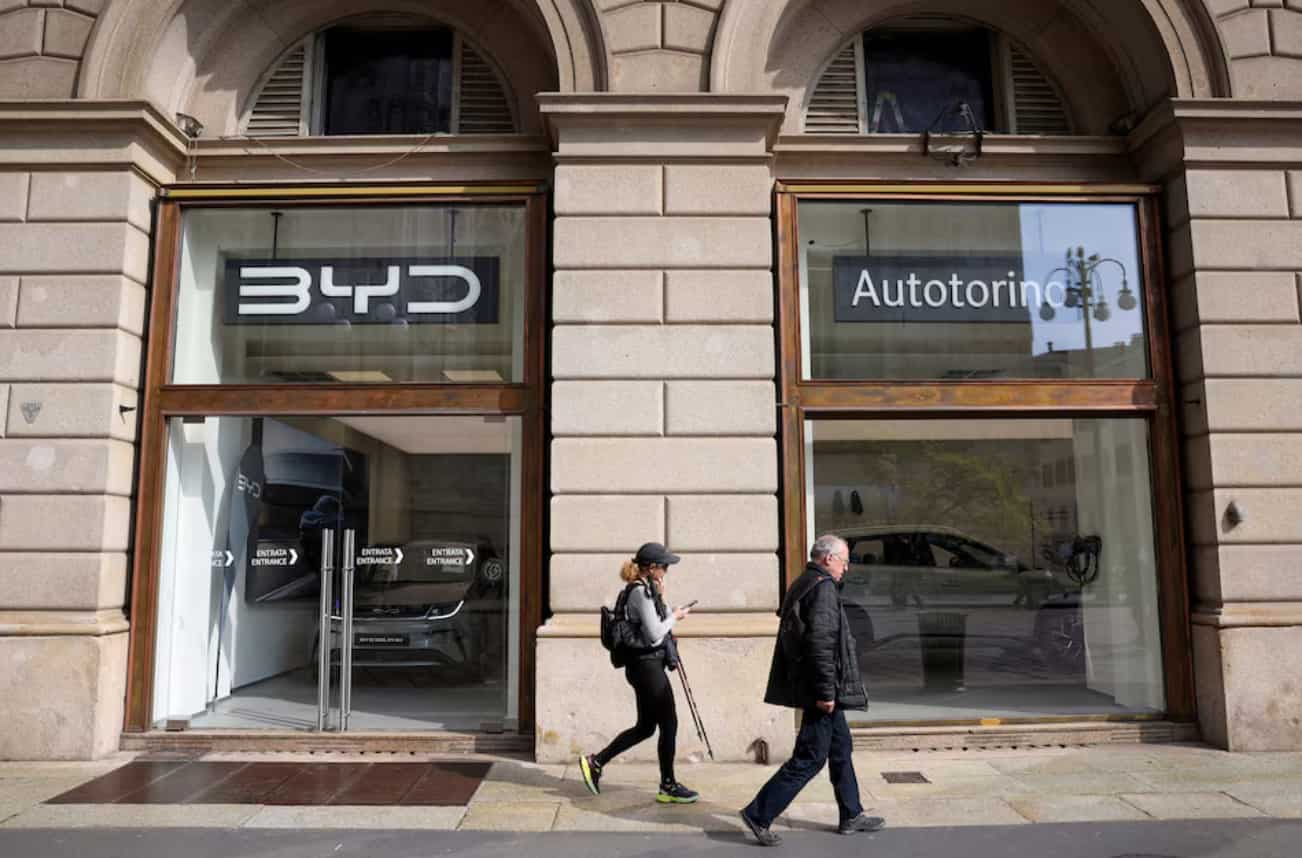
This expansion aims to mitigate the impact of the European Union’s decision to hike duties on Chinese EVs.
Chinese electric vehicle (EV) manufacturers are increasingly penetrating the European market, strategically partnering with local companies to counteract steep tariffs. This expansion aims to mitigate the impact of the European Union’s decision to hike duties on Chinese EVs, potentially making these vehicles thousands of euros more expensive. The EU's tariffs, reaching up to 48%, pose a significant challenge for Chinese automakers, who are now employing innovative strategies to maintain their competitive edge.
Collaborations with Local Industries
One prominent example is Chery Automobile Co., which has teamed up with Spain’s Ebro-EV Motors to produce the Omoda E5 in Barcelona. This partnership will see the former Nissan Motor Co. factory near Barcelona’s cargo port become a hub for Chery’s European operations. By 2029, Chery and Ebro aim to produce 150,000 cars annually at this facility. Charlie Zhang, president of Chery Europe, expressed the company's commitment to establishing a strong presence in Europe. "We’re determined to move ahead with our launch team, with our operation in Europe in the short, medium, and long term," he said.

Similarly, Chinese EV manufacturer Leapmotor has begun assembling its T03 city cars at a Stellantis-owned plant in Poland. This arrangement involves assembling cars from kits that have been partially knocked down, a process allowing manufacturers to circumvent high tariffs imposed on fully assembled vehicles.
Expanding Production Capacity
BYD Co. has announced plans to establish a factory in Hungary, with another on the horizon in Turkey. Meanwhile, Zeekr, a subsidiary of Geely, is considering utilising existing production sites owned by its parent company. These moves reflect a broader trend of Chinese EV makers localising production to maintain market share and profitability in Europe.
)
Justice eludes Air India 1985 bombing victims as Canada probe goes 'inactive' | Gravitas
)
Erdogan again raises Kashmir issue at UNGA, calls for dialogue under UN Charter
)
'Our team opened the gate of gold medals': Harmanpreet Kaur on India’s Asian Games final win
)
'Needs time away from the international scene': England white-ball captain Brook on pacer Brydon Carse's future
)
Four decades after leaving Kolkata, the Birlas may be coming back for more
)
The Verdict | Moral policing isn’t culture or discipline, it’s crime
)
Cyclone Arnab: Landfall expected before midnight tomorrow as IMD issues orange alerts across six states
)
Glitch in the matrix caught on camera: Woman vanishes after talking to reporter
)
Rani Mukerji's mother Krishna Mukerji passes away; Karan Johar, Jaideep Ahlawat visit actress
)
Asian Games 2026: India women's cricket team beats Sri Lanka by 147 runs for first gold
)
ICC plans T20I expansion and fewer ODIs in 2027–2031 FTP cycle: Report
)
Key accused in Bihar's Jamui molestation case, arrested after police shoot him in leg
)
'Mumma’s boy from Gwalior who dared to dream': Kartik Aaryan pens long note after first National Award win
)
Gravitas | Boosting NHS productivity could save 20,600 lives in UK annually: Report
)
US and China vie for AI dominance as calls grow for regulation | Gravitas
)
Yemen clashes kill 154 people in two days as cornered Saudi battles Houthi offensive | Gravitas
72nd National Film Awards: Kartik Aaryan receives Best Actor honour for Chandu Champion in Gujarat
)
Bomb scare in New York amid UNGA: Suspicious suitcase found near UN headquarters
)
IND vs JPN, one-off T20I: Japan captain Kendel on pushing India to the brink - ‘It was special’
)
Raaka creates history! Allu Arjun’s film secures Guinness World Record ahead of release
)
Saudi Arabia exits China-led mBridge digital currency platform amid Saudi-Houthi conflict
)
WION Iconic Tourism Summit and Awards 2026: Key voices to discuss India’s tourism future
)
National Film Awards 2026: Yami Gautam wins Best Actress for Article 370
)
World leaders repeatedly call Gaza crisis ‘genocide’ as Israel’s war dominates opening sessions of UNGA
)
WION Iconic Tourism Summit and Iconic Awards 2026: India's travel economy leaders gather in Delhi
)
American manufacturing is reshoring faster than its factory floors can absorb
&im=FitAndFill=(700,400))
New OTT releases this week (September 21-27, 2026): Shaque: Trust No One, Hunkkaar, Don’t Be Shy- 5 new titles coming to Netflix, Prime Video and more
)
Trump calls on nations to quit ‘rogue’ and ‘out-of-control’ International Criminal Court, rips UN
)
Who is Clavicular? The 20-year-old controversial 'Looksmaxxing' influencer charged with rape allegations
)
'This is normally what toddlers do': Why a psychiatrist is raising fresh questions about Trump’s recent behaviour
&im=FitAndFill=(700,400))
National Film Awards 2026: Kartik Aaryan, Mammootty, Yami Gautam, Randeep Hooda and other key winners
)
‘Strike a deal or drive Iran into hell’: Trump issues fresh warning to Tehran at UNGA
)
Trump calls Cuba a ‘failed state’ at UN, Cuban delegation walks out
)
Over 4,200 books withdrawn from circulation in J&K colleges, 94% from Kashmir
)
Trump’s China visa crackdown puts US universities, Chinese students in focus ahead of Trump- Xi summit
)
Explainer: Why rare-earth export licences and Board of Trade are US priorities ahead of Trump-Xi summit
)
Oil slips to $98 as Saudi Arabia restarts East-West oil pipeline
)
‘Shame on you’: Netanyahu vows to ‘tell the truth’ about Mamdani at UN ahead of New York visit
The Stakes for European Automakers
The influx of Chinese EVs represents a significant challenge for established European car manufacturers. Facing declining global sales growth, European automakers must adapt by forming partnerships with their Chinese counterparts or risk closing some of their own production sites. The strategic alliances and new factories being established by Chinese companies are creating a complex competitive landscape.
SAIC Motor Corp., for example, is in discussions with the Spanish government to determine the location of its first European production site. Volvo Car AB, owned by Geely, has accelerated plans to produce its new EX30 model at its existing plant in Ghent, Belgium, in addition to its factory in China. These initiatives underscore the urgency with which Chinese manufacturers are seeking to establish a foothold in Europe.
Economic and Trade Implications
The European Commission is still deliberating how the new tariffs will apply to joint ventures not included in its anti-subsidy investigation. While ongoing negotiations may prevent the extra duties from becoming permanent in November, China has initiated a retaliatory probe into alleged dumping of pork products from the EU. This trade tension is part of a broader global dispute, with the US imposing even higher tariffs on Chinese EV imports.
Chinese EV makers must navigate these challenges to avoid sacrificing profits or passing on the cost burden to consumers. For instance, BloombergNEF estimates that the profit margin for state-owned SAIC’s MG4 EV could plummet from 25% to just 1% if the firm fails to adjust its pricing strategy. Matthias Schmidt of Schmidt Automotive Research noted, "List prices of Chinese-brand models are unlikely to change, as they currently lack the brand equity to justify a price increase."
Localising Production for Competitive Advantage
Localising production not only helps Chinese EV makers avoid tariffs but also attracts car parts manufacturers, boosting local economies. Ganyi Zhang, a market analyst with digital logistics platform Upply, highlighted the benefits of this approach. "Localising production in Europe can attract car parts makers," he said, indicating the potential positive spill-over effects.
European Governments’ Balancing Act
European governments are courting Chinese manufacturers to bolster local production while grappling with the implications for domestic industries. Stellantis CEO Carlos Tavares has voiced concerns about the growing presence of Chinese firms. "All European governments are dating Chinese car makers to come to assemble their vehicles in their countries," Tavares said in a Bloomberg Television interview. "Italy, France, Germany, Spain, they are all dating the Chinese. We are here for the fight."
Italy’s antitrust authority recently fined DR Automobiles €6 million for mislabeling vehicles from Chinese manufacturers as Italian-made. This highlights the delicate balance European countries must strike between attracting foreign investment and protecting local jobs.
The Future of Chinese EVs in Europe
Despite these challenges, Chinese manufacturers remain resolute in their expansion plans. Alexandre Marian, partner and managing director at AlixPartners, emphasised the determination of Chinese firms. "Chinese manufacturers are extremely determined," he said. "They always find a way around a problem and once they’ve fixed a target, they find a way to make that target."
As Chinese EV makers continue to establish partnerships and build local production facilities, their influence in the European market is set to grow, reshaping the competitive landscape and challenging the dominance of traditional European automakers.