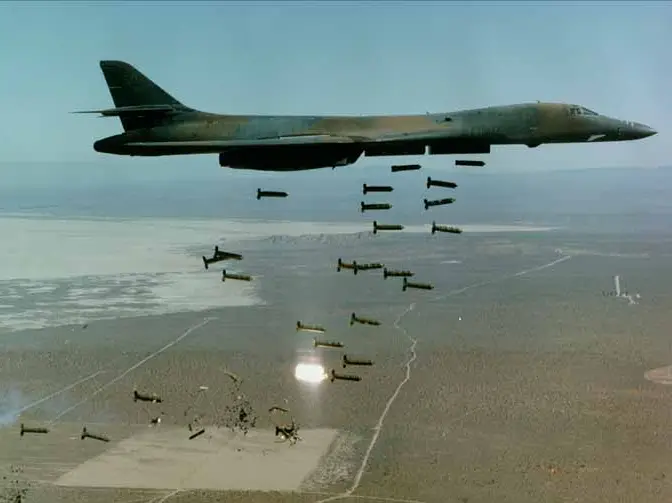
With mid-air refuelling, the B-52 can fly literally forever, the only limit is the crew

&imwidth=600&imheight=450&format=webp&quality=medium "With mid-air refuelling, the B-52 can fly literally forever, the only limit is the crew")
With mid-air refuelling, the B-52 can fly literally forever, the only limit is the crew
The B-52 Stratofortress already has an unrefuelled range of over 14,000 kilometres. But with aerial refuelling from KC-135 tankers, which pump 7,000 pounds of fuel per minute directly into the bomber, the B-52's range becomes effectively unlimited.
The B-52 Stratofortress can fly over 14,000 kilometres on a single fuel load, roughly the distance from New York to Sydney. That range alone makes it one of the longest-legged combat aircraft in the world. But the B-52 was designed from the start to operate with aerial refuelling support, and when connected to a tanker aircraft, its range stops being a number and becomes a question of human endurance instead.
How The Refuelling Works
The B-52 receives fuel through a boom receptacle mounted on top of the fuselage, forward of the cockpit. A KC-135 Stratotanker or KC-46 Pegasus flies in formation above and slightly ahead of the bomber, and a boom operator on the tanker extends a rigid, telescoping fuel boom downward into the receptacle. Once connected, fuel flows at approximately 7,000 pounds per minute — meaning a single refuelling contact can transfer around 25,000 pounds of jet fuel in roughly four minutes. The B-52 pilot holds a precise formation position behind the tanker while the boom operator manages the connection. The process can be repeated as many times as needed, at intervals determined by the bomber's fuel consumption rate and the availability of tanker support.
Range Becomes Endurance
With tanker support available along its route, the B-52's operational range is no longer limited by fuel capacity. It is limited only by the physical and mental endurance of its five-person crew. On missions lasting 30 to 35 hours, which are not unusual for long-range deterrence patrols or combat sorties launched from the continental United States — crews refuel multiple times while airborne. The aircraft never needs to land for fuel. It can stay in the air as long as there are tankers to meet it and crew members capable of flying it.
Cold War Patrols That Never Landed
Trending Stories
&imwidth=280&imheight=210&format=webp&quality=medium)
&imwidth=280&imheight=210&format=webp&quality=medium)
&imwidth=280&imheight=210&format=webp&quality=medium)
&imwidth=280&imheight=210&format=webp&quality=medium)
&imwidth=280&imheight=210&format=webp&quality=medium)
&imwidth=280&imheight=210&format=webp&quality=medium)
&imwidth=280&imheight=210&format=webp&quality=medium)

&imwidth=280&imheight=210&format=webp&quality=medium)
&imwidth=280&imheight=210&format=webp&quality=medium)
&imwidth=280&imheight=210&format=webp&quality=medium)
&imwidth=280&imheight=210&format=webp&quality=medium)
&imwidth=280&imheight=210&format=webp&quality=medium)
&imwidth=280&imheight=210&format=webp&quality=medium)
&imwidth=280&imheight=210&format=webp&quality=medium)
&imwidth=280&imheight=210&format=webp&quality=medium)
&imwidth=280&imheight=210&format=webp&quality=medium)
&imwidth=280&imheight=210&format=webp&quality=medium)
&imwidth=280&imheight=210&format=webp&quality=medium)
&imwidth=280&imheight=210&format=webp&quality=medium)
&imwidth=280&imheight=210&format=webp&quality=medium)
&imwidth=280&imheight=210&format=webp&quality=medium)
&im=FitAndFill=(700,400)&imwidth=280&imheight=210&format=webp&quality=medium)
&imwidth=280&imheight=210&format=webp&quality=medium)
&imwidth=280&imheight=210&format=webp&quality=medium)
&imwidth=280&imheight=210&format=webp&quality=medium)
&imwidth=280&imheight=210&format=webp&quality=medium)
&imwidth=280&imheight=210&format=webp&quality=medium)
&imwidth=280&imheight=210&format=webp&quality=medium)
&imwidth=280&imheight=210&format=webp&quality=medium)
&imwidth=280&imheight=210&format=webp&quality=medium)
&imwidth=280&imheight=210&format=webp&quality=medium)
&imwidth=280&imheight=210&format=webp&quality=medium)
&im=FitAndFill=(700,400)&imwidth=280&imheight=210&format=webp&quality=medium)
&imwidth=280&imheight=210&format=webp&quality=medium)
&imwidth=280&imheight=210&format=webp&quality=medium)
&imwidth=280&imheight=210&format=webp&quality=medium)
&imwidth=280&imheight=210&format=webp&quality=medium)
During Operation Chrome Dome — the Cold War programme that kept nuclear-armed B-52s airborne around the clock as a deterrent against Soviet first strikes — bombers launched from bases in the United States and flew continuous 24-hour patrol routes over the Arctic and the Atlantic, refuelling from tankers positioned along their flight paths. The B-52s were airborne with live nuclear weapons, ready to proceed to their assigned targets in the Soviet Union if a launch order was received. These patrols ran continuously from 1961 to 1968, with bombers rotating in and out of the air in a never-ending cycle. The only reason each individual bomber eventually landed was not fuel — it was crew fatigue.
Why This Capability Still Matters
The ability to keep a bomber airborne indefinitely with tanker support is not a Cold War relic — it is a current operational capability. In 1991, seven B-52s flew a 35-hour round trip from Louisiana to Iraq and back without landing — Operation Secret Squirrel. In more recent years, B-52s have flown bomber task force missions from the continental United States to the Middle East, the Pacific, and Eastern Europe, refuelling in the air and returning to base without ever touching a foreign runway. In a world where basing access can be denied or politically complicated, an aircraft that can reach any point on Earth from home soil — provided tanker support is available — remains one of the most strategically valuable assets in any air force.
