

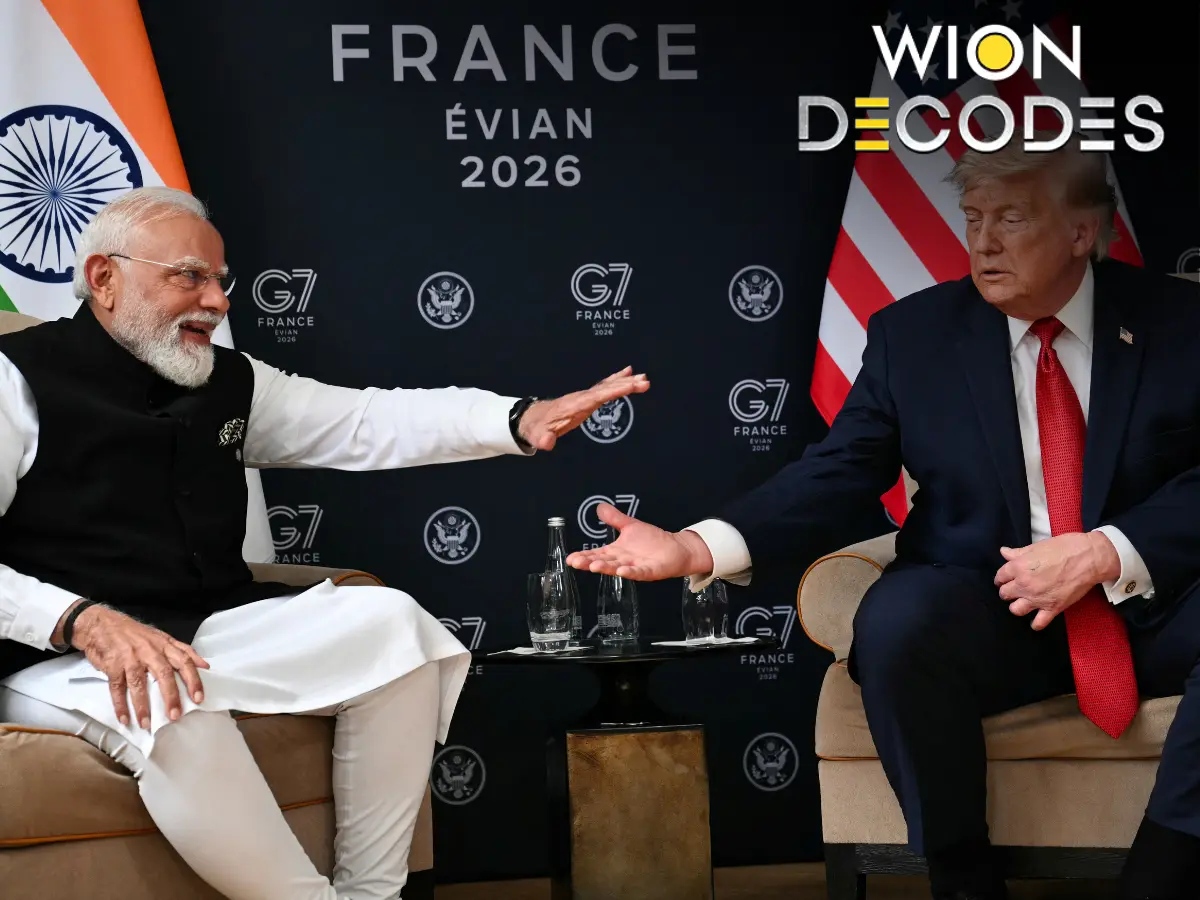
&imwidth=800&imheight=600&format=webp&quality=medium "WION Decodes: Why is the US threatening India with fresh 12.5% tariff under Section 301? Which industries stand to lose the most?")
Just as India and the United States appeared to be inching closer to a long-awaited bilateral trade agreement, a fresh dispute has landed on the negotiating table. Washington has proposed an additional 12.5 per cent tariff on certain Indian imports, alleging that India's enforcement against forced labour is inadequate. New Delhi has strongly pushed back, calling the proposal legally and factually weak, while insisting the issue should be resolved through consultations rather than new tariffs.
The timing matters because both countries have repeatedly said they are close to finalising a trade pact worth hundreds of billions of dollars.
Also read | US says trade deal with India is 'very, very close'. What's holding it up? | WION Decodes
So why has the US opened a new trade front now? And which Indian industries stand to lose the most if the tariff eventually takes effect? WION Decodes.
Why is the US proposing new tariffs?
The proposed tariff stems from a Section 301 investigation launched by the Office of the US Trade Representative (USTR).
Trending Stories
&imwidth=180&imheight=135&format=webp&quality=medium)
Blasts heard in Sanaa as Saudi-led coalition warns civilians to evacuate; Houthis vow retaliation
&imwidth=180&imheight=135&format=webp&quality=medium)
China's counter-surveillance industry booms amid heightened espionage fears | Gravitas
&imwidth=180&imheight=135&format=webp&quality=medium)
Saudi Arabia strikes Yemen oil sites as Houthi missiles target Riyadh; 'limited fire' breaks out at Aramco
&im=FitAndFill=(700,400)&imwidth=180&imheight=135&format=webp&quality=medium)
Navratri 2026: 9 days, 9 forms of Goddess Durga and 9 colours- Check the complete list
&imwidth=180&imheight=135&format=webp&quality=medium)
Trump accuses Houthis of driving up oil prices before US midterms, warns of consequences
&imwidth=180&imheight=135&format=webp&quality=medium)
New Delhi rejects Beijing’s claims and remarks on Ladakh location naming exercise
&imwidth=180&imheight=135&format=webp&quality=medium)
US Midterms 2026: In Alaska, cost-of-living anxiety meets strangest ballot in high-stakes Senate race
&imwidth=180&imheight=135&format=webp&quality=medium)
CMs Vijay-Naidu meet in Vijayawada, discuss water sharing, river-linking
&imwidth=180&imheight=135&format=webp&quality=medium)
'Don't ever mess with nature!': Trump’s tiger attack post triggers social media backlash as victim's family issues heartbreaking tribute
&imwidth=180&imheight=135&format=webp&quality=medium)
OpenAI employee arrested by FBI after allegedly hiding recording device in office
&imwidth=180&imheight=135&format=webp&quality=medium)
Man dies at Six Flags Georgia: Past accidents at Six Flags amusement parks across US
&imwidth=180&imheight=135&format=webp&quality=medium)
1,500 drones illuminate Mumbai sky as Cordelia Cruises unveils second ship, Cordelia Sky
&imwidth=180&imheight=135&format=webp&quality=medium)
Pope Leo XIV diagnosed with lung cancer after surgery, Vatican says 'successful surgery and recovering'
&imwidth=180&imheight=135&format=webp&quality=medium)
Pakistan to chair UN-backed global Borrowers’ Platform as its own debt burden mounts, triggers sarcastic reactions on social media
&imwidth=180&imheight=135&format=webp&quality=medium)
Suicidal man survives jump from 11th floor in Japan, could now be tried for murder
&imwidth=180&imheight=135&format=webp&quality=medium)
Robot gropes girl, makes thrusting movements in bizarre crime in Germany
&imwidth=180&imheight=135&format=webp&quality=medium)
France accuses Musk of ‘online harassment’ of European leaders, warns of poll interference
&imwidth=180&imheight=135&format=webp&quality=medium)
MI5 chief warns Russia is UK’s ‘aggressor number one’ as Iran and AI threats grow
&imwidth=180&imheight=135&format=webp&quality=medium)
'Turn approver, resign, we'll forgive you': Rahul Gandhi claims receiving messages from CEC Gyanesh Kumar
&imwidth=180&imheight=135&format=webp&quality=medium)
Inside the alleged drug-money trail behind a Mumbai couple’s properties
&imwidth=180&imheight=135&format=webp&quality=medium)
‘My president, I mean my husband’: Trump's new press secretary Katie Zacharia's first briefing goes off the rails in 14 minutes
&im=FitAndFill=(700,400)&imwidth=180&imheight=135&format=webp&quality=medium)
IMF World Economic Outlook: 10 economies to watch for growth in FY27 and FY28 - Where does India stand?
&imwidth=180&imheight=135&format=webp&quality=medium)
Marco Rubio to visit India next week, focus on energy cooperation and strategic ties
&imwidth=180&imheight=135&format=webp&quality=medium)
Is the AI chip boom already over? Global semiconductor stocks slide as investors question unbridled spending
&imwidth=180&imheight=135&format=webp&quality=medium)
L Murugan resigns as Union Minister, expresses wish to return to grassroots
&imwidth=180&imheight=135&format=webp&quality=medium)
'Ouch!!! That must hurt': Kangana Ranaut hails Kamal Haasan's sharp reply to Elon Musk over Starlink row
&imwidth=180&imheight=135&format=webp&quality=medium)
Girl 'dead' for 8 hours wakes up at her own funeral, dad insists she wasn't breathing
&imwidth=180&imheight=135&format=webp&quality=medium)
Sidhu Moose Wala’s younger brother wins hearts by recreating late singer’s signature move at Toronto Hologram Show
&imwidth=180&imheight=135&format=webp&quality=medium)
UK school ditches technology, shifts from screen to pen and paper for learning
&im=FitAndFill=(700,400)&imwidth=180&imheight=135&format=webp&quality=medium)
New OTT releases this week (October 12-18, 2026): Sacrifice, Koffee with Karan S9, Roadies Rebirth- 6 titles coming on Netflix, JioHotstar and more
&imwidth=180&imheight=135&format=webp&quality=medium)
Rahul Gandhi speaks on Anti-CeC protests: Gathering over tea after Supreme Court rally
&imwidth=180&imheight=135&format=webp&quality=medium)
Anupam Kher joins Ranbir Kapoor's Ramayana as Jatayu, new poster unveiled
&imwidth=180&imheight=135&format=webp&quality=medium)
Measles kills again: 6 dead in Pennsylvania as America faces its worst outbreak in decades | Gravitas
&imwidth=180&imheight=135&format=webp&quality=medium)
Ken Paxton's Dubai night out with two US fugitives sparks political storm as Texas Senate race tightens
&imwidth=180&imheight=135&format=webp&quality=medium)
Mundhe: Fight against unsafe food goes on
&imwidth=180&imheight=135&format=webp&quality=medium)
Cornell University suspends fraternity parties over 2024 gang rape allegations
Washington argues that India has not done enough to prevent products allegedly linked to forced labour from entering international supply chains. According to the USTR, this places an unreasonable burden on American commerce and justifies trade action.
The proposed duty is not aimed only at India. The investigation covers around 60 economies, although India is among the largest trading partners affected.
For now, it remains a proposal rather than a final decision, giving countries an opportunity to challenge the findings before any tariff comes into force.
What exactly is Section 301?
Section 301 is one of Washington's most powerful trade weapons. It comes from the US Trade Act of 1974 and allows the US government to investigate what it considers unfair trade practices by other countries.
If the USTR concludes that another country's policies harm American businesses or violate international trade obligations, it can recommend retaliatory measures.
Those measures can include:
- Additional import tariffs
- Restrictions on imports
- Suspension of trade concessions
The law has previously been used against China over intellectual property disputes, European digital taxes and several other trade disagreements.
How did India react to the Section 301 findings?
India argues that Washington has failed to provide country-specific evidence linking Indian exports to forced labour. In a detailed submission dated July 6 to the United States Trade Representative (USTR), India said the investigation does not establish how its laws or policies amount to "unreasonable" practices under the US's Section 301.
Officials say the proposal rests on broad allegations rather than documented proof involving Indian manufacturers. "In view of the claims advanced, the identified gaps and lack of a sufficient basis, India requests the United States to reconsider the proposed imposition of tariffs against India. India remains willing to engage constructively with the USTR through consultation and dialogue on any specific concern," the submission reads.
India has also questioned whether the tariff has a sufficient legal basis under international trade rules.
Instead of unilateral tariffs, New Delhi wants both sides to resolve the dispute through consultations already built into the Section 301 process.
At the same time, Indian negotiators are trying to ensure that this issue does not derail the much larger bilateral trade agreement currently under discussion.
Could this affect the India-US trade deal?
Potentially, yes. Although officials on both sides continue to insist that negotiations have made "substantial progress", the proposed tariff has introduced a fresh layer of uncertainty.
India wants assurances that once a trade agreement is signed, it will not immediately face new tariff measures through a separate process.
For Washington, meanwhile, the Section 301 investigation provides additional negotiating leverage. Trade experts believe the issue could eventually become part of a broader bargain involving tariffs, market access and regulatory commitments.
Which Indian industries stand to lose the most?
If an additional tariff is imposed, the impact is unlikely to be felt evenly. Some sectors are significantly more exposed to the US market than others.
- Automotive components
India's auto component industry exports billions of dollars' worth of precision-engineered parts to American manufacturers.
An extra tariff would raise costs for US buyers and could reduce the competitiveness of Indian suppliers.
- Textiles and garments
Indian apparel exporters are deeply integrated into global supply chains, and even a relatively modest tariff could influence sourcing decisions by international retailers. Major companies like Shahi Exports and Alok Industries have actively petitioned against the tariff.
- Agricultural and food exports
Rice exporters, spice manufacturers, dehydrated vegetable producers and other processed food exporters could also find it harder to compete in the American market if import costs rise.
- Engineering goods
Engineering exports remain one of India's largest export categories. Forgings, industrial machinery, heavy equipment and specialised manufacturing products could all become more expensive for US customers.
What happens next?
Nothing changes immediately. The tariff proposal is still moving through the USTR consultation process, during which India will continue challenging the findings.
Meanwhile, negotiations on the bilateral trade agreement are continuing in parallel.
That means the coming weeks could determine whether the two countries move towards deeper economic integration or allow a fresh tariff dispute to complicate the much-awaited India-US trade deal.

