

&imwidth=800&imheight=600&format=webp&quality=medium "Who is Tulsi Gabbard? The former presidential hopeful who landed America’s toughest intelligence job")
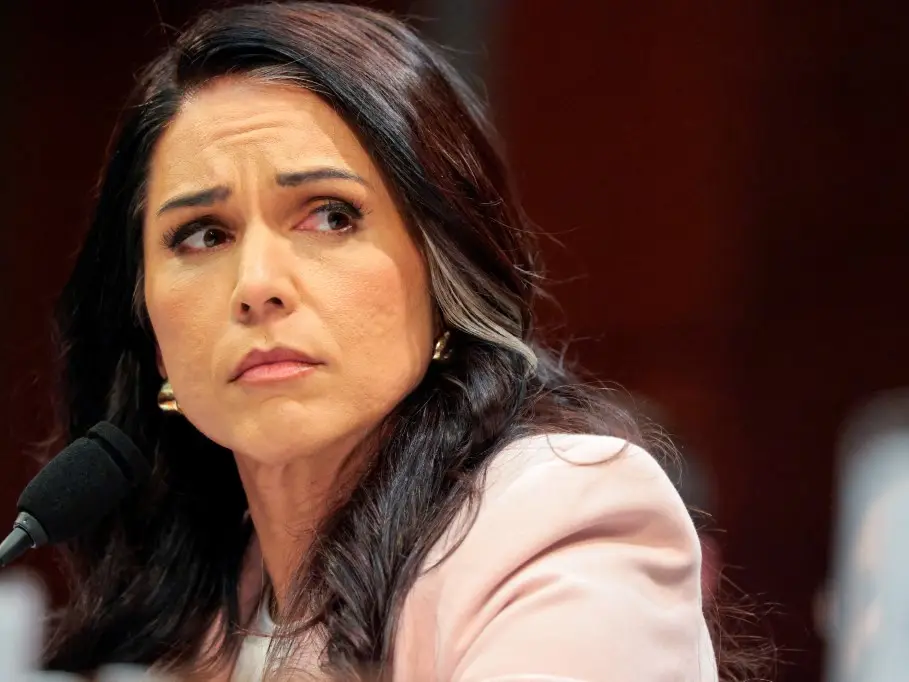
The resignation of Tulsi Gabbard as the United States Director of National Intelligence has once again placed the former Congresswoman and Iraq war veteran at the center of American political debate. Gabbard announced that she would step down from the role, citing her husband’s health condition as the primary reason behind the decision. Gabbard, one of the most unconventional figures in modern American politics, served as President Donald Trump’s intelligence chief after being confirmed in 2025. Her tenure was marked by controversy, sharp disagreements over foreign policy, and intense scrutiny from both Democrats and Republicans.
Who is Tulsi Gabbard?
Tulsi Gabbard was born on April 12, 1981, in Leloaloa, American Samoa, before her family moved to Hawaii during her childhood. Raised in a multicultural household with strong spiritual influences, Gabbard often spoke about how her upbringing shaped her worldview and political thinking. Her entry into politics came astonishingly early. At just 21 years old, she became one of the youngest women ever elected to the Hawaii State Legislature. Even at that stage, Gabbard projected an image different from the traditional Washington politician, disciplined, outspoken, and deeply influenced by ideas of public service and patriotism. Her rise in Hawaiian politics appeared rapid, but world events would soon redefine her career entirely.
Military service and the Iraq War
After the September 11 attacks, Gabbard joined the Hawaii Army National Guard. Her military service would later become the defining foundation of her political identity.
She served in Iraq in 2004 as part of a medical unit and later deployed to Kuwait. Unlike many politicians who debated wars from television studios and congressional halls, Gabbard often emphasized that she had witnessed conflict firsthand. That experience profoundly shaped her political philosophy. She emerged as one of Washington’s strongest critics of “regime change wars” and military interventions in the Middle East. Gabbard repeatedly argued that the United States had spent decades entering conflicts without clear long-term strategies, often destabilizing entire regions in the process. For supporters, this made her one of the few authentic anti-war voices in American politics. Critics, however, accused her of oversimplifying complex geopolitical realities and aligning too closely with authoritarian governments hostile to US interests.
Trending Stories
&imwidth=180&imheight=135&format=webp&quality=medium)
Pakistan to head IMF, World Bank boards after 74 years amid persistent economic crisis
&imwidth=180&imheight=135&format=webp&quality=medium)
"The scariest thing was"... flydubai Captain Smit Machchhar recalls cockpit fight and how he thought of his son and daughter
&imwidth=180&imheight=135&format=webp&quality=medium)
'We are not sitting in ivory towers, we are aware': SC issues notice to Rahul Gandhi, Akhilesh Yadav
&imwidth=180&imheight=135&format=webp&quality=medium)
6-year-old among 2 killed as vehicle crashes into youth soccer game in US
&imwidth=180&imheight=135&format=webp&quality=medium)
‘I have very severe problems’: Trump fuels health speculation during address to firefighters
&imwidth=180&imheight=135&format=webp&quality=medium)
Lizard people? Ex-US Army sniper claims soldier killed by 'reptilian beings' in battle near Area 51
&imwidth=180&imheight=135&format=webp&quality=medium)
Ankita Bhandari murder case: Parents meet CBI, seek impartial investigation
&imwidth=180&imheight=135&format=webp&quality=medium)
Bangladesh resort fire kills 10 tourists, including a 5-year-old child
&imwidth=180&imheight=135&format=webp&quality=medium)
At least 19 killed in stampede-like situation after part of Kolkata Durga Puja pandal collapses
&imwidth=180&imheight=135&format=webp&quality=medium)
Rajinikanth remembers late composer Deva, recalls his kindness and musical legacy
&imwidth=180&imheight=135&format=webp&quality=medium)
Rain washes out 5th T20I as India-West Indies share honours 2-2
&imwidth=180&imheight=135&format=webp&quality=medium)
'Reason UN has lost credibility': Amid SIR protests India hits out at report alleging 'youth repression'
&imwidth=180&imheight=135&format=webp&quality=medium)
Pope Leo XIV discharged from hospital in Rome after cancer surgery
&imwidth=180&imheight=135&format=webp&quality=medium)
‘My president, I mean my husband’: Trump's new press secretary Katie Zacharia's first briefing goes off the rails in 14 minutes
&imwidth=180&imheight=135&format=webp&quality=medium)
China responds to Trump's Press Secretary Katie Zacharia after toilet remark: 'Visit China more often'
&imwidth=180&imheight=135&format=webp&quality=medium)
UAE agrees with Saudi Arabia to rejoin Yemen fight as Houthi strikes rattle Riyadh
&imwidth=180&imheight=135&format=webp&quality=medium)
COVID-19 pandemic led to increase in divorce cases, observes Madras High Court
&imwidth=180&imheight=135&format=webp&quality=medium)
At least 400 arrested as protests turn violent in France; PM blames far left
&imwidth=180&imheight=135&format=webp&quality=medium)
Explosion and fire at military base in Canada's Alberta, casualties feared
&imwidth=180&imheight=135&format=webp&quality=medium)
Israel examines Russia's Shahed-type drones sent by Ukraine to combat Iran | Gravitas
&imwidth=180&imheight=135&format=webp&quality=medium)
WATCH | iPhones, luxury perfumes floating in Hormuz? Iranian fishermen make bizarre discovery
&imwidth=180&imheight=135&format=webp&quality=medium)
Two students die, 14 injured at Dandiya event in Hyderabad: Know what happened? VIDEO
&imwidth=180&imheight=135&format=webp&quality=medium)
China’s ‘dark tourism’ boom: Why are young travelers paying to experience simulated disasters?
&imwidth=180&imheight=135&format=webp&quality=medium)
'keep telling him you will get your opportunities': Iyer opens up on conversations with Sooryavanshi
&imwidth=180&imheight=135&format=webp&quality=medium)
WATCH | Zelensky gives cheeky response when asked if Trump is making him a scapegoat ahead of US midterms
&imwidth=180&imheight=135&format=webp&quality=medium)
No Ravindra Jadeja, Yashasvi Jaiswal in India’s 2027 ODI World Cup plans: Report
&imwidth=180&imheight=135&format=webp&quality=medium)
Kolkata Durga Puja stampede: PM Modi announces Rs 2 lakh ex-gratia for kin of dead, Amit Shah to visit injured
&im=FitAndFill=(700,400)&imwidth=180&imheight=135&format=webp&quality=medium)
Inside Tesla's Roadster: 10 features of Elon Musk's 'flying car' that push the limits of electric vehicles | In Pics
&imwidth=180&imheight=135&format=webp&quality=medium)
Anirudh Ravichander-Kavya Maran wedding: Telangana CM reveals Chennai reception date
&imwidth=180&imheight=135&format=webp&quality=medium)
Ranbir Kapoor visits North Bombay Durga Puja pandal, offers prayers
&imwidth=180&imheight=135&format=webp&quality=medium)
One species, two lineages: Why Sri Lanka’s spectacled cobra differs genetically from Indian variant
&imwidth=180&imheight=135&format=webp&quality=medium)
Oil tanker carrying over 2M barrels of crude hits mine in Strait of Hormuz, catches fire, says Iran
&imwidth=180&imheight=135&format=webp&quality=medium)
2 injured in plane crash on busy California highway

US ends automatic work permit extensions; Indian workers lose 540-day safety net: What it means
&imwidth=180&imheight=135&format=webp&quality=medium)
'It's a joy to see the makers bring it on such a grand scale': SS Rajamouli on Ramayana
&imwidth=180&imheight=135&format=webp&quality=medium)
13 dead after truck mows down devotees, crashes into temple gate in Madhya Pradesh's Gwalior
&imwidth=180&imheight=135&format=webp&quality=medium)
IND-W vs ZIM-W, 2nd T20I: When and where to watch live streaming in India?
&imwidth=180&imheight=135&format=webp&quality=medium)
Kolkata puja pandal stampede: 7 arrested, section 163 restrictions imposed in north Kolkata
Rise in Congress
In 2012, Gabbard was elected to represent Hawaii’s 2nd congressional district in the US House of Representatives. Her arrival in Congress immediately attracted national attention. She became one of the first Hindu members of Congress and frequently highlighted religious diversity in America. Her swearing-in ceremony using the Bhagavad Gita became symbolic for many Indian-Americans and Hindu communities across the globe. Initially, Gabbard was seen as a promising future leader within the Democratic Party. Young, articulate, military-trained, and charismatic, she appeared to embody a new generation of leadership. But her willingness to challenge party orthodoxy quickly made her a complicated figure within Democratic circles.
The Bernie Sanders episode and the Democratic rift
One of the biggest turning points in Gabbard’s political career came during the 2016 Democratic presidential primaries. At the time, she served as vice chair of the Democratic National Committee. However, she resigned from the post to endorse Senator Bernie Sanders over Hillary Clinton, arguing that the Democratic establishment was unfairly influencing the primary process. The move transformed her into a hero among many anti-establishment voters, but it also widened the rift between her and the Democratic leadership. From that point onward, Gabbard increasingly positioned herself as an outsider willing to confront her own party.
Syria, Assad, and the controversies
Perhaps no issue generated more controversy around Tulsi Gabbard than her approach to Syria. In 2017, she traveled to Syria and met President Bashar al-Assad, a decision that triggered outrage across much of Washington. Critics argued that the visit legitimised a leader accused of war crimes and chemical attacks against civilians. Gabbard defended the trip by saying dialogue, even with adversaries, was necessary to prevent endless wars and understand conflicts directly rather than relying solely on intelligence briefings and media narratives. Her skepticism toward US intervention in Syria, along with her criticism of intelligence assessments involving Russia and foreign conflicts, often drew accusations that she echoed talking points favorable to authoritarian regimes. Supporters countered that she was simply challenging a deeply entrenched foreign policy establishment unwilling to tolerate dissenting views.
The 2020 Presidential campaign
In 2019, Tulsi Gabbard announced her candidacy for President of the United States. While her campaign never emerged as a frontrunner, she became one of the most talked-about figures in the Democratic debates. Gabbard gained attention for her sharp attacks on rivals, especially former Vice President Kamala Harris, over criminal justice policies. Her campaign focused heavily on anti-war policies, civil liberties, government transparency, and opposition to military intervention abroad. Though she failed to secure widespread electoral support, the campaign elevated her national visibility dramatically. It also reinforced her reputation as a politician who did not fit neatly into America’s traditional ideological boxes.
Leaving the Democratic Party
By 2022, Tulsi Gabbard’s relationship with the Democratic Party had completely deteriorated. She officially announced her departure from the party, accusing Democratic leaders of promoting division, censorship, and ideological intolerance. Her statement generated headlines nationwide and cemented her transformation from Democratic congresswoman to political independent. Over time, Gabbard began appearing more frequently in conservative media spaces and found growing support among audiences skeptical of mainstream institutions, foreign interventions, and establishment politics. This ideological evolution confused some former supporters while attracting entirely new political constituencies.
Appointment as Director of National Intelligence
Perhaps the most surprising chapter of Gabbard’s career came with her appointment as Director of National Intelligence. The role placed her at the top of America’s intelligence structure, overseeing coordination among numerous intelligence agencies during a highly volatile global environment marked by tensions involving China, Russia, Iran, and the Middle East. For supporters, the appointment represented a dramatic challenge to Washington’s traditional national security establishment. They believed her military background and skepticism of interventionist policies could bring accountability and reform to the intelligence community. Critics, however, questioned whether someone so openly critical of past intelligence assessments should lead the very system she had spent years challenging. Her tenure remained under constant political scrutiny, reflecting the deeply divided opinions surrounding her career.
Why Tulsi Gabbard remains so polarising?
Few politicians in modern America provoke such sharply divided reactions. To admirers, Gabbard is a rare independent thinker willing to criticise both Democrats and Republicans. They see her as a patriot shaped by military service, someone unafraid to question wars, intelligence failures, and political groupthink. To opponents, she represents a dangerous form of populist politics that often blurred the line between skepticism and the amplification of authoritarian narratives. Yet regardless of where one stands politically, it is impossible to deny that Tulsi Gabbard has built one of the most unconventional careers in contemporary American politics.
What comes next for Tulsi Gabbard?
With her resignation as Director of National Intelligence, speculation about Gabbard’s future has intensified once again. Could she return to electoral politics? Will she become a larger voice in conservative media and foreign policy debates? Or could she reinvent herself once more in a political environment that increasingly rewards outsider figures? Tulsi Gabbard’s career has repeatedly defied expectations. From Hawaii legislator to Iraq war veteran, Congresswoman, presidential candidate, and intelligence chief, her political story has never followed a predictable script. And that unpredictability may ultimately remain the defining feature of Tulsi Gabbard herself.

