
&imwidth=800&imheight=600&format=webp&quality=medium "US sanctions three Mexican banks for playing 'vital role in laundering millions of dollars'")
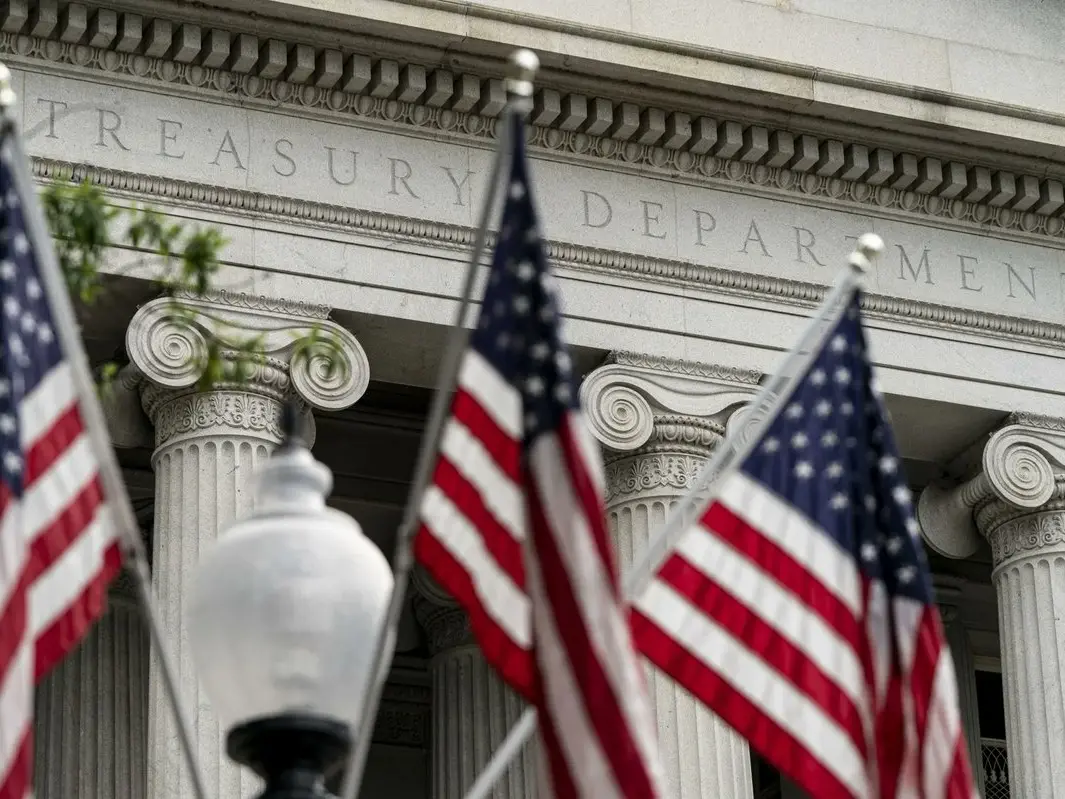
The US Treasury Department on Wednesday prohibited three Mexico-based financial transactions institutions, CIBanco, Intercam Banco, and Vector Casa de Bolsa, under the Fentanyl Sanctions Act and the FEND Off Fentanyl Act. The first use of new sanctions was led by the Treasury’s Financial Crimes Enforcement Network (FinCEN), which designated the three financial firms as “primary money laundering concerns."
The classification restricts the US entities from continuing any transactions with their Mexican branches. However, the applied sanctions don't involve freezing assets and global access to US dollars, but effectively isolate the institutions from the US financial system.
Although the firms involved are not major players in Mexico’s financial industry, the US Treasury’s move may have significant consequences due to the tightly linked banking systems of Mexico and the United States, according to a report in the news agency Reuters.

The Financial Crimes Enforcement Network (FinCEN) labelled the three institutions as “primary money laundering concerns,” barring US entities from engaging in transactions with their Mexican branches. While the sanctions stop short of freezing assets or entirely cutting off access to the US dollar, standard in more stringent cases, they still effectively sever these firms from the American financial network.
“This is a bold move. Being cut off from the US financial system is a death blow. It’s enormously impactful,” said Vanda Felbab-Brown of the Brookings Institution, an expert in organised crime. While she acknowledged that these are mid-sized firms rather than top-tier institutions, she emphasised that the fallout would still be serious, even if it doesn't drastically disrupt cartel finances.
Institutions deny any allegations
Trending Stories
&im=FitAndFill=(700,400))
How fast can the Sukhoi Su-30 fighter jet really fly?
)
Did China ask its people 'not to respond to aliens'? Origin of bizarre claim on social media
)
MS Dhoni-CSK Fallout? Report claims failed stake sale talks triggered rift
)
Japan to go nuclear? Russia warns Tokyo could get nukes within a year
)
Scientists reveal the SAFEST COUNTRY when catastrophe strikes the planet
)
Serial killer on the loose in South Korea's Jeju Island? Fourth body found in three days as more than a dozen people go missing
)
2/3rd of glacier detached, collapsed: ISRO satellite images reveal what triggered Nepal floods
)
'If he is dead, they're putting on a pretty good show': Trump casts fresh doubt over Mojtaba Khamenei's fate
)
Trump once again claims without him there would be ‘no Israel right now’
)
Foreign espionage attacks against German companies surge to 37%, Bitkom report reveals
)
Blake Lively wins partial legal fee from Justin Baldoni after $8M request
)
Why is Pakistan deploying Turkish Bayraktar TB2 drones near India border?
)
'OH MY GOD! We've found other agents!': Investigators discover not one or two, almost 700 OpenAI AI agents went rogue, hacked Hugging Face
)
Lunar eclipse 2026: India timings, places to see and more. August Blood moon factsheet
)
RSS chief Mohan Bhagwat on global outreach tour
)
16-year-old charged with preparing terror attack on kindergarten in Norway
)
Nepal floods: Over 165 dead, 400 missing; US, India, China, World Bank mobilise aid
)
India's multi-layered watch: The new surveillance war
)
5 doomsday planes spotted in US skies hours after CIA director's secret trip to Russia
)
9/11 mastermind Khalid Sheikh Mohammed to finally face trial in 2028, nearly 27 years after horrific attacks
)
Islamabad hospital fire: What we know about one of the biggest facility that housed Imran Khan
)
Workers run for life while filming Nepal flash flood: Scary new visuals emerge from Rasuwa
)
Russian military planes enter South Korean air defence zone amid rising tensions with North Korea: What's happening
)
WATCH | ‘Orange snake’ in the hills: Vande Bharat’s stunning Western Ghats journey goes viral
)
400-year-old 'vampire' grave in Poland reveals non-existent genetic lineage
)
Dolly Parton, global icon and queen of country music, dies at 80
)
Nepal flash floods: Kailash Mansarovar yatra affected, close to 400 pilgrims out of contact
)
Ron Weasley Is Back! Rupert Grint set to return to Harry Potter universe on Broadway
)
Man arrested near US Capitol with guillotine in pickup truck: What happened?
&im=FitAndFill=(700,400))
Why the Su-30MKI cockpit is painted bright turquoise green
The Treasury Department confirmed that these institutions have offered the laundering of millions of dollars for Mexican cartels for over a year, enabling payments for chemicals used to manufacture fentanyl. Meanwhile, institutions pushed back, denying the allegations. The Vector categorically rejected the claims and promised to cooperate with the authorities. In addition, Intercam also refuted the claim of alleged involvement in illicit activity, and no official response has been issued from the CIBanco end.
“Financial facilitators like CIBanco, Intercam, and Vector are enabling the poisoning of countless Americans by moving money on behalf of cartels, making them vital cogs in the fentanyl supply chain,” Secretary of the Treasury Scott Bessent said in a statement released by the US Treasury Department. “Through the first use of this powerful authority, today’s actions affirm Treasury’s commitment to using all tools at our disposal to counter the threat posed by criminal and terrorist organisations trafficking fentanyl and other narcotics.”
As per Reuters, the Finance Ministry of Mexico said that in order to support the allegations, it had requested evidence from the US Treasury, but no conclusive information was received. Legal analyst Luis Manuel Perez de Acha called the decision a “bombshell,” emphasising that exclusion from US financial systems could render the affected firms virtually inoperative.
The sanctions could also deepen existing tensions in US-Mexico trade relations, which are already under stress from American efforts, such as imposing high tariffs, to pressure Mexico into controlling the movement of fentanyl across the border.

