Tamil Nadu drug regulator says 'no contamination found' in Indian eyedrops after US raises alarm

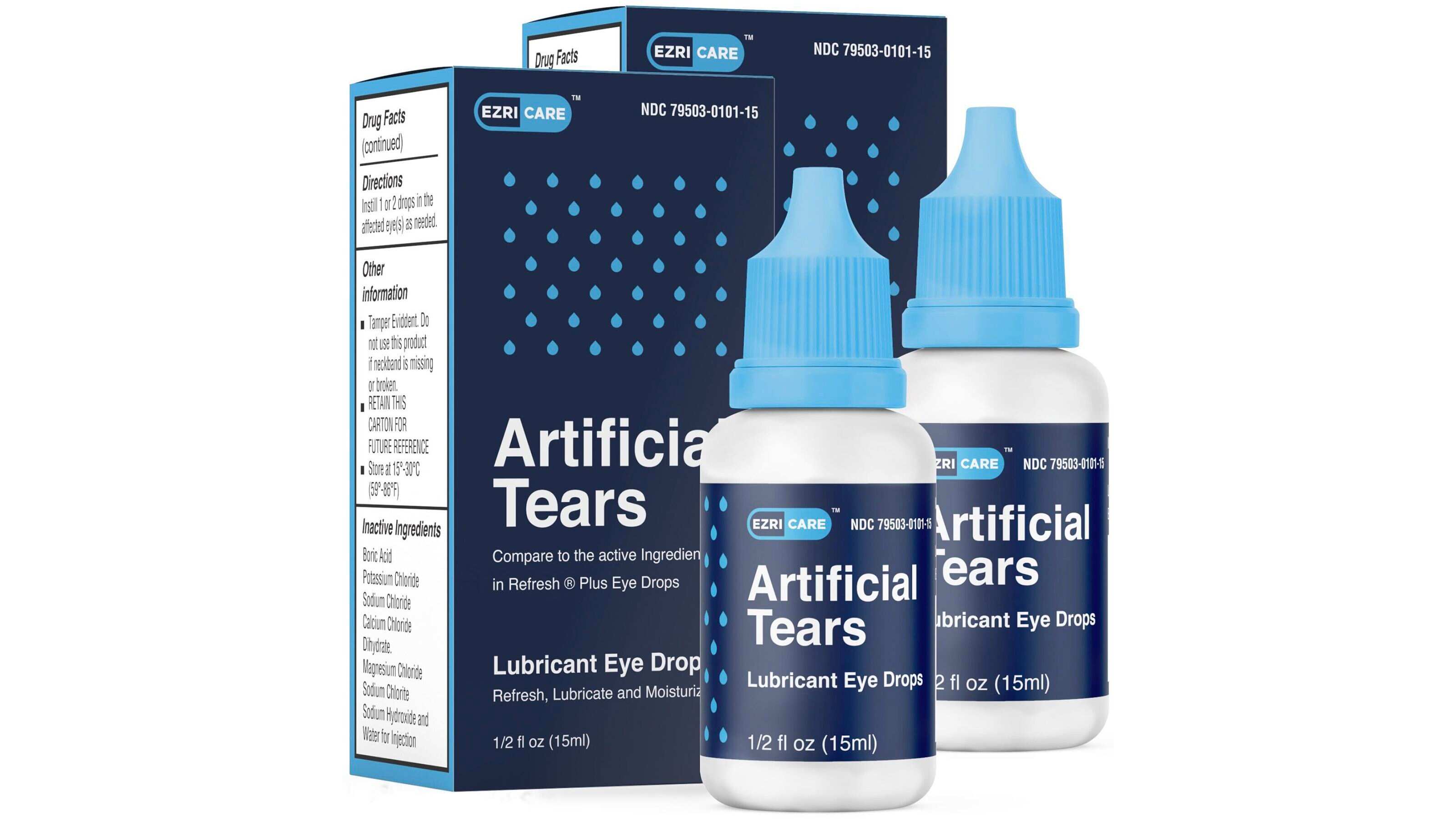
EzriCare Artificial Tears
The drug regulator in the south Indian state of Tamil Nadu has junked media reports which claimedthat a Chennai-based pharmaceutical company's eyedrops caused eye infections and blindness in the US.
Speaking to Indian news outlet NDTV, the director of the Tamil Nadu Drugs Control, PV Vijayalakshmi, said that no contamination was found in samples from unopened eyedrops manufactured at the Chennai plant.
"Samples from several batches, including the one under question, were analysed. We found no contamination. The raw materials too were found as per standards," the drug regulator's director was quoted as saying.

The remarks came after the top US medical body, Centers for Disease Control and Prevention (CDC), expressed alarm over the spread of a drug-resistant superbug linked to eyedrops and an eye ointment made by the Indian pharmaceutical company,Global Pharma Healthcare.
Experts have said that the strain, which was recently detected in the United States, cannot be treated with existing antibiotics, reported New York Times newspaper.
In recent months, eight cases of blindness and dozens of infections have been traced to EzriCare Artificial Tears, made by Chennai-based Global Pharma Healthcare, the NYT reported on Monday.
)
No Pandya as Auqib Nabi earns maiden ODI call-up; Mayank returns for WI T20Is| check full squads
)
Trump praises India’s Opium crackdown, hails anti-drug efforts
Mandakini breaks silence on Dawood Ibrahim photo: 'I was not invited by him'
)
Former India player Diana Edulji wants Smriti Mandhana to replace Harman as skipper at the earliest
)
Trump calls Canada-EU associate membership plan ‘laughable’ and threatens 'very serious tariffs'
)
Protests erupt over migrant housing plan in Piddington
)
Shahzad Bhatti Network declared terrorist organisation under UAPA: Govt order
)
Europe wants a common playbook for security threats, seeks security beyond NATO
)
240-million-year-old bizarre 'pig with a tusk' creature creates new dilemma over origin of dinosaurs
)
Formula One reveals the 2027 race calendar; Monaco to host sprint race for the first time
)
All Indian goods to get duty-free access to New Zealand
)
Bigg Boss 20: Mahhi Vij reveals she lost Yuva role to Kareena Kapoor; 'didn’t work out in my favour'
)
Lionel Messi for 2026 Ballon d’Or over Mbappe and Yamal, says Diego Simeone
)
US House votes 417-3 to pass Ratepayer Protection Act targeting AI data center electricity costs
)
Hong Kong unveils 11 new measures to boost birth rates, offers higher cash bonuses and housing perks
)
Former OpenAI researcher warns of growing risks from Artificial Intelligence
)
Veteran actor Anant Nag honoured with Indian cinema’s highest award
)
Wildfire tears through forests in Spain's Valencia
)
AUS vs SA: Steve Smith still gets 'little flashbacks' from sandpaper gate
)
PM Modi’s 76th birthday: From Akshay Kumar to Shilpa Shetty, Bollywood celebs extend warm wishes
)
Pakistan naval vessel returns to harbour with 'severe damage' after collision with Indian warship in Arabian Sea
)
Fed raises rates for first time in 3 years, Kevin Warsh defies Trump as inflation mounts
)
Katrina Kaif’s postpartum weight is not the problem; your gaze is
)
Taiwan seeks deeper India ties as direct flights restart soon and chip projects advance
)
Daayra movie review: Kareena Kapoor, Prithviraj Sukumaran shine in Meghna Gulzar’s cop-versus-cop crime thriller
)
Saudi Vs Houthis: Yemeni military rebels clash with Houthis
)
Pak batter Rizwan's petition against being questioned by cyber crime agency rejected by court
)
US trade tariff: 100% tariff targets Russian buyers amid trade tensions
)
Pakistan: Imran Khan's sons Kasim & Sulaiman claim their father is 'tortured' in jail
&im=FitAndFill=(700,400))
New OTT releases this week (September 14-20, 2026): Lust Stories 3, Waiting Hai, Irumudi- 5 new titles coming on Netflix, Prime Video and more
)
Ebola outbreak: WHO sees encouraging signs in fight against Ebola outbreak
)
Trump gets new power to hit India, China with up to 100% tariffs as US Senate clears Russia sanctions bill
)
‘Imagine 50 AI fighters cornering one manned jet’: India’s mobbing doctrine eyes a new era of air warm
)
Saudi vs Houthis: Riyadh claims to have shot Houthi drone targeting Mecca
)
US Treasury rallies global financial institutions for Op Economic Outcast to isolate Iran
)
Want to get married within a year? Why 18 lakh people rush to Jaipur for ‘sacred henna’
)
Pakistan boycotts chess match against Israel at Olympiad
)
UN General Assembly 2026: What is veto power. Which countries have it and how does it work?
&im=FitAndFill=(700,400))
Suriya and Jyothika say ‘I do’ again after 20 years! See their dreamy wedding pics
)
Abhishek Sharma rises to No. 2 in T20Is; ENG’s Robinson 3rd after record Pakistan Tests
)
Laura Wolvaardt sets new world record for most WT20I runs in a year
)
The Early Spring season 2 is happening, but fans have one request - 'don't change the actors'
)
The Food and Drug Administration (FDA), which regulates over-the-counter medicines in the US, and the CDC have issued advisories against the use of EzriCare Artificial Tears, warning that they may be linked to an outbreak of ‘Pseudomonas aeruginosa.’
Pseudomonas bacteria causes infections in the blood, lungs or other parts of the body after surgery.
The FDA stopped imports of the product after the Indian pharma company in February recalled the potentially dangerous eyedrops from the US market.
According to medical experts, the bacteria linked to drug-resistant Pseudomonas aeruginosa is already a top concern for healthcare providers, as it affects those with compromised immune systems, nursing home residents and patients with invasive medical devices like catheters and breathing tubes.
Marburg virus: US health body warns travellers to observe symptoms for 21 days
An infectious disease specialist at the University of North Carolina School of Medicine, Dr David van Duin, told NYT that it is difficult to neutralise the drug-resistant bacteria from health care facilities, where it clings tenaciously to sink drains, water faucets and other moist environments, and from patients who develop bloodstream infections.
A possible outbreak due to the eyedrops have been largely contained. Moreover, the CDC has been asking doctors to work with public health labs to determine the genetic fingerprint of hard-to-treat Pseudomonas infections in the eye and throughout the body.
Additionally, the FDA has ordered to recall Delsam Pharma’s Artificial Eye ointment, which was made in the same factory as the eyedrops, because of possible contamination.
The health agency has blocked Global Pharma’s imports, saying that the company provided “an inadequate response to a records request” and violated manufacturing rules.
After facing criticism over lapses, the FDA conducted an unannounced inspection at the India plant between February 20 and March 2. It found “a litany of problems with the plant’s sterility practices", the NYT report states citing an inspection report published by STAT news.
Moreover, the Indian government also conducted raids at the units Global Pharma Healthcare on February 3.
In a statement, the company said that it was recalling all its products due to possible contamination.
This is the second time an Indian pharma has come under the spotlight over its “substandard"products. Recently, a firm from Uttar Pradesh landed under scrutiny after dozens of deaths were reported among children in Gambia and Uzbekistan last year after consuming cough syrups.
(With inputs from agencies)
WATCH WION LIVE HERE