

&imwidth=800&imheight=600&format=webp&quality=medium "US nuclear fuel company counters BARC’s safety concerns over thorium fuel for reactors: More details inside")
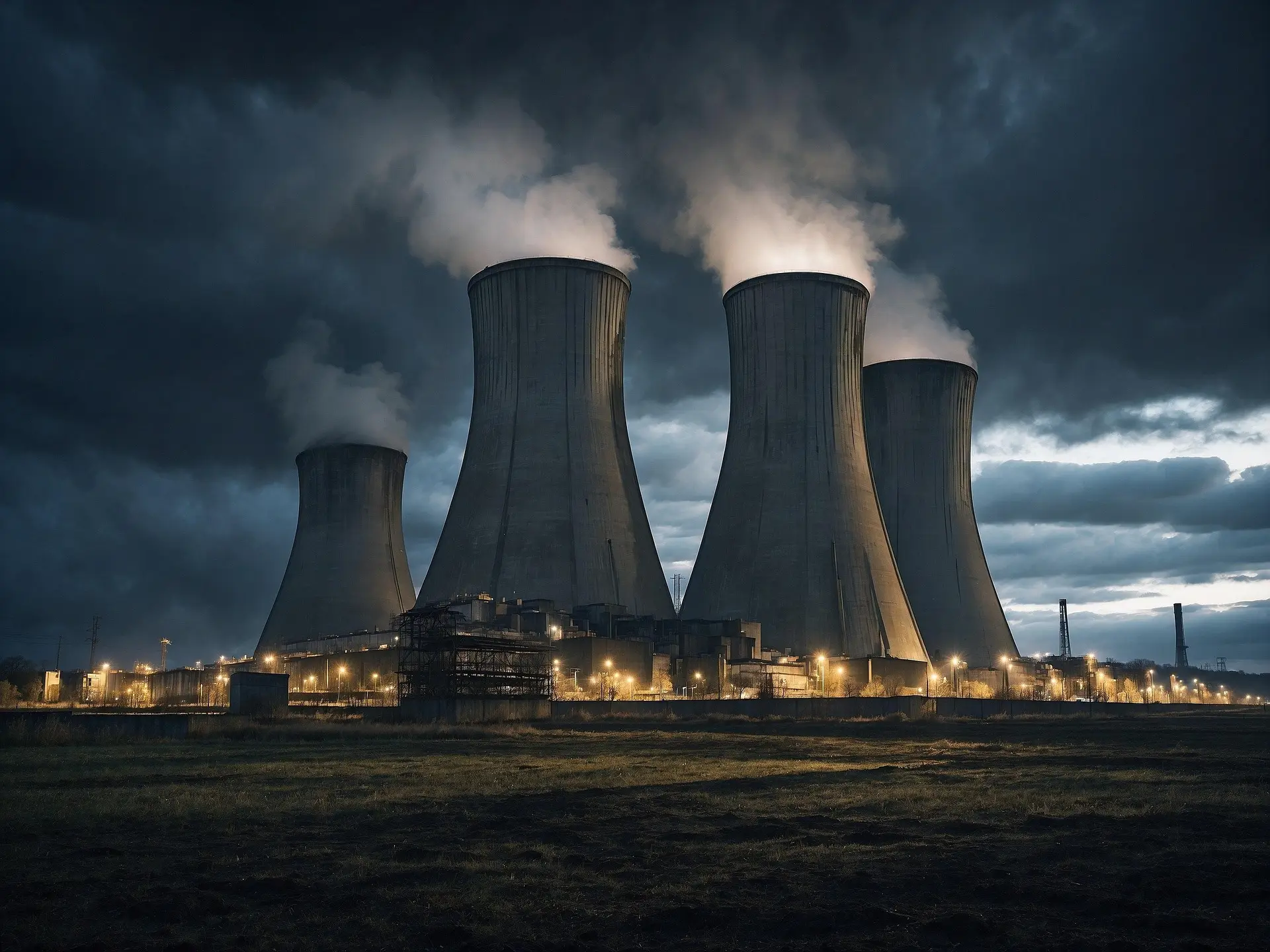
Chicago-based nuclear fuel company has denied the concerns over the use of ANEEL (Advanced Nuclear Energy for Enriched Life), an advanced nuclear fuel, in existing pressurised heavy water reactors (PHWRs). The company known as Clean Core Thorium Energy (CCTE) claimed that the thorium-based fuel improves significant reactor safety characteristics and can be positioned without the need for modifications to reactor designs or control systems.
In a report published in the journal Nuclear Engineering and Design, researchers from Clean Core, the Massachusetts Institute of Technology, Toronto-based Innovative Nuclear Solutions, and San Diego-based Structural Integrity Associates countered the discovery of a previous study by scientists at the Bhabha Atomic Research Centre (BARC). Research on the BARC paper had challenged that deploying ANEEL in the existing PHWR fleet of India would require reactor redesigns and would likely increase safety risks under accident conditions.
The paper stated that the advanced nuclear fuel produces nearly six times more energy than conventional natural uranium fuel. CCTE is the second American company to have secured an export license from the US Department of Energy for supplying nuclear technology to India in nearly 20 years, and has developed the patented thorium-based fuel called ANEEL. The fuel combines thorium with high-assay low-enriched uranium (HALEU) for use in Pressurised Heavy Water Reactors (PHWRs).
CCTE said ANEEL is compatible with India's fleet of PHWRs, which make up the majority of the country's operational nuclear reactors. In December 2024, state-run NTPC Ltd partnered with the company to explore the development and deployment of ANEEL fuel at existing nuclear power plants in India, subject to regulatory approvals.
However, a paper published in Current Science in January by scientists from the Bhabha Atomic Research Centre (BARC) raised concerns about introducing ANEEL into India's existing PHWRs. The researchers concluded that the thorium-HALEU fuel was not a straightforward replacement for natural uranium and that significant modifications to existing reactors would be necessary before it could be used.
Responding to these concerns, CCTE maintained that ANEEL is a "plug-and-play" alternative to conventional natural uranium fuel bundles. The company argued that the fuel retains the same external dimensions and overall geometry as existing fuel assemblies, with changes confined only to the internal pin design and fuel composition.
Trending Stories
&imwidth=180&imheight=135&format=webp&quality=medium)
Rahul Gandhi's plea against Election Commission delayed as Supreme Court registry flags 14 ‘defects’
&im=FitAndFill=(700,400)&imwidth=180&imheight=135&format=webp&quality=medium)
Navratri 2026: 9 days, 9 forms of Goddess Durga and 9 colours- Check the complete list
&imwidth=180&imheight=135&format=webp&quality=medium)
Korean peninsula tensions escalate as North Korea launches multiple ballistic missiles, PACOM says 'no threat to US personnel'
&imwidth=180&imheight=135&format=webp&quality=medium)
Trump weighs firing Kimberly Guilfoyle as US ambassador to Greece amid misconduct allegations: Report
&imwidth=180&imheight=135&format=webp&quality=medium)
Anti-SIR protest in Mumbai: Protestors wear black masks & ribbons in Mumbai
&imwidth=180&imheight=135&format=webp&quality=medium)
UK PM Andy Birnham renews claims of Russian meddling in Brexit vote
&imwidth=180&imheight=135&format=webp&quality=medium)
BCCI rejects venue shift reports, India vs Sri Lanka 1st ODI to remain in Delhi
&imwidth=180&imheight=135&format=webp&quality=medium)
'Absolutely disgusting': Australia slams US plan to livestream Nidal Hasan's execution; Mike Johnson raises concerns, warns of terrorist propaganda
&imwidth=180&imheight=135&format=webp&quality=medium)
1,500 drones illuminate Mumbai sky as Cordelia Cruises unveils second ship, Cordelia Sky
&imwidth=180&imheight=135&format=webp&quality=medium)
Houthis warns US of 'painful response' if Washington joins Saudi war in Yemen as airlines suspend flights to Saudi Arabia
&imwidth=180&imheight=135&format=webp&quality=medium)
Congress demands action against chief election commissioner
&imwidth=180&imheight=135&format=webp&quality=medium)
Robot gropes girl, makes thrusting movements in bizarre crime in Germany
&imwidth=180&imheight=135&format=webp&quality=medium)
'Turn approver, resign, we'll forgive you': Rahul Gandhi claims receiving messages from CEC Gyanesh Kumar
&imwidth=180&imheight=135&format=webp&quality=medium)
'I will not be silenced': Ilhan Omar alleges political intimidation after federal officers search her Washington home
&imwidth=180&imheight=135&format=webp&quality=medium)
Pakistan's government blames PTI for rise of terrorism in Khyber Pakhtunkhwa
&imwidth=180&imheight=135&format=webp&quality=medium)
‘This is just the start’: Maaya Rajeshwaran on historic ITF title, confidence boost and future goals
&imwidth=180&imheight=135&format=webp&quality=medium)
I.N.D.I.A. Bloc lists 10 requests to Supreme Court
&im=FitAndFill=(700,400)&imwidth=180&imheight=135&format=webp&quality=medium)
IMF World Economic Outlook: 10 economies to watch for growth in FY27 and FY28 - Where does India stand?
&im=FitAndFill=(700,400)&imwidth=180&imheight=135&format=webp&quality=medium)
How does a robot decide what to do next?
&imwidth=180&imheight=135&format=webp&quality=medium)
Is the AI chip boom already over? Global semiconductor stocks slide as investors question unbridled spending
&imwidth=180&imheight=135&format=webp&quality=medium)
L Murugan resigns as Union Minister, expresses wish to return to grassroots
&imwidth=180&imheight=135&format=webp&quality=medium)
Trump says he 'may' meet North Korean leader Kim Jong Un during upcoming Asia trip
&imwidth=180&imheight=135&format=webp&quality=medium)
'Ouch!!! That must hurt': Kangana Ranaut hails Kamal Haasan's sharp reply to Elon Musk over Starlink row
&imwidth=180&imheight=135&format=webp&quality=medium)
Sidhu Moose Wala’s younger brother wins hearts by recreating late singer’s signature move at Toronto Hologram Show
&imwidth=180&imheight=135&format=webp&quality=medium)
Girl 'dead' for 8 hours wakes up at her own funeral, dad insists she wasn't breathing
&imwidth=180&imheight=135&format=webp&quality=medium)
UK school ditches technology, shifts from screen to pen and paper for learning
&imwidth=180&imheight=135&format=webp&quality=medium)
Opposition’s 10 demands in Supreme Court petition range from stay on SIR to audit of voter rolls
&imwidth=180&imheight=135&format=webp&quality=medium)
'I am thoroughly unamused': Judge slams Trump administration after 400 trees cut at Washington golf course
&im=FitAndFill=(700,400)&imwidth=180&imheight=135&format=webp&quality=medium)
New OTT releases this week (October 12-18, 2026): Sacrifice, Koffee with Karan S9, Roadies Rebirth- 6 titles coming on Netflix, JioHotstar and more
&imwidth=180&imheight=135&format=webp&quality=medium)
China’s gold rush puts billion in focus
&imwidth=180&imheight=135&format=webp&quality=medium)
India's Ajit Doval, Iran's Mohsen Rezaei hold talks amid escalating West Asia tensions, discuss 'issues of mutual interest'
&imwidth=180&imheight=135&format=webp&quality=medium)
New Cold War: Why is China buying more gold? Explained
&imwidth=180&imheight=135&format=webp&quality=medium)
Anupam Kher joins Ranbir Kapoor's Ramayana as Jatayu, new poster unveiled
&imwidth=180&imheight=135&format=webp&quality=medium)
'Almost certainly': UK Prime Minister Andy Burnham says Iran's IRGC behind RAF Fairford threat
&imwidth=180&imheight=135&format=webp&quality=medium)
Elon Musk pumps $276 million into Republican campaigns ahead of US midterm elections
Effectiveness of the reactor's shutdown system
CCTE's paper also countered the argument that the existing nuclear reactors of India would require major redesigns to use its ANEEL thorium-based fuel. While an earlier study by BARC scientists estimated that the effectiveness of the reactor's shutdown system would fall by about 26 per cent, requiring modifications to maintain safety margins, CCTE estimated a much smaller decline of up to 16 per cent.
According to the company, the current Primary Shutdown System would still retain an estimated safety margin of 70 mk, well above the required 50 mk, making any redesign unnecessary. The paper also disputed concerns over coolant void reactivity (CVR), an important reactor safety parameter. BARC had argued that thorium-HALEU fuel could increase CVR, raising safety risks during a loss-of-coolant accident.
However, CCTE claimed ANEEL actually improves reactor safety by reducing the potential power surge from 16.4 mk with conventional uranium fuel to 13.3 mk. It attributed this to the fuel's ring-wise design and burnable absorbers. Although HALEU-thorium fuel has a higher upfront cost, CCTE argued this would be offset over time through lower uranium consumption, greater energy generation and reduced spent fuel management costs.

