US midterms 2026: Red seats once deemed safe now appear shaky as Republicans spend big on ads

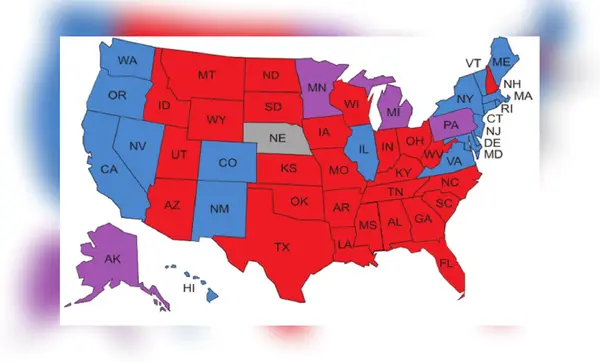
The advertising operation was aimed at 27 House districts, 20 of which were Republican-held. Photograph: (X)
The advertising blitz reveals that the districts that were being considered safe for Republicans after Trump’s landslide presidential victory are receiving significant financial reinforcements as Democrats seek to capitalise on economic discontent and dissatisfaction with the administration.
With the November 3 US midterm elections fast approaching, Republicans are pouring money into congressional districts that President Donald Trump had won by double-digit margins in 2024. The spending emphasises the party’s growing concern about defending its narrow House majority.
The advertising blitz reveals that the districts that were being considered safe for Republicans after Trump’s landslide presidential victory are now receiving significant financial reinforcements as Democrats seek to capitalise on economic discontent and dissatisfaction with the administration.
Three Trump-aligned groups — MAGA Inc., No Going Back PAC and Safety and Affordability PAC — spent more than $163 million on advertising and airtime from September 1. More than $63 million, nearly 40% of that spending, was directed towards states and congressional districts which Trump had won by at least 10 percentage points in 2024.
Texas and Kentucky among the warning signs
Texas’s 15th Congressional District and Kentucky’s 6th are among the Republican-held districts drawing attention. Both were carried comfortably by Trump in 2024, yet they have seen substantial Republican-aligned advertising.
If Republicans are spending heavily in districts considered safe, party strategists may be responding to opinion polls, fundraising trends or voter enthusiasm that suggests a shift in political environment.
Trending Stories


Six House districts Trump won by double digits that were being targeted by organisations linked to MAGA Inc. The advertising operation was aimed at 27 House districts, 20 of which were Republican-held.
The fact is that Republicans are unwilling to risk losing districts that could become vulnerable if the national political climate deteriorates further.
Economic anxieties reshape the map
Inflation, tariffs and the administration’s handling of international conflicts have become central issues in the US midterms campaign, and Democrats are trying to turn these concerns into a broader referendum on Trump’s presidency among those who supported Republicans in 2024 but may be less enthusiastic about the party in a midterm election.
Similarly, Montana’s 1st Congressional District, which Trump won by 12 points in 2024, was moved into the toss-up category, suggesting that electoral vulnerability is no longer confined to the traditional battleground districts that determine control of the House.
A defensive strategy with national stakes
Republicans argue that their advertising advantage and voter outreach can protect incumbents. The party also has an incentive to mobilise voters who turn out with enthusiasm for presidential elections but are less likely to participate in midterms.
Democrats see chances to expand the map beyond districts previously considered competitive. Their challenge is converting dissatisfaction into votes while competing against well-funded Republican advertising operations.
Since the control of the House is potentially determined by a handful of seats, spending in traditionally Republican territory could prove decisive. The final map will depend on whether Trump’s 2024 coalition remains intact or whether economic concerns and lower enthusiasm among Republican-leaning voters result in a backlash.
The money trail offers an important indication, that the Republicans are preparing to defend territory they earlier expected to hold comfortably, while Democrats are trying to see how far can the red map be stretched.