Trump to strike Iran? CENTCOM chief briefs US president on military options as USS Gerald R. Ford arrives near Israel

&imwidth=600&imheight=450&format=webp&quality=medium "Trump to strike Iran? CENTCOM chief briefs US president on military options as USS Gerald R. Ford arrives near Israel")
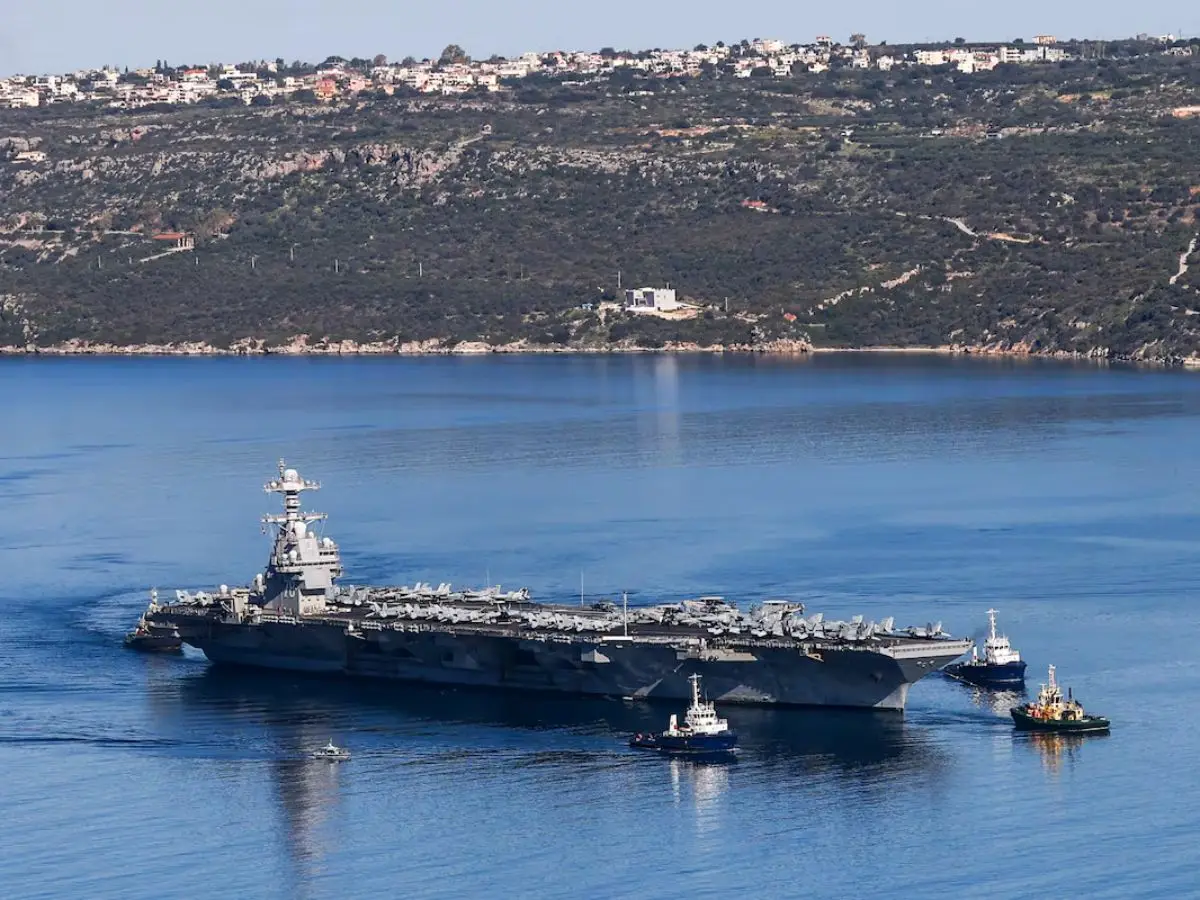
The US Navy aircraft carrier USS Gerald R. Ford departs Souda Bay on the island of Crete on February 26, 2026. Photograph: (AFP)
Trump received a high-level military briefing on Iran as US warships move closer to the region. As strike options are on the table, will tensions escalate?
US President Donald Trump was reportedly briefed by United States Central Command (CENTCOM) chief Admiral Brad Cooper on Thursday (Feb 26) about potential military options in Iran amid rising tensions with the Middle East nation. Reports suggested that Gen. Dan Caine, chairman of the Joint Chiefs of Staff and the president's top military adviser, was also present in the closed-door briefing. This comes the same day US and Iranian officials held indirect talks on Tehran’s nuclear program in Geneva. Meanwhile, the USS Gerald R. Ford, the world's largest aircraft carrier, on Friday (Feb 27) arrived at Israel's northern coast today.
ABC reported, citing people familiar with the matter, that it was not clear whether any military action had been authorised by Trump, who has grown incredibly frustrated with Iran's refusal to agree to stop enrichment of uranium. In recent days, several Trump administration officials and Republicans have privately advocated for Israel to take the lead in striking Iran instead of the US initiating any military action, the report added. A joint US-Israeli operation is also a possibility as the American forces move ships and fighter jets to the region, the report said.
The report added that a limited strike on Iran’s ballistic missile launchers and nuclear sites as a warning to force Tehran agree to Trump’s demands is among the options for the US president. A major operation striking several targets over a period of time is also under consideration, ABC reported, citing sources.
White House Deputy Press Secretary Anna Kelly said, “The media may continue to speculate on the President’s thinking all they want, but only President Trump knows what he may or may not do.”
Defence analysts have predicted Tehran would almost certainly retaliate if Israel attacks Iran. Trump could then defend a US intervention in the conflict, saying it was in line with policy defending Israel. Experts have said that this could also serve as a political cover to Republicans in Congress, pushing Trump’s rhetoric of ending wars, not starting them.
Analysts caution that any major operation could last weeks, pose serious risks and offer no guarantee of a more US-friendly outcome in Iran. Particular concern remains over the safety of the 35,000 to 40,000 US troops stationed across the region, who could become targets in the event of escalation.
Trending Stories
&imwidth=280&imheight=210&format=webp&quality=medium)
&imwidth=280&imheight=210&format=webp&quality=medium)
&imwidth=280&imheight=210&format=webp&quality=medium)
&imwidth=280&imheight=210&format=webp&quality=medium)
&imwidth=280&imheight=210&format=webp&quality=medium)
&im=FitAndFill=(700,400)&imwidth=280&imheight=210&format=webp&quality=medium)
&imwidth=280&imheight=210&format=webp&quality=medium)
&imwidth=280&imheight=210&format=webp&quality=medium)
&imwidth=280&imheight=210&format=webp&quality=medium)
&imwidth=280&imheight=210&format=webp&quality=medium)
&imwidth=280&imheight=210&format=webp&quality=medium)
&im=FitAndFill=(700,400)&imwidth=280&imheight=210&format=webp&quality=medium)
&imwidth=280&imheight=210&format=webp&quality=medium)
&imwidth=280&imheight=210&format=webp&quality=medium)
&imwidth=280&imheight=210&format=webp&quality=medium)
&imwidth=280&imheight=210&format=webp&quality=medium)
&imwidth=280&imheight=210&format=webp&quality=medium)
&im=FitAndFill=(700,400)&imwidth=280&imheight=210&format=webp&quality=medium)
&im=FitAndFill=(700,400)&imwidth=280&imheight=210&format=webp&quality=medium)
&imwidth=280&imheight=210&format=webp&quality=medium)
&imwidth=280&imheight=210&format=webp&quality=medium)
&imwidth=280&imheight=210&format=webp&quality=medium)
&imwidth=280&imheight=210&format=webp&quality=medium)
&imwidth=280&imheight=210&format=webp&quality=medium)
&imwidth=280&imheight=210&format=webp&quality=medium)
&im=FitAndFill=(700,400)&imwidth=280&imheight=210&format=webp&quality=medium)
&imwidth=280&imheight=210&format=webp&quality=medium)
&imwidth=280&imheight=210&format=webp&quality=medium)
&imwidth=280&imheight=210&format=webp&quality=medium)
&imwidth=280&imheight=210&format=webp&quality=medium)
&imwidth=280&imheight=210&format=webp&quality=medium)
&imwidth=280&imheight=210&format=webp&quality=medium)
&imwidth=280&imheight=210&format=webp&quality=medium)

