Trade zone, not war zone: Decouple Strait of Hormuz from Iran-US-Israel conflict if the global economy is to stay afloat

&imwidth=600&imheight=450&format=webp&quality=medium "Trade zone, not war zone: Decouple Strait of Hormuz from Iran-US-Israel conflict if the global economy is to stay afloat")
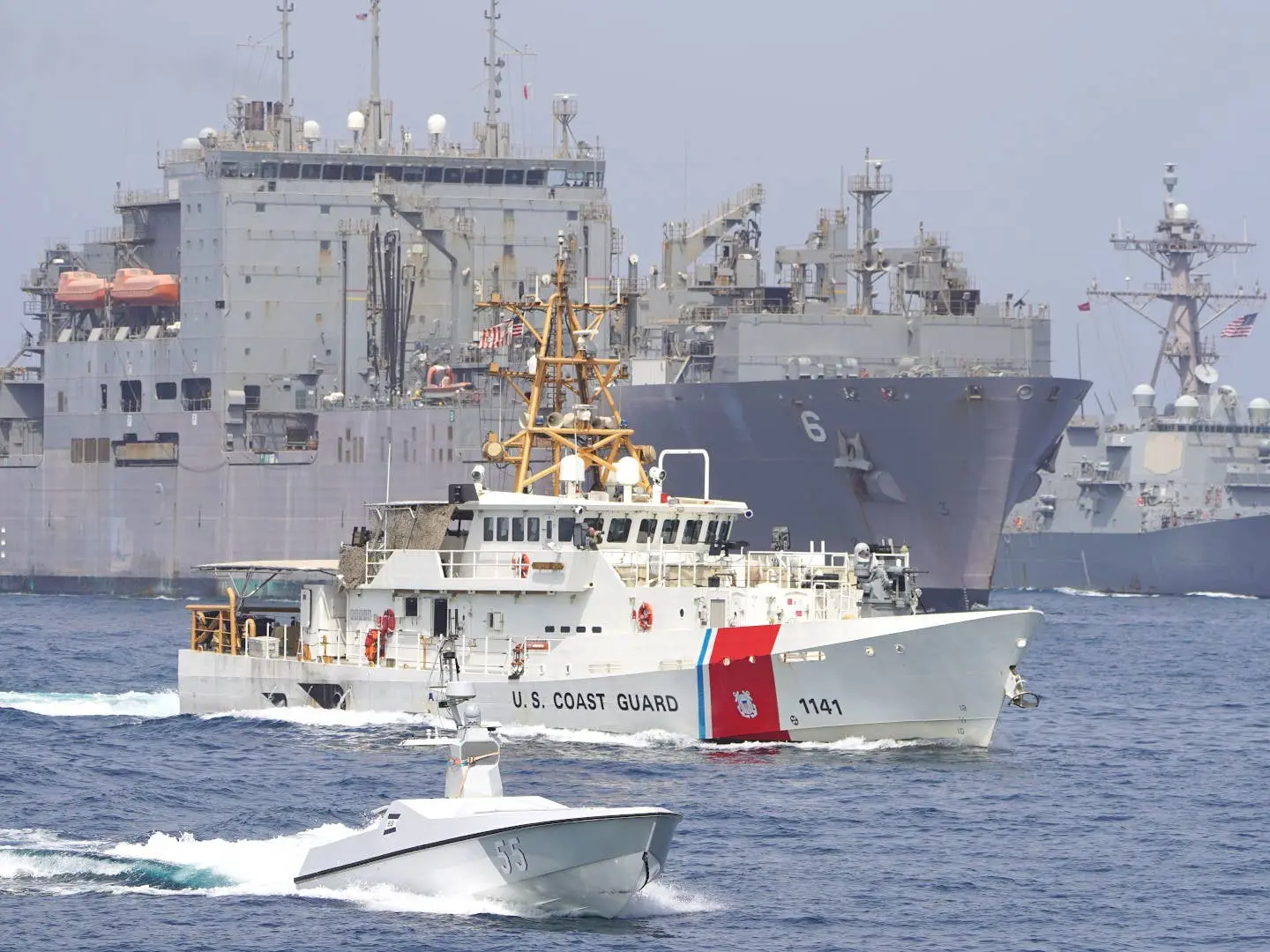
A file picture of US warships and Coastguard vessels passing through Strait of Hormuz Photograph: (Others)
Amid the Iran–US–Israel conflict, theres' a growing view that the Strait of Hormuz must be treated separately. Military action cannot eliminate Iran’s disruption capacity, nor can constant Navy escorts be used to ensure safe global oil transit
There is a growing view that the disruption of the Strait of Hormuz, as a strategy by Iran amid the war, is affecting countries that have nothing to do with its ongoing conflict with US and Israel. The strait, which carries roughly 20–25 per cent of global oil traffic and other goods, has become a central flashpoint of the war. Analysts, officials, the shipping and freight industries, and even US allies are explicitly arguing that the strait’s security and Iran’s leverage over it should be treated as a distinct issue, separate from the joint US-Israeli military campaign against Iran.
No amount of US or allied attempts to secure the strait by military means is likely to be sustainable. Air or naval strikes, warship or coastguard escorts, or coalition-building efforts would not fully wrest control. Iran will still maintain some level of disruption capacity due to the advantages of geography, asymmetric capabilities, and the nature of commercial risks associated with the chokepoint.
Nobody wants to ‘shift the war to the Strait of Hormuz’
European allies of the US, such as Germany’s Defence Minister Boris Pistorius, along with countries including the UK, France, Canada, India and China, have either refused or diluted calls for warship coalitions to escort tankers. Such participation, they feel, would entangle them in the war while not securing their energy needs.
There is a perception that the war has “shifted to the Strait of Hormuz” in recent days. However, Hormuz is not just a military issue. International bodies treat safe passage as a global shipping concern, not the responsibility of any single belligerent in the war. The International Maritime Organization has stated that naval escorts alone cannot guarantee the safety of vessels passing through, particularly without Iranian cooperation.
Many believe that the strait crisis should not be allowed to escalate or become an extension of the war.
Trending Stories
)
)
)
)
)
)
)
)
)
)
)
)
)
)
)
)
)
)
)
)
)
)
&im=FitAndFill=(700,400))
)
)
)
&im=FitAndFill=(700,400))
)
Navies or militaries cannot take Hormuz control away from Iran
Several shipping, freight and oil industry executives, regional experts, military planners and officials are of the view that Iran has enduring leverage over the strait, having influenced traffic through it for decades.
Iran borders the narrow strait, which is only about 21 miles wide at its narrowest point. The Islamic Revolutionary Guard Corps (IRGC) can conduct mine-laying and has demonstrated the ability to launch drone or missile strikes, or engage in swarm tactics using fast boats from the sea or shore.
These capabilities remain cheap, dispersed and quickly replaceable. Mines and coastal threats persist even after US strikes significantly degraded Iranian naval assets.
Military escorts and naval presence are not enough for commercial vessels, given the volume of traffic transiting the strait. Insurers, shipping firms and crews still consider passage too risky even with naval protection. The strait effectively becomes a high-risk “kill zone” because threats cannot be eliminated, increasing war-risk premiums for freight passage.
US is aware of Iran’s capacity for nuisance and disruption
US officials initially underestimated Iran’s willingness to escalate in the strait. However, Pentagon briefings now indicate that escort missions are currently too dangerous.
Even if the US prioritises military operations to secure control of the strait, restoring transit could take months; it is prudent not to worsen the situation.
Mine-clearing alone could take weeks. Restoring full transit and trade is more complex than achieving military dominance.
Markets respond to perceived risk rather than raw force, and this has already been reflected in stock markets as well as crude oil and gas prices.
Iran has de facto control of the Strait of Hormuz: The world needs to live with it
For all practical purposes, Iran retains de facto control over the strait. Even attempting to wrest that control through bombardment would not secure safe transit for the ships. Beyond mine-clearing, Iran’s capacity to disrupt the strait through guerrilla-style or asymmetric operations from the near shore or mainland cannot be ruled out.
If the US were to attempt full control of the strait through military means, it would also need control over adjacent coastal territory. This would imply creating a ‘buffer zone’ to push Iranian forces away—an idea that might be unworkable.
Given Iran’s ability to launch missile and drone strikes from inland, even a limited physical presence near the coast would not be necessary for Tehran to disrupt shipping.
Negotiate a deal for Hormuz, separate trade from war
It is important that hostilities around the Strait of Hormuz end as soon as possible. Strategic oil reserve releases or contingency plans for oil- and gas-importing countries cannot be sustained for more than a few weeks. Iran’s selective allowance of ship passage through the strait is also not sustainable.
Iran’s disruption capacity vis-à-vis the strait is proximity-based. Restoring safe global oil transit will remain difficult as long as Hormuz remains a factor in the war. The situation echoes the 1980s Tanker War, where escorts mitigated risks but never eliminated the threat without addressing land-based sources. It is imperative to end this crisis fast, even if the main war drags on.