Sudan militia leader grew rich by selling gold

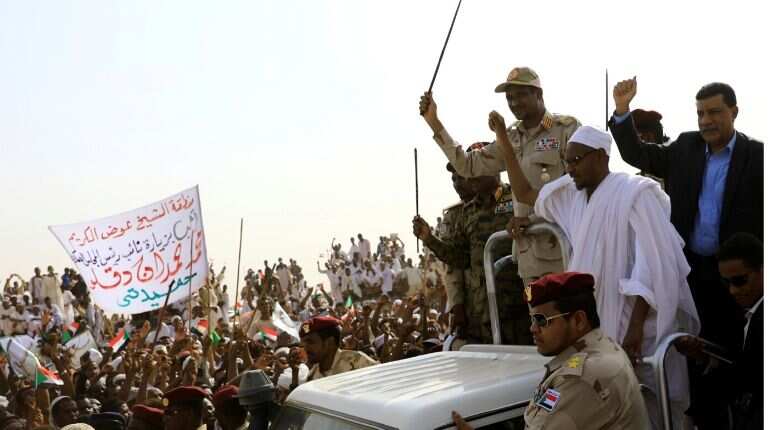
Rapid Support Forces (RSF)
Late last year, as President Omar Hassan al-Bashir's hold on power weakened, one ofSudan's most fearedmilitialeaders lashed out against the government of his long-time ally and benefactor.
In a speech to cheering troops,militiachief Mohamed "Hemedti" Hamdan Dagalo sympathised with the thousands of protesters who had poured onto the streets in December demanding food, fuel and an end to corruption. He hit out at officials "who take what isn't theirs."
"There are some people who are doing great harm, and they are the officials, not the poor," he raged.

After years of loyally supporting Bashir, Hemedti took part in the military coup that toppled theleaderin April and is now a senior figure in the transitional government that is preparing the ground for elections in three years' time. Under the constitution, members of the transitional government aren't allowed to engage in private business activity.
Now a Reuters investigation has found that even as Hemedti was accusing Bashir's people of enriching themselves at the public's expense, a company that Hemedti's family owns was flyinggoldbars worth millions of dollars to Dubai.
Current and former government officials andgoldindustry sources said that in 2018 asSudan's economy was imploding, Bashir gave Hemedti free rein to sellSudan's most valuable natural resource through this family firm, Algunade. At times Algunade bypassed central bank controls overgoldexports, at others it sold to the central bank for a preferential rate, half a dozen sources said. A central bank spokesman said he had no information about the matter.
&im=FitAndFill=(700,400)&imwidth=180&imheight=135&format=webp&quality=medium)
What is the real meaning behind Pete Hegseth's tattoos?
&imwidth=180&imheight=135&format=webp&quality=medium)
India-US ties: Marco Rubio seeks India's oil & energy co-operation Ad Ad options Learn more
&imwidth=180&imheight=135&format=webp&quality=medium)
Man marries off wife of 17 years to her lover in Uttar Pradesh
&imwidth=180&imheight=135&format=webp&quality=medium)
Boeing 737 MAX10 gets FAA certification, deliveries expected to begin in 2027
&imwidth=180&imheight=135&format=webp&quality=medium)
Shastri backs Shami comeback; lauds Bhuvi and warns Bumrah on format workload ahead of World Cup
&imwidth=180&imheight=135&format=webp&quality=medium)
US midterms 2026: Red seats once deemed safe now appear shaky as Republicans spend big on ads
&imwidth=180&imheight=135&format=webp&quality=medium)
WATCH | Albania protesters set Supreme Court on fire as anti-Rama riots escalate
&imwidth=180&imheight=135&format=webp&quality=medium)
'Tap dancing through a minefield': Musk backs SpaceX-Tesla merger as AI boom fuels rocket firm's first profit
&imwidth=180&imheight=135&format=webp&quality=medium)
Dandiya Nite ’26: Indian High Commissioner hails diaspora as bridge between India and Nigeria
&imwidth=180&imheight=135&format=webp&quality=medium)
Trump says Ilhan Omar 'could go to jail' amid federal probe, calls Somalia a 's***house'
&imwidth=180&imheight=135&format=webp&quality=medium)
Punjab CM Bhagwant Mann allegedly detained for three hours at Delhi airport, fined ₹50,000: AAP
&imwidth=180&imheight=135&format=webp&quality=medium)
What the Mecca Joint Defence Agreement says about withdrawal and military support. Read full text of the pact here
&imwidth=180&imheight=135&format=webp&quality=medium)
Musk ordered Starlink restrictions that caught Ukraine off guard amid escalating tensions: Report
&imwidth=180&imheight=135&format=webp&quality=medium)
India vs New Zealand T20I Series 2026: Complete schedule, match timings, squads and live streaming details
&imwidth=180&imheight=135&format=webp&quality=medium)
Trump calls Le Pen France’s ‘conservative voice’ after riots, but holds back on endorsement
&imwidth=180&imheight=135&format=webp&quality=medium)
Trump considers removing White House press corps to restore historic indoor swimming pool
&imwidth=180&imheight=135&format=webp&quality=medium)
Ukrainian soldier rescued by a drone chopped off own leg while hiding for 491 days
&imwidth=180&imheight=135&format=webp&quality=medium)
US-Iran war | Tehran: Must end port blockade, oil sanctions and regional attacks
&im=FitAndFill=(700,400)&imwidth=180&imheight=135&format=webp&quality=medium)
Priyanka Chopra to Shilpa Shetty: 6 Bollywood actresses and their fitness secrets
&imwidth=180&imheight=135&format=webp&quality=medium)
'US will never part with niche technology' former IAF assistant chief on India's fighter jet ambitions
&imwidth=180&imheight=135&format=webp&quality=medium)
Pujara says 'Samson and Vaibhav cannot be in Playing XI' for India on NZ tour
&imwidth=180&imheight=135&format=webp&quality=medium)
'What's wrong with you? Are you a sick person?': Trump at it again as he snaps at reporters, faces backlash
&imwidth=180&imheight=135&format=webp&quality=medium)
Over 100 US lawmakers urge FBI to probe foiled Hindu temple shooting as hate crime
&im=FitAndFill=(700,400)&imwidth=180&imheight=135&format=webp&quality=medium)
New OTT releases this week (October 19-25, 2026): Gajab Raat to Chaar Yaar-8 titles to watch during Dussehra week on Netflix, Prime Video and more
&imwidth=180&imheight=135&format=webp&quality=medium)
Ukrainian drone airlifts wounded soldier in what is likely a world first
&imwidth=180&imheight=135&format=webp&quality=medium)
Trump says he wants Zelensky to 'make a deal' with Russia, asks Putin to release American prisoner Stephen Hubbard
&imwidth=180&imheight=135&format=webp&quality=medium)
The Verdict | Trump, Putin and Xi: A superpower triangle that could reshape global diplomacy
&imwidth=180&imheight=135&format=webp&quality=medium)
India moves to buy 10,000 more AI chips for a national compute pool open to startups
&imwidth=180&imheight=135&format=webp&quality=medium)
'They are not even telling us' - Mysterious metallic object discovered in Minnesota field
&imwidth=180&imheight=135&format=webp&quality=medium)
Cattle-feed bran in biscuits, detergent in milk: FSSAI acts against 3 companies
&imwidth=180&imheight=135&format=webp&quality=medium)
US midterms 2026: With Republicans spending big, Bloomberg opens his wallet for Democrats. Here's how much he is pouring
&imwidth=180&imheight=135&format=webp&quality=medium)
Iran rejects US talks until demands are met, rules out moving enriched uranium out of the country
&imwidth=180&imheight=135&format=webp&quality=medium)
Feds obtain DNA evidence that could prove Ilhan Omar married her brother: Report
&imwidth=180&imheight=135&format=webp&quality=medium)
Ramayana advance booking: Ranbir Kapoor, Yash's film cross $500K ahead of Diwali release
Airway bills and invoices, reviewed by Reuters, give a rare glimpse into Algunade's dealings - a closely-guarded secret in a country where two-thirds of the population live in poverty. The documents, covering a four-week period from the end of last year, show Algunade sent around $30 million ofgoldbars to Dubai, around a ton in weight.
In the past, Hemedti has spoken openly about owninggoldinterests, most recently in an interview with the BBC in August. "I'm not the first man to havegoldmines. It's true, we havegoldmines, and there's nothing preventing us from working ingold," he said then.
But in response to Reuters' questions for this article, Hemedti's office denied any link between the commander and Algunade. In a separate interview, Algunade's general manager, Abdelrahman al-Bakri, said the firm is owned by Hemedti's brother Abdelrahim, who is also the deputy head of Hemedti's Rapid Support Forces (RSF). Nevertheless, Bakri maintained there was no connection between Algunade and Hemedti and his RSF, which has evolved from amilitiain Darfur toSudan's most powerful paramilitary group.
"Algunade is as far as can be from the RSF," he told Reuters at the firm's heavily secured headquarters. He showed Reuters registration documents that named Abdelrahim as the company's owner. Reuters was unable to contact Abdelrahim. Bakri acknowledged that Algunade exportedgoldto Dubai in late 2018 but said it had done so at the request of Bashir's intelligence agency. He denied the firm soldgoldto the central bank at a preferential rate.
Hemedti's grip onSudan's vitalgoldtrade illustrates the scale of the challenge to rescue an economy broken by decades of mismanagement, corruption, and war.
His career began as amilitiaman in western Darfur, where rebels took up arms against Khartoum in 2003. Bashir mobilized severalmilitiasto quell the revolt and, in the conflict that followed, some 300,000 people were killed and two million more driven from their homes. The government disowned "outlaw" fighters who murdered civilians, but the International Criminal Court issued an arrest warrant for Bashir for war crimes and the United States imposed further economic sanctions against his government.
In Darfur, Hemedti earned a reputation as a ruthless commander and a loyal servant to Bashir. The president called him "Hemayti," meaning "my protector." After Hemedti seized thegoldmines of Darfur's Jebel Amer mountain region, Bashir allowed him to hold onto the prize.
"He became the new king of Jebel Amer and itsgold," said Amjad Farid, a politician, and pro-democracy activist. "For Bashir, he was his loyal boy, his protection force."
Hemedti and hismilitiatook full control of the Jebel Amer mines in 2017 - the year the United States began lifting economic sanctions againstSudan. He faced few obstacles as he expanded his operations from Darfur to South Kordofan and other regions of the country.
Algunade traded with poor, artisan miners who used toxic mercury to extractgold, at grave risk to their health. The leftover soil, known locally as "Karta," was trucked to Algunade's plants where it was treated with cyanide to harvest the remaining ore.
These practices have sometimes brought Algunade into conflict with local people. In October, people in the town of Talodi, South Kordofan, set fire to the Algunade plant, accusing the firm of plundering theirgoldand polluting their soil.
"Thisgoldbelongs to us and this is our land, handed down by our grandfathers. Why should we give thegoldto Algunade? We burned the factory to stop pollution and to stop them from stealing ourgold," said miner Haroun Abdallah.
Algunade's general manager, Bakri, said the "citizens of South Kordofan should say thank you very much to Algunade" for all it had done for the area. He estimated the attack on the facility caused damage of about $6 million.
A global campaign against the use of mercury ingoldmining and other industries led to a United Nations treaty, the Minamata Convention on Mercury, which will prohibit the manufacture, import, and export of products containing mercury by 2020.Sudan's Energy and Mining Minister Adil Ibrahim told Reuters his country would comply with the agreement. The convention does not extend to cyanide, however.
"Cyanide is more serious because it seeps into the earth and can be washed by rain, and it kills so many animals and seeps into drinking water and affects vegetation in the area," said Anwar al-Haj the chair ofSudanDemocracy First Group, a non-governmental organization which advocates for democracy. It published a report in 2018 that asserted a link between the use of hazardous chemicals in mining and increased miscarriages, birth defects, and deaths.
Energy and Mining Minister Ibrahim said the government would help miners find alternatives to mercury, but cyanide use would continue because, if handled properly, it isn't harmful.
Sudan's central bank is supposed to overseegoldexports, but two current and one former government official and several industry sources told Reuters that Bashir sometimes allowed Hemedti to circumvent this rule. The former president let Algunade sellgoldas it liked, these people said, because Hemedti's RSFmilitiawas a useful counterweight to generals in the regular military whom Bashir perceived as a threat to his rule.
The export documents and invoices reviewed by Reuters, covering a four-week period from the end of 2018, showed Algunade doing business with one counterparty in Dubai, a company called Rozella. Contacted by Reuters, Rozella confirmed the firm had dealt with Algunade. A company official said transactions between the two companies took place over a period of three months in late 2018. Algunade's general manager Bakri told Reuters that Rozella was the only firm Algunade dealt with within Dubai.
Under the arrangement with Bashir, Algunade would hand some of its export earnings to the state, to pay for the government's fuel and wheat purchases, government officials said. Algunade's general manager, Bakri, confirmed that some of the proceeds ofgoldsales were used to buy fuel. He said Algunade bypassed the central bank only for three months in late 2018, at Bashir’s request.
A senior government official, however, told Reuters, "there were no official records showing that Algunade gave money" to the state. This official said Hemedti used proceeds fromgoldexports "to buy weapons for Bashir and himself." He estimated that Hemedti pumped millions of dollars into buying weapons and vehicles for the RSF that roams the streets with rocket-propelled grenades and machine guns mounted on jeeps. Asked if revenues from Algunade'sgoldsales were used to buy weapons, Bakri maintained there was no connection between the firm and the RSF or Hemedti. Hemedti's office declined to comment beyond denying any link between the commander and Algunade.
The head ofSudan'sgoldexporters' union Abdel Monem al-Siddiq said that even when Algunade sold itsgoldto the central bank as it was supposed to, it received a preferential rate - a claim Algunade's general manager Bakri rejected as "fake news."
With tens of thousands of soldiers, the RSF is Hemedti's power base. It is deployed across the country to protectgoldmines and strategic buildings. Thousands of its fighters have fought for Saudi Arabia and the United Arab Emirates in Yemen's civil war. Hemedti's fighters are deeply loyal.
"Theleadersometimes takes the time to talk to usmilitiamen by telephone. We will always support him," said one fighter, declining to be named because he wasn't permitted to talk to the media. He said he was paid $20,000 to fight in Yemen for six months. Many of his countrymen live on less than $10 a month.
Energy and Mining Minister Ibrahim faces a big challenge to reform thegoldindustry. He said successive ministers failed to ensure concessions were awarded fairly and transparently, leading to corruption. "It's a mess," he added.
Finance Minister Ibrahim Elbadawi, who estimatedSudanneeds up to $5 billion in international support, said the government will push to end monopolies in sectors includinggoldmining. Algunade's general manager Bakri insisted Algunade doesn't have market dominance.
For manySudanese, Hemedti and his firm are symbols of the country's repressive past and economic inequalities.
Onegoldtrader told Reuters how he stood up during an industry conference recently to complain that Hemedti'sgoldbusiness had become too dominant. Two days later, he said, police hauled him to the prosecutor's office for questioning about his comments. His account couldn't be independently confirmed.
At thegoldsouk in downtown Khartoum, a large sign advertising Algunade blazes above rows and rows of idle jewellery shops. FewSudanese can afford to buy these days, said shopkeeper Mohammed Awad. When asked ifgoldexports had harmed his business, another trader pointed to the Algunade sign above him and said: "We hope that Hemedti will change his ways and keep thegoldinside the country."