Pakistan to lead secretariat in Riyadh under Saudi-Turkey-Pakistan defence pact

&imwidth=600&imheight=450&format=webp&quality=medium "Pakistan to lead secretariat in Riyadh under Saudi-Turkey-Pakistan defence pact")
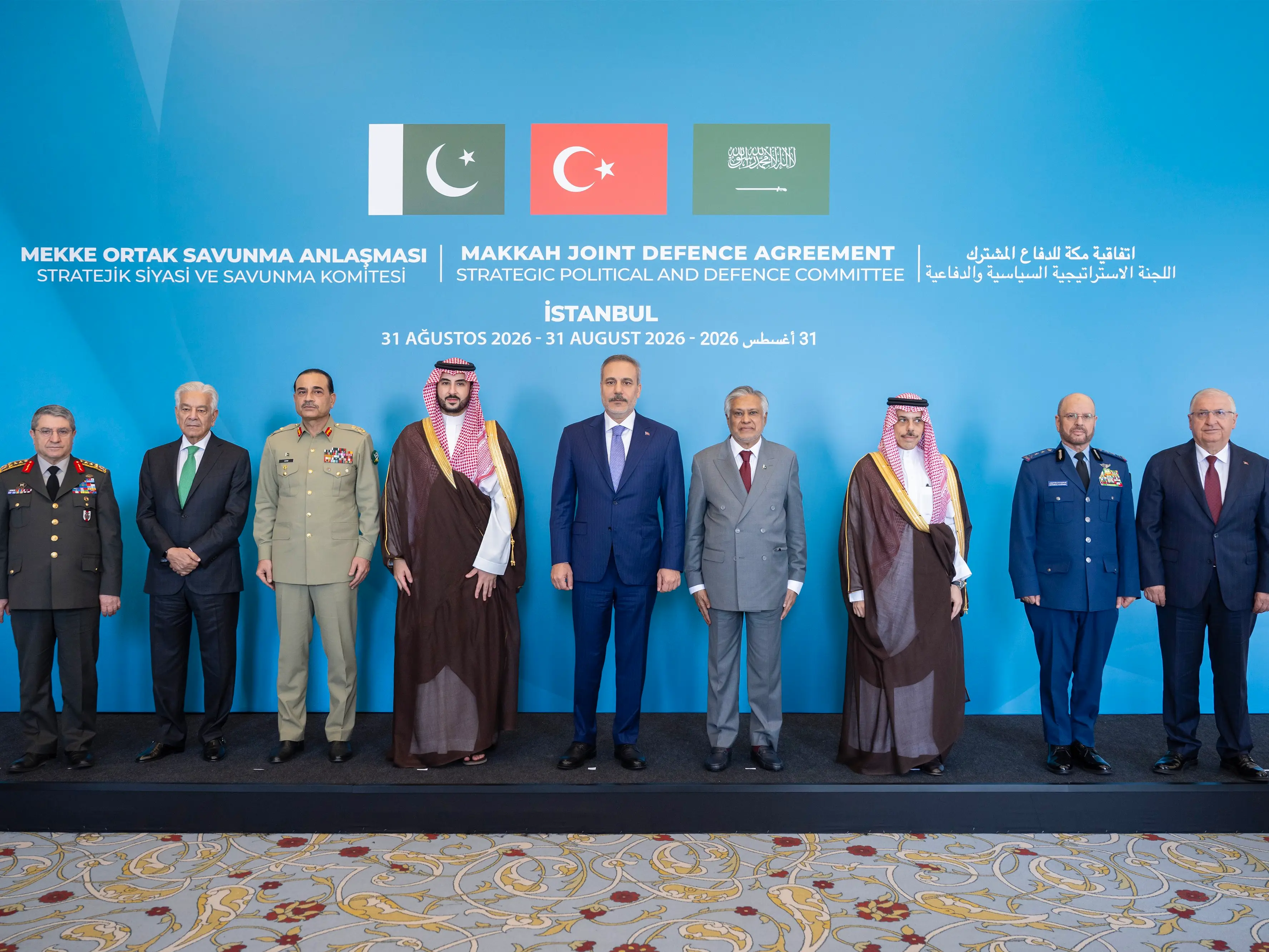
Senior officials from Saudi Arabia, Turkey and Pakistan gather in Istanbul for the first meeting of the Strategic Political and Defense Committee under the Mecca Joint Defense Agreement Photograph: (X| Khalid bin Salman)
Saudi Arabia, Pakistan and Turkey agree to establish a secretariat in Riyadh under the Mecca Joint Defence Agreement to strengthen trilateral defence cooperation.
Saudi Arabia, Turkey and Pakistan have agreed to establish a secretariat Riyadh, Saudi Arabia, at the inaugural meeting of the Strategic Political and Defence Committee under the Mecca Joint Defence Agreement. The countries officially agreed that the central administrative body in Riyadh will be managed initially by the Pakistani Secretary General for three years.
“A Secretariat, headed by a Secretary General, will be established in the Kingdom of Saudi Arabia to support their work within the framework of the agreement," said the Pakistani Ministry of Foreign Affairs in a statement following the meeting.
“The Secretariat will be initially headed by a Secretary General from the Islamic Republic of Pakistan for a period of three years.”
This is being seen as a move to institutionalise the cooperation between the three nations, “enhance their solidarity, ensure the credibility and effectiveness of their collective deterrence and defence,” and support “a just, inclusive and lasting peace.”
Turkish Foreign Minister Hakan Fidan said that the alliance was based on “international principles, such as respecting the sovereignty of other states, territorial integrity and not intervening in internal affairs” and it remained open for participation "of any other country.”
Trending Stories
&imwidth=280&imheight=210&format=webp&quality=medium)
&imwidth=280&imheight=210&format=webp&quality=medium)
&imwidth=280&imheight=210&format=webp&quality=medium)
&imwidth=280&imheight=210&format=webp&quality=medium)
&imwidth=280&imheight=210&format=webp&quality=medium)
&imwidth=280&imheight=210&format=webp&quality=medium)
&imwidth=280&imheight=210&format=webp&quality=medium)
&imwidth=280&imheight=210&format=webp&quality=medium)

&imwidth=280&imheight=210&format=webp&quality=medium)
&imwidth=280&imheight=210&format=webp&quality=medium)
&imwidth=280&imheight=210&format=webp&quality=medium)
&imwidth=280&imheight=210&format=webp&quality=medium)
&imwidth=280&imheight=210&format=webp&quality=medium)
&imwidth=280&imheight=210&format=webp&quality=medium)
&imwidth=280&imheight=210&format=webp&quality=medium)
&imwidth=280&imheight=210&format=webp&quality=medium)
&im=FitAndFill=(700,400)&imwidth=280&imheight=210&format=webp&quality=medium)
&imwidth=280&imheight=210&format=webp&quality=medium)
&imwidth=280&imheight=210&format=webp&quality=medium)
&imwidth=280&imheight=210&format=webp&quality=medium)
&imwidth=280&imheight=210&format=webp&quality=medium)
&imwidth=280&imheight=210&format=webp&quality=medium)
&imwidth=280&imheight=210&format=webp&quality=medium)
&imwidth=280&imheight=210&format=webp&quality=medium)
&imwidth=280&imheight=210&format=webp&quality=medium)
&im=FitAndFill=(700,400)&imwidth=280&imheight=210&format=webp&quality=medium)
&imwidth=280&imheight=210&format=webp&quality=medium)
&im=FitAndFill=(700,400)&imwidth=280&imheight=210&format=webp&quality=medium)

&im=FitAndFill=(700,400)&imwidth=280&imheight=210&format=webp&quality=medium)
&imwidth=280&imheight=210&format=webp&quality=medium)
&imwidth=280&imheight=210&format=webp&quality=medium)
&imwidth=280&imheight=210&format=webp&quality=medium)
Pakistan's delegation was led by Ishaq Dar, Asim Munir and Defence Minister Khawaja Asif. Turkiye was represented by Fidan, Defence Minister Yasar Guler and Chief of the General Staff Selcuk Bayraktaroglu. Saudi Arabia’s delegation included Foreign Minister Faisal bin Farhan Al Saud, Defence Minister Khalid bin Salman and Chief of the General Staff Fayyad al-Ruwaili.
While many analysts have previously termed it an Islamic NATO based on an Article 5-like stipulation where an attack on one is considered an attack on all. However, many analysts push back on this analogy that the pact has no integrated command, no joint military budget, and no discernible bureaucratic structure that underpins NATO. However, this decision to establish a secretariat can be seen as a step towards having an operational capacity of the alliance.