Opinion: Expect the unexpected in the Korean theatre

Trump kim
The international isolation of North Korea appeared near complete towards the end of last year.
"If you don't like the weather in New England now, just wait a few minutes," once said Mark Twain. This is as applicable to the political weather in the Korean Peninsula, which continues to live up to its billing as a theatre of the unexpected.
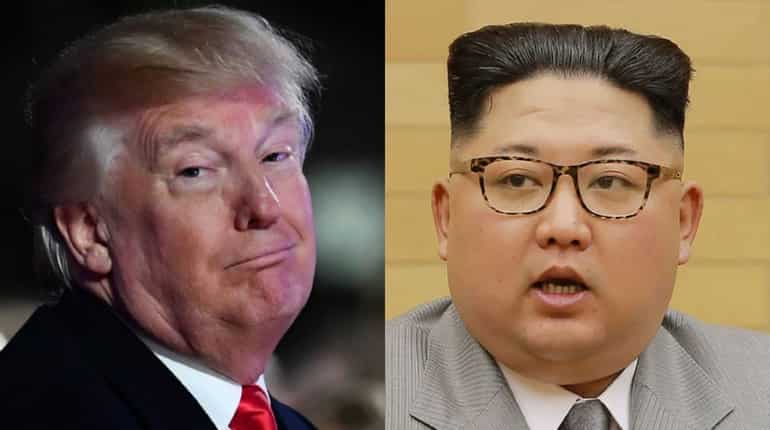
Barely had the surprise news of an inter-Korean summit, begun to sink-in that President Trump announced his willingness to meet Kim Jong-un (KJU) towards the end of May. If it materialises, and there is still an if, it would be a historic first.
As if that was not dramatic enough, Japanese media sighted a 21-coach green train with yellow stripes, from North Korea heading to the Chinese capital. As speculated, none other than a beaming Kim Jong-un emerged in Beijing, with wife in toe, for a first ever meeting with Xi Jinping on 26 March. An attempt to lift the veil is in order.

The international isolation of North Korea appeared near complete towards the end of last year. Sanctions had begun to bite and the American rhetoric was becoming shriller. With the dawn of 2018, came the unexpected offer of dialogue with Seoul and one thing led to another. The Korean leaders are to meet at the Peace Village on DMZ (Demilitarised Zone) on April 27. Hectic preparations are underway.
NSA Chung Eui-yong, who was the principal South Korean (ROK) envoy to Pyongyang rushed to Washington with a message from Kim Jong-un. He called on Trump on March 8, who agreed on the spot to meet Kim Jong-un, without any preconditions. Kim's message also included a promise to denuclearise. Addressing the media at the White House and knowing which buttons to press, Chung observed, "I explained to President Trump that his leadership and his maximum-pressure policy, together with international solidarity, brought us to this juncture."
Meanwhile, Trump has been busy inducting like-minded hardliners into his team. CIA Director Mike Pompeo, a hawk, is to be the new Secretary of State. The 69-year-old John Bolton, a super-hawk, has been pulled out of retirement to become the new NSA.
&imwidth=180&imheight=135&format=webp&quality=medium)
Blasts heard in Sanaa as Saudi-led coalition warns civilians to evacuate; Houthis vow retaliation
&imwidth=180&imheight=135&format=webp&quality=medium)
China's counter-surveillance industry booms amid heightened espionage fears | Gravitas
&imwidth=180&imheight=135&format=webp&quality=medium)
Saudi Arabia strikes Yemen oil sites as Houthi missiles target Riyadh; 'limited fire' breaks out at Aramco
&im=FitAndFill=(700,400)&imwidth=180&imheight=135&format=webp&quality=medium)
Navratri 2026: 9 days, 9 forms of Goddess Durga and 9 colours- Check the complete list
&imwidth=180&imheight=135&format=webp&quality=medium)
Trump accuses Houthis of driving up oil prices before US midterms, warns of consequences
&imwidth=180&imheight=135&format=webp&quality=medium)
New Delhi rejects Beijing’s claims and remarks on Ladakh location naming exercise
&imwidth=180&imheight=135&format=webp&quality=medium)
Russian woman and Bihar boy's love story goes viral after she reaches India to marry him
&imwidth=180&imheight=135&format=webp&quality=medium)
US Midterms 2026: In Alaska, cost-of-living anxiety meets strangest ballot in high-stakes Senate race
&imwidth=180&imheight=135&format=webp&quality=medium)
CMs Vijay-Naidu meet in Vijayawada, discuss water sharing, river-linking
&imwidth=180&imheight=135&format=webp&quality=medium)
'Don't ever mess with nature!': Trump’s tiger attack post triggers social media backlash as victim's family issues heartbreaking tribute
&imwidth=180&imheight=135&format=webp&quality=medium)
Air India Flight from Frankfurt diverted to Jaipur after hijack alert, probe on
&imwidth=180&imheight=135&format=webp&quality=medium)
1,500 drones illuminate Mumbai sky as Cordelia Cruises unveils second ship, Cordelia Sky
&imwidth=180&imheight=135&format=webp&quality=medium)
Delhi Police arrest Cockroach Janta Party's Saurav Das, Ashutosh Ranka, Ajinkya Shinde in Jantar Mantar case, to be produced before court
&imwidth=180&imheight=135&format=webp&quality=medium)
Pakistan to chair UN-backed global Borrowers’ Platform as its own debt burden mounts, triggers sarcastic reactions on social media
&imwidth=180&imheight=135&format=webp&quality=medium)
Robot gropes girl, makes thrusting movements in bizarre crime in Germany
&imwidth=180&imheight=135&format=webp&quality=medium)
US Treasury hits Bank of America with over $1.2 billion in penalties over suspicious transactions and Chinese money-laundering links
&imwidth=180&imheight=135&format=webp&quality=medium)
France accuses Musk of ‘online harassment’ of European leaders, warns of poll interference
&imwidth=180&imheight=135&format=webp&quality=medium)
'Turn approver, resign, we'll forgive you': Rahul Gandhi claims receiving messages from CEC Gyanesh Kumar
&imwidth=180&imheight=135&format=webp&quality=medium)
MI5 chief warns Russia is UK’s ‘aggressor number one’ as Iran and AI threats grow
&imwidth=180&imheight=135&format=webp&quality=medium)
Trump reconsidering calling off Nidal Hasan's execution livestream. Here's why
&imwidth=180&imheight=135&format=webp&quality=medium)
‘My president, I mean my husband’: Trump's new press secretary Katie Zacharia's first briefing goes off the rails in 14 minutes
&imwidth=180&imheight=135&format=webp&quality=medium)
‘How many people did she illegally bring from Somalia?’ Trump targets Ilhan Omar, questions her net worth
&imwidth=180&imheight=135&format=webp&quality=medium)
Marco Rubio to visit India next week, focus on energy cooperation and strategic ties
&imwidth=180&imheight=135&format=webp&quality=medium)
'Ouch!!! That must hurt': Kangana Ranaut hails Kamal Haasan's sharp reply to Elon Musk over Starlink row
&imwidth=180&imheight=135&format=webp&quality=medium)
Girl 'dead' for 8 hours wakes up at her own funeral, dad insists she wasn't breathing
&imwidth=180&imheight=135&format=webp&quality=medium)
Sidhu Moose Wala’s younger brother wins hearts by recreating late singer’s signature move at Toronto Hologram Show
&imwidth=180&imheight=135&format=webp&quality=medium)
UK school ditches technology, shifts from screen to pen and paper for learning
&im=FitAndFill=(700,400)&imwidth=180&imheight=135&format=webp&quality=medium)
New OTT releases this week (October 12-18, 2026): Sacrifice, Koffee with Karan S9, Roadies Rebirth- 6 titles coming on Netflix, JioHotstar and more
&imwidth=180&imheight=135&format=webp&quality=medium)
New Cold War: Why is China buying more gold? Explained
&imwidth=180&imheight=135&format=webp&quality=medium)
Netanyahu wants to join Saudi's war on Houthis, but Crown Prince denies: Report
&imwidth=180&imheight=135&format=webp&quality=medium)
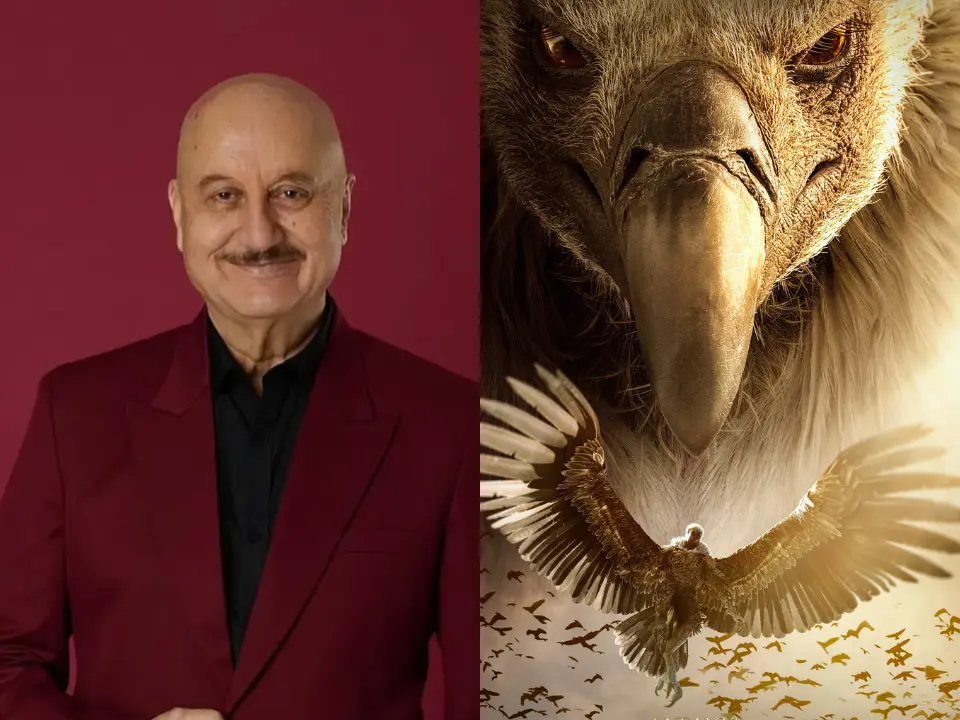
Anupam Kher joins Ranbir Kapoor's Ramayana as Jatayu, new poster unveiled
&imwidth=180&imheight=135&format=webp&quality=medium)
Measles kills again: 6 dead in Pennsylvania as America faces its worst outbreak in decades | Gravitas
&imwidth=180&imheight=135&format=webp&quality=medium)
Ken Paxton's Dubai night out with two US fugitives sparks political storm as Texas Senate race tightens
&imwidth=180&imheight=135&format=webp&quality=medium)
Cornell University suspends fraternity parties over 2024 gang rape allegations
Earlier on March 19, Bolton, who has been a votary of regime change in North Korea had stated, "We should insist that if this meeting is going to take place, it will be similar to discussions we had with Libya 13 or 14 years ago: how to pack up their nuclear weapons program and take it to Oak Ridge, Tennessee... . If they're not prepared to have that kind of serious discussion, it could actually be a very short meeting." (Reported by Reuters on March 23). Even though he was publicly staking out a maximalist position, the Libyan example and fate of Gaddafi, is Kim Jong-un's darkest nightmare, and does not portend well for any meaningful forward movement.
For a few weeks it appeared that Seoul was calling the shots in fostering a thaw in the Korean Peninsula. Her diplomats were clocking up thousands of air-miles in briefing key world leaders including Putin, Xi and Abe. Japan was uncomfortable but could do little except to advise caution and keep in touch with Washington. Abe is travelling to the US to meet Trump on 17-18 April. China, North Korea's sole, even if somewhat estranged benefactor, refused to be side-lined and decided to get into the act. An invitation for an unofficial meeting was extended by President Xi to Kim Jong-un and grabbed with alacrity.
Both sides stood to gain. China underscored its leverage over the North and signalled that a solution to the North Korea imbroglio could only be found with its blessings. Beijing effectively claimed a spot for itself at the negotiating table and became a frontrunner to host the Trump-Kim summit. Paranoid about his security and convinced that the US is out to get him, Kim Jong-un is highly unlikely to travel to the US or a western capital for the meeting. His preference would be Pyongyang or the Peace Village, which would not be acceptable to the US. The sides, even if reluctantly, could settle for Beijing.
Setting his grievances aside, Xi Jinping accorded all state-honours to Kim, who had left North Korea for the first time since coming to power in 2011. The charm offensive worked. For Kim, friendless and isolated, the invite came as a Godsent. It improved his bargaining position in one go, knowing that China, which was loath to see an increased US role in the Korean Peninsula, was being supportive.
"The issue of denuclearisation of the Korean Peninsula can be resolved, if South Korea and the United States respond to our efforts with goodwill, create an atmosphere of peace and stability while taking progressive and synchronous measures for the realisation of peace," (emphasis added) Kim stated in Beijing. He expectedly introduced caveats which may be difficult for Trump to accept, who wants to frontload the agreement with obligations on North Korea's part to dismantle its Weapons of Mass Destruction (WMD) programme, before easing sanctions. Thus, the stage is being set for bruising and gruelling negotiations.
All these developments augur well for a constructive inter-Korean summit, for only that can pave the way for a Trump-Kim meet.
(Vishnu Prakash has been Ambassador of India to Republic of Korea and Indian High Commissioner to Canada. He is spokesperson of Foreign Office & Consul General to Shanghai, a columnist/analyst on foreign affairs)
(Disclaimer: The opinions expressed above are the personal views of the authors and do not reflect the views of ZMCL)