

&imwidth=800&imheight=600&format=webp&quality=medium "Oil jumps, stocks soar: Markets defy West Asia crisis amid AI boom, IEA warns of economy 'red zone'")
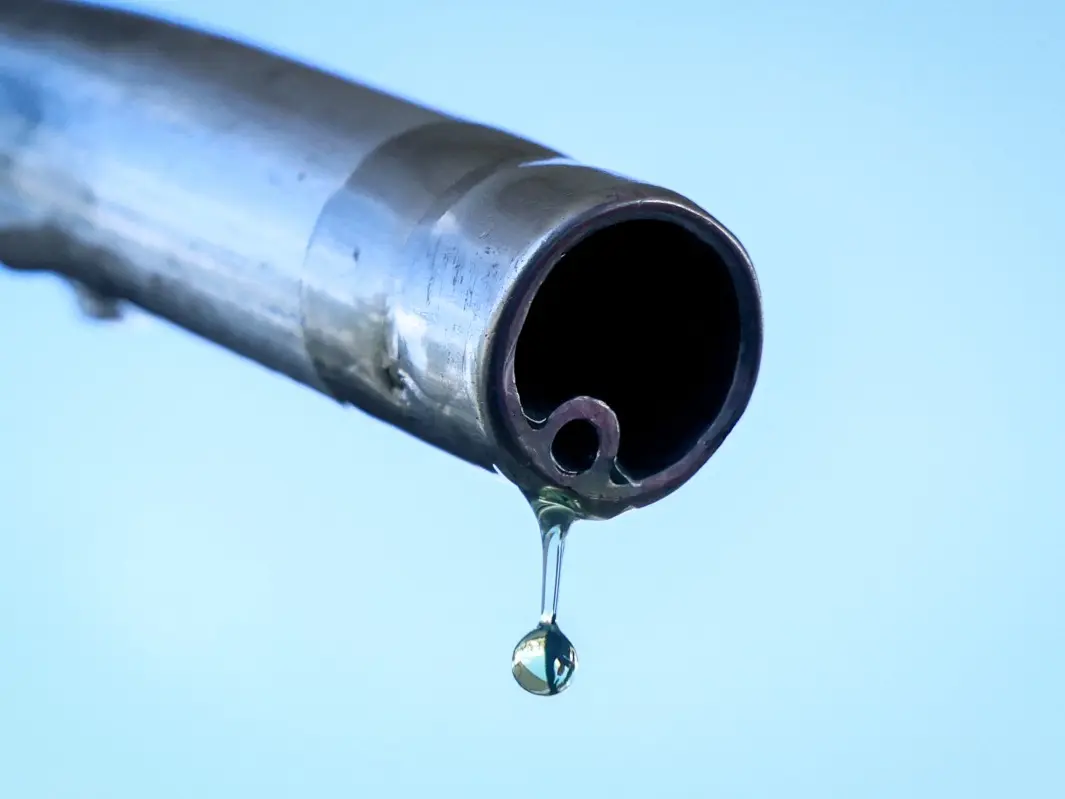
Oil prices rose on Wednesday as Brent Crude is trading at $98.20 per barrel, as peace talks between the US and Iran stuttered. However, benchmark indexes across Japan, Taiwan, China, Sydney, Singapore and Manila continued to rally, driven by the tech sector and demand for artificial intelligence. Iran fired missiles at Kuwait and Bahrain, and the US fired on and disabled oil tankers heading towards Iran. Prices for August contracts have risen by more than 2 per cent since June 2 and by over 5 per cent since last week.
Speaking to CNBC-TV18, International Energy Agency (IEA) Executive Director Fatih Birol Global economy could enter a “red zone” if disruption through the Strait of Hormuz continues. The IEA has warned that the Strategic Oil Reserves are depleting rapidly. In March, all of 34 IEA countries released 400 million of their strategic oil reserves to stabilise the market price. However, the IEA Chief said that there was no immediate need for the release of the second strategic oil reserve.
Stock markets continue to rally
Stock markets across the globe continued to rally, driven by AI optimism. In the US, all three major indexes closed at fresh records on Tuesday's closure. S&P 500 rose 0.13 per cent to end above 7,600 for the first time ever, while the Dow added 228.91 points, or 0.45 per cent. The Nasdaq Composite marked a gain of 0.03 per cent. Across the Asian market, Japan’s Nikkei 225 hit a record high, as investors appeared to look past the war in Iran. Nikkei 225 ended Wednesday’s trading session 2.50 per cent higher, while Topix added 1.83 per cent higher, China’s CSI 300 rose 0.49 per cent, and Hong Kong’s Hang Seng was down 1.62 per cent. While Australia's S&P/ASX 200 rose 0.70 per cent. But India showed a downward trend as the Nifty 50 fell 0.83 per cent, while the BSE Sensex was down by 0.90 per cent.
Most of the major indexes were driven by the AI optimism, but the economy underneath this rally does not appear evenly strong. Stocks are up, but households are under strain. US household purchasing power, when adjusted for inflation, has decreased; discretionary spending is declining, meanwhile, credit card delinquency pushes consumers towards a debt trap. Most equity markets are concentrated towards one particular sector, hinting at a looming correction.
Trending Stories
&imwidth=180&imheight=135&format=webp&quality=medium)
Abhishek Sharma sets all-time record for most T20I sixes in a year
&imwidth=180&imheight=135&format=webp&quality=medium)
‘My president, I mean my husband’: Trump's new press secretary Katie Zacharia's first briefing goes off the rails in 14 minutes
&im=FitAndFill=(700,400)&imwidth=180&imheight=135&format=webp&quality=medium)
Who left the White House podium the fastest? Press secretaries with the shortest stints
&imwidth=180&imheight=135&format=webp&quality=medium)
'Reason UN has lost credibility': Amid SIR protests India hits out at report alleging 'youth repression'
&im=FitAndFill=(700,400)&imwidth=180&imheight=135&format=webp&quality=medium)
New Friday OTT releases (October 16, 2026): DC, Sacrifice, Aasha- 6 new movies and TV shows coming on Netflix, Zee 5, Prime Video and more
&imwidth=180&imheight=135&format=webp&quality=medium)
US lawmaker Pramila Jaypal writes to Rubio, urges to raise handling of CJP protest with India
&imwidth=180&imheight=135&format=webp&quality=medium)
'We feel like Mr India': Gujarat’s undercover SHE team guard garba nights at Navratri
&imwidth=180&imheight=135&format=webp&quality=medium)
Sean ‘Diddy’ Combs transferred to new prison amid reports of special privileges
&imwidth=180&imheight=135&format=webp&quality=medium)
Selma Blair’s team responds to flight incident, says actress ‘did not intend to harm anyone’
&im=FitAndFill=(700,400)&imwidth=180&imheight=135&format=webp&quality=medium)
Inside Tesla's Roadster: 10 features of Elon Musk's 'flying car' that push the limits of electric vehicles | In Pics
&imwidth=180&imheight=135&format=webp&quality=medium)
Ukraine drone strike disrupts 22 Russian airports, over 200 flights
&imwidth=180&imheight=135&format=webp&quality=medium)
India’s naval priorities: Ex-Navy Chief calls for third aircraft carrier, more warships and submarines
&imwidth=180&imheight=135&format=webp&quality=medium)
IND-W vs ZIM-W, 1st T20I: Deepti Sharma, Niki Prasad shine as India beat Zimbabwe by four wickets
&imwidth=180&imheight=135&format=webp&quality=medium)
China responds to Trump's Press Secretary Katie Zacharia after toilet remark: 'Visit China more often'
&imwidth=180&imheight=135&format=webp&quality=medium)
Pakistan to head IMF, World Bank boards after 74 years amid persistent economic crisis
&imwidth=180&imheight=135&format=webp&quality=medium)
Oil tanker carrying over 2M barrels of crude hits mine in Strait of Hormuz, catches fire, says Iran
&imwidth=180&imheight=135&format=webp&quality=medium)
Infiltration bid foiled in Kupwara’s Keran sector, search operation underway
&imwidth=180&imheight=135&format=webp&quality=medium)
US midterms 2026: Ken Paxton may have Elon Musk to thank if he wins the Texas Senate race. Here's why
&imwidth=180&imheight=135&format=webp&quality=medium)
Vijay Deverakonda and Rashmika Mandanna's Ranabaali X Review: Netizens call it history-rich but overstuffed
&imwidth=180&imheight=135&format=webp&quality=medium)
Ramayana Part 1: Sai Pallavi's warrior avatar as Sita steals the spotlight in new BTS footage
&imwidth=180&imheight=135&format=webp&quality=medium)
No Ravindra Jadeja, Yashasvi Jaiswal in India’s 2027 ODI World Cup plans: Report
&imwidth=180&imheight=135&format=webp&quality=medium)
Israel examines Russia's Shahed-type drones sent by Ukraine to combat Iran | Gravitas
&imwidth=180&imheight=135&format=webp&quality=medium)
Trump invokes national interest to waive new Russia sanctions, tariffs; India gets relief from 100% tariff threat
&imwidth=180&imheight=135&format=webp&quality=medium)
Gravitas | Iran threatens to hit key bridges in 7 countries if US resumes strikes
&imwidth=180&imheight=135&format=webp&quality=medium)
US midterms 2026: Alexandria Ocasio-Cortez donates $1 million to Abdul El-Sayed’s as Michigan race heats up
&imwidth=180&imheight=135&format=webp&quality=medium)
Lizard people? Ex-US Army sniper claims soldier killed by 'reptilian beings' in battle near Area 51

Not Khan but Pal: Why did Imran Khan choose his mother's surname over his father's? Family tree explained
&imwidth=180&imheight=135&format=webp&quality=medium)
One species, two lineages: Why Sri Lanka’s spectacled cobra differs genetically from Indian variant
&imwidth=180&imheight=135&format=webp&quality=medium)
A secret code, a midnight escape and 300 deaths: The Russian officer who turned on Putin
&imwidth=180&imheight=135&format=webp&quality=medium)
Ankita Bhandari murder case: Parents meet CBI, seek impartial investigation
&imwidth=180&imheight=135&format=webp&quality=medium)
Here’s who is eyeing the White House press secretary role after Katie Zacharia’s exit
&imwidth=180&imheight=135&format=webp&quality=medium)
COVID-19 pandemic led to increase in divorce cases, observes Madras High Court

US ends automatic work permit extensions; Indian workers lose 540-day safety net: What it means

