'No food, no oxygen': Missing Sherpa rescued on Everest after 6 days, found crawling towards base camp

&imwidth=600&imheight=450&format=webp&quality=medium "'No food, no oxygen': Missing Sherpa rescued on Everest after 6 days, found crawling towards base camp")
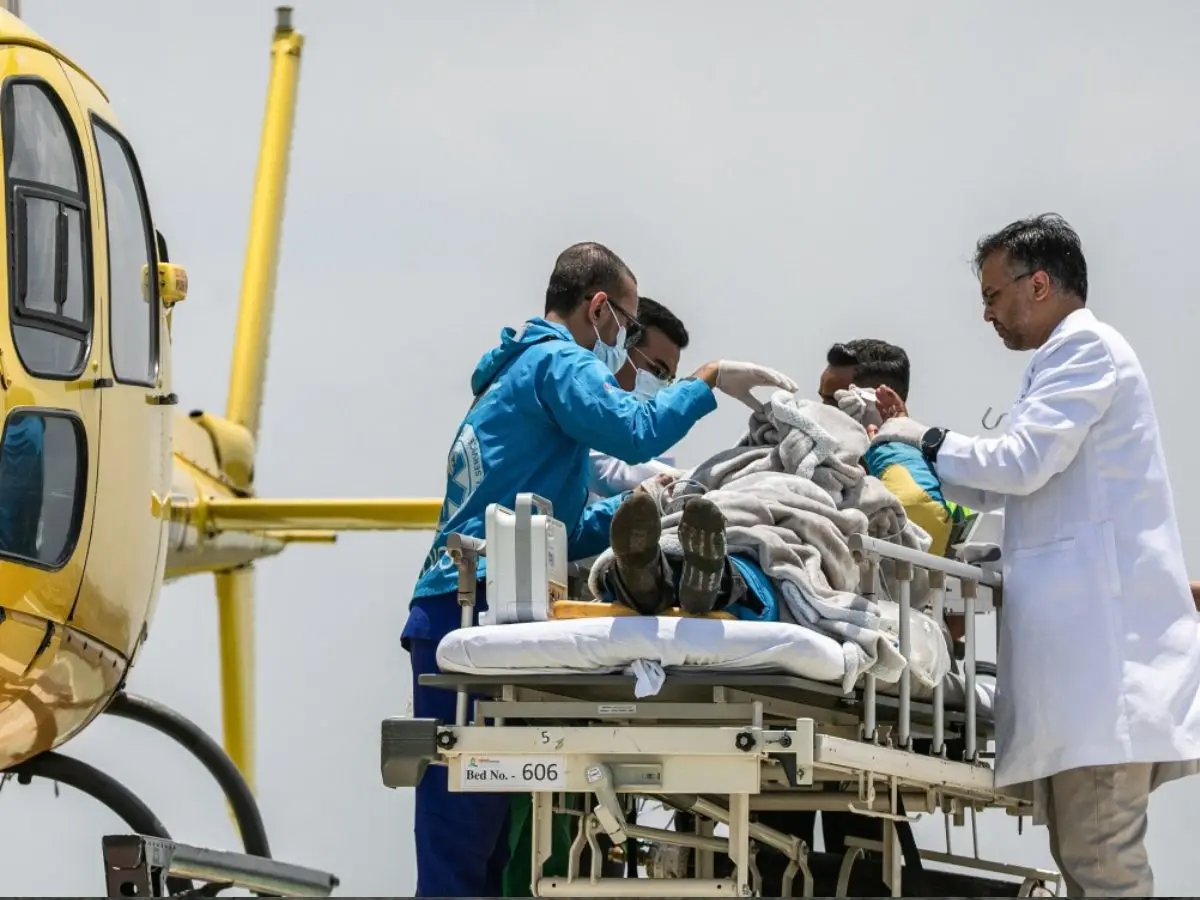
Medics and rescuers transfer mountaineer Dawa Sherpa from a helicopter upon his arrival at the HAMS Hospital Photograph: (AFP)
The season itself was delayed after a huge block of glacial ice obstructed the route near base camp for nearly two weeks.
A Nepali Sherpa guide who disappeared on the slopes of Mount Everest has been rescued after surviving for about a week without food, bottled oxygen or contact with rescuers, in a rare survival story from the world's highest mountain.
Dawa Sherpa, 52, went missing while descending Everest after an unsuccessful summit attempt with a Polish climber he was guiding. He was last seen on May 29 between Camp III and Camp IV, high on the 8,849-metre peak. While his client safely returned to base camp, Dawa failed to arrive, raising fears that he had died on the mountain. "Dawa survived alone for nearly a week without food, water, or supplemental oxygen navigating the treacherous Khumbu Icefall (even after the fixed ladders were removed for the season)," the Nepal Mount Everest hiking company said in a social media post. "This is nothing short of a miracle."
Discovery near the Khumbu Icefall
The breakthrough came on Thursday when a clean-up team from the Sagarmatha Pollution Control Committee spotted Dawa crawling down snowy slopes near the Khumbu Icefall, just above Everest Base Camp. The committee, which installs ropes and ladders before the climbing season and removes equipment afterwards, was carrying out post-season clean-up operations when the missing guide was found.
According to Reuters, Lama Kazi Sherpa of the committee said the team located Dawa and brought him down to safety. Pemba Sherpa of 8K Expeditions, which coordinated the search, told the Associated Press that he was quickly given food and water before being evacuated by helicopter to HAMS Hospital in Kathmandu.
Trending Stories
&imwidth=280&imheight=210&format=webp&quality=medium)
&imwidth=280&imheight=210&format=webp&quality=medium)
&imwidth=280&imheight=210&format=webp&quality=medium)
&imwidth=280&imheight=210&format=webp&quality=medium)
&imwidth=280&imheight=210&format=webp&quality=medium)
&im=FitAndFill=(700,400)&imwidth=280&imheight=210&format=webp&quality=medium)
&imwidth=280&imheight=210&format=webp&quality=medium)
&imwidth=280&imheight=210&format=webp&quality=medium)
&im=FitAndFill=(700,400)&imwidth=280&imheight=210&format=webp&quality=medium)
&imwidth=280&imheight=210&format=webp&quality=medium)
&imwidth=280&imheight=210&format=webp&quality=medium)
&imwidth=280&imheight=210&format=webp&quality=medium)
&imwidth=280&imheight=210&format=webp&quality=medium)
&imwidth=280&imheight=210&format=webp&quality=medium)
&imwidth=280&imheight=210&format=webp&quality=medium)
&imwidth=280&imheight=210&format=webp&quality=medium)
&imwidth=280&imheight=210&format=webp&quality=medium)
&imwidth=280&imheight=210&format=webp&quality=medium)
&imwidth=280&imheight=210&format=webp&quality=medium)
&imwidth=280&imheight=210&format=webp&quality=medium)
&imwidth=280&imheight=210&format=webp&quality=medium)
&imwidth=280&imheight=210&format=webp&quality=medium)
&im=FitAndFill=(700,400)&imwidth=280&imheight=210&format=webp&quality=medium)
&imwidth=280&imheight=210&format=webp&quality=medium)
&imwidth=280&imheight=210&format=webp&quality=medium)
&imwidth=280&imheight=210&format=webp&quality=medium)
&imwidth=280&imheight=210&format=webp&quality=medium)
&imwidth=280&imheight=210&format=webp&quality=medium)
&imwidth=280&imheight=210&format=webp&quality=medium)
&imwidth=280&imheight=210&format=webp&quality=medium)
&imwidth=280&imheight=210&format=webp&quality=medium)
&imwidth=280&imheight=210&format=webp&quality=medium)
&im=FitAndFill=(700,400)&imwidth=280&imheight=210&format=webp&quality=medium)
&imwidth=280&imheight=210&format=webp&quality=medium)
&imwidth=280&imheight=210&format=webp&quality=medium)
Family had begun funeral rituals
For Dawa's family, the rescue came when hope had almost vanished. His wife, Damu Sherpa, said they first learnt he was alive through local news reports and phone calls informing them that he was being brought down from the mountain. His daughter, Mendo Lhamu Sherpa, revealed the family had already started funeral rituals. “When we first heard about it, we could not be sure if that person was indeed our father,” she told AP. “So to be certain we asked for photos to be sent and then only we were sure and very happy.”
She later confirmed that her father recognised family members and was able to speak. “He recognised me ... is good and speaks. We are happy,” she said.
A remarkable Everest survival story
Dawa, who works for Kathmandu-based Himalayan Traverse and comes from Okhaldhunga district south of Everest, is being treated for frostbite and other complications. His rescue comes after Everest's busiest climbing season on record, with more than 1,000 climbers and guides reaching the summit. The season itself was delayed after a huge block of glacial ice obstructed the route near base camp for nearly two weeks.
First climbed in 1953 by Edmund Hillary and Tenzing Norgay, Everest remains one of the world's most unforgiving environments. Dawa Sherpa's survival after days alone at extreme altitude now stands among the mountain's most extraordinary rescue stories.