Mysterious brightening of distant galaxy traced to awakening giant black hole


Representational image of black holes.
Astronomers have traced the mysterious brightening of a distant galaxy in the Virgo constellation to the awakening of a colossal black hole, estimated to be 1 million times more massive than the sun.
The galaxy known by the codename SDSS1335+0728, situated 300 million light years away, showed no remarkable features for decades. This changed dramatically at the end of 2019 when scientists noticed a massive surge in its luminosity.
A staff astronomer at the European Southern Observatory in Garching, GermanyDr Paula Sanchez-Saez said,"We discovered this source at the moment it started to show these variations in luminosity."

"It's the first time we've seen this in real time."
Also Read |Scorching heatwave set to sear northeastern US, break records and spark health concerns
The sudden brightening of the galaxy was first detected by the Zwicky Transient Facility in California in December 2019.
)
IND vs JPN one-off T20I: India survive scare from Japan to win five-over a side match by 2 runs
)
Putin's United Russia party wins 355 seats in Duma election; 4 other parties cross threshold to enter parliament
)
AI models chose to harm humans to stop ‘pain,’ alarming study raises fresh safety questions
)
‘0% chance’: Nvidia CEO Jensen Huang dismisses AI extinction fears by 2030
)
Samay Raina-Mukesh Chhabra controversy explained: What happened over girlfriend joke on India's Got Latent?
)
Trump's helipad event overshadowed by audio failure as major TV networks suspend pool coverage
)
'Needs time away from the international scene': England white-ball captain Brook on pacer Brydon Carse's future
)
New Zealand farms shift to carbon forests: Carbon credits fuel a land rush reshaping rural life
)
Anti-AI activists storm summit, say 'incompetent' leaders are leading us into a disaster - 'We need a vote'
)
J&K Assembly Session begins amid chaos: BJP, ruling alliance clash as statehood demand dominates
)
Asian Games 2026: India women's cricket team beats Sri Lanka by 147 runs for first gold
)
Key accused in Bihar's Jamui molestation case, arrested after police shoot him in leg
)
Randeep Hooda arrives in Gujarat for his first National Film Award: ‘Very grateful’
)
US and China vie for AI dominance as calls grow for regulation | Gravitas
&im=FitAndFill=(700,400))
Anant Nag to recieve Dadasaheb Phalke Award: From Ankur to Nishant- Revisit his best films and iconic performances on OTT
)
UK banks are rethinking financial crime detection because of algorithm
)
FIFA chief Infantino wants to reform governing body with consultation from federations
)
India at UNGA81: Jaishankar warns global order under 'growing stress', pushes for ‘reformed multilateralism’
)
IND vs JPN, one-off T20I: Japan captain Kendel on pushing India to the brink - ‘It was special’
)
Raaka creates history! Allu Arjun’s film secures Guinness World Record ahead of release
)
Saudi Arabia exits China-led mBridge digital currency platform amid Saudi-Houthi conflict
)
Indonesian groups sue govt over wildfires as haze crosses borders, nearly 900,000 hectares burned
)
'Lot of things to learn from experienced players': Jayasuriya backs Rohit, Virat for 2027 ODI World Cup
)
$110 billion Warner Bros merger: Paramount reaches settlement with 12 US states
&im=FitAndFill=(700,400))
New OTT releases this week (September 21-27, 2026): Shaque: Trust No One, Hunkkaar, Don’t Be Shy- 5 new titles coming to Netflix, Prime Video and more
)
From ‘communist’ to ‘great mayor’: Trump praises Mamdani after New York meeting, discusses immigration and housing
)
Report: Zelensky meets CIA chief Ratcliffe at Shannon airport, weeks after his secret Moscow trip
)
How Zaheer Khan came to be CSK's head coach of IPL 2027
)
Who is Clavicular? The 20-year-old controversial 'Looksmaxxing' influencer charged with rape allegations
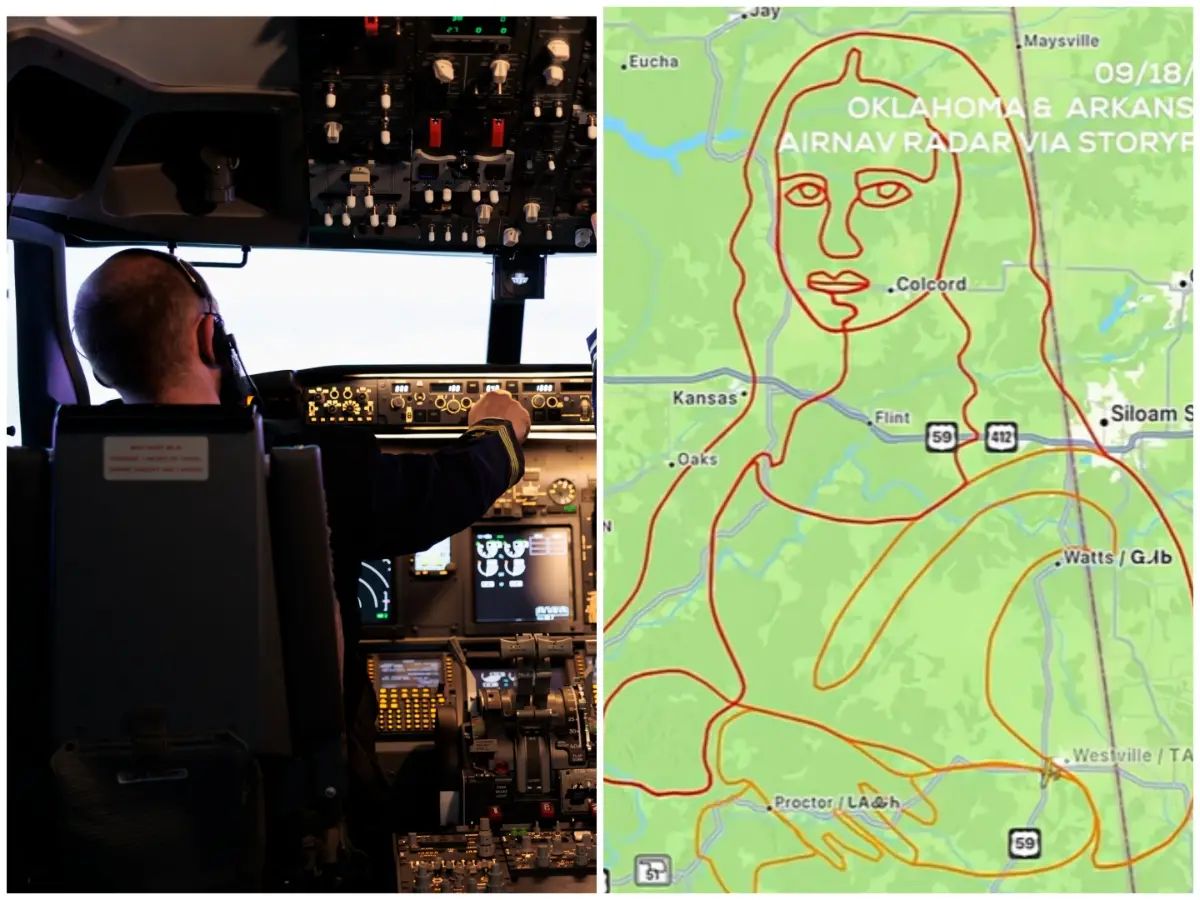)
Pilot recreates Mona Lisa in sky over Oklahoma and Arkansas in four-hour flight: VIDEO
)
UK PM Burnham agrees to 'defensive' military support for Saudi Arabia against Houthis
)
Jailer 2: Vidya Balan joins Rajinikanth's upcoming film as Kantha | Watch
&im=FitAndFill=(700,400))
National Film Awards 2026: Kartik Aaryan, Mammootty, Yami Gautam, Randeep Hooda and other key winners
)
Microsoft executive called AI training the ‘largest theft of labour in human history’
)
40-foot waves crash into cruise ship in dangerous stretch near Antarctica. Watch
)
US-Iran war, peace deals and more: What to expect from Trump's UNGA 2026 speech
)
Explainer: Why rare-earth export licences and Board of Trade are US priorities ahead of Trump-Xi summit
)
Two infants die after fire breaks out at RIMS newborn care unit in Telangana's Adilabad
)
Oil slips to $98 as Saudi Arabia restarts East-West oil pipeline
This observatory recorded an unexpected increase in the galaxy's brightness, prompting astronomers worldwide to conduct new observations and review past measurements from both ground and space-based telescopes.
Also Read |‘Atoco Point’: NASA’s rover spots strikingly mysterious rock never seen before on Mars
Their research revealed that the galaxy had recently doubled in brightness in the mid-infrared wavelengths, quadrupled in ultraviolet brightness, and increased tenfold in X-ray brightness.
The cause of this dramatic change remains uncertain.
However, in a paper published in Astronomy and Astrophysics, researchers propose that the most plausible explanation is the formation of an "active galactic nucleus."
This phenomenon occurs when a vast black hole at the centreof a galaxy begins actively consuming surrounding material, emitting a broad spectrum of light as gas around the black hole heats up and glows.
Watch | Study: Secret aliens could be here on Earth already
Dust particles around the black hole also absorb and re-radiate various wavelengths of light.
Another potential explanation is an exotic "tidal disruption event," a process where a star is torn apart after wandering too close to a black hole.
Typically, tidal disruption events brighten a galaxy for only a few hundred days, which makes this scenario less likely but not impossible. More data is required to rule it out completely.
(With inputs from agencies)