

&imwidth=800&imheight=600&format=webp&quality=medium "Marco Rubio defends global tariff reset, calls it ‘long overdue’")
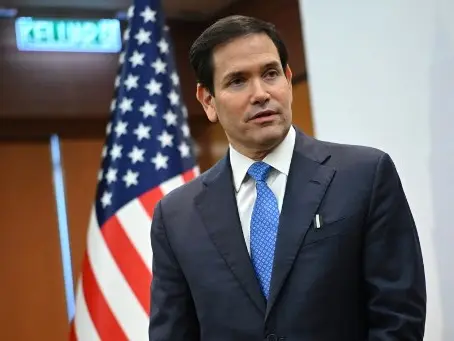
US Secretary of State Marco Rubio strongly defended the Trump administration’s sweeping global tariff reset, calling it a “long overdue” correction to decades of imbalanced trade that he says has undermined American industry and national security. Speaking during a diplomatic tour of Southeast Asia, Rubio described the tariff overhaul — set to take effect August 1 — as a necessary global realignment, not an act of economic aggression.
“There’s no country in the world where the issue of trade and tariffs wouldn’t come up,” Rubio said at a press conference in Kuala Lumpur. “But this is not about punishing anyone. It’s about fairness for American workers. It’s about fixing a system that hasn’t worked for decades.”
Rubio’s message comes as trading partners across the Indo-Pacific express concern over Washington’s aggressive recalibration of tariffs. Vietnam, Japan, Malaysia, and others have warned of disruptions to long-established supply chains and mutual agreements. But Rubio pushed back on these concerns, arguing that many of America’s partners have benefited from lopsided trade dynamics, and that a reset is both fair and inevitable.
“If we were targeting just a few countries, I could understand the backlash,” he said. “But this is global. Virtually every trade relationship is being reassessed. And if your economy is built on massive surpluses with the United States, of course you don’t want that to change — but it has to.”
Rubio cited America’s ballooning trade deficits and the erosion of its domestic manufacturing capabilities as key reasons for the tariff reset. He pointed to sectors like shipbuilding, rare earth processing, and pharmaceuticals — industries that have either been outsourced or concentrated in adversarial regions — as examples of vulnerabilities the US can no longer afford.
“It’s not just an economic issue. It’s a national security issue,” he said. “We need to be able to make things — not just for jobs, but for resilience. We’ve lost that edge, and it’s time to bring it back.”
Trending Stories
&imwidth=180&imheight=135&format=webp&quality=medium)
Pakistan airline PIA unveils new crew uniforms, faces online criticism
&imwidth=180&imheight=135&format=webp&quality=medium)
Chemical warehouse explosion in Mexico: Several injured in multiple blasts, 1,000 evacuated in León
&imwidth=180&imheight=135&format=webp&quality=medium)
Viral video shows cross falling on Colombia priest, no official confirmation | WATCH
&imwidth=180&imheight=135&format=webp&quality=medium)
US midterms 2026: Trump revises Canada tariffs as Susan Collins faces tight re-election race in Maine
&im=FitAndFill=(700,400)&imwidth=180&imheight=135&format=webp&quality=medium)
New Friday OTT releases (October 23, 2026): Gajab Raat, Dorothy, Chaar Yaar- Watch these 6 new movies and TV shows on Netflix, Prime Video and more
&imwidth=180&imheight=135&format=webp&quality=medium)
Anthropic security chief issues grim cyberattack warning: ‘It’s going to get a lot worse’
&imwidth=180&imheight=135&format=webp&quality=medium)
'You’re a horrible little reporter, aren’t you?': Trump snaps at NBC reporter questioning his support for Ramaswamy's campaign ad
&imwidth=180&imheight=135&format=webp&quality=medium)
Tu Hai Meri Kiran film review: Sonakshi Sinha and Zaheer Iqbal's thriller gets tangled in its own twists
&imwidth=180&imheight=135&format=webp&quality=medium)
Global cybersecurity alert: PHP flaws trigger website shutdowns as hack attempts surge into millions
&imwidth=180&imheight=135&format=webp&quality=medium)
Fauzi teaser out: Prabhas takes on the British Empire in patriotic avatar | Watch
&imwidth=180&imheight=135&format=webp&quality=medium)
Farooq Abdullah says Pakistan’s raising of Kashmir issue keeps pressure on Delhi
&imwidth=180&imheight=135&format=webp&quality=medium)
Google Fitbit Air’s new health guardian feature tracks trends: How it works
&imwidth=180&imheight=135&format=webp&quality=medium)
Emmanuel Macron calls Paris suburb shooting a 'racist terrorist attack' after one killed, several injured
&imwidth=180&imheight=135&format=webp&quality=medium)
IND vs NZ 2nd T20I: Shreyas Iyer on brink of breaking Rohit Sharma’s record
&imwidth=180&imheight=135&format=webp&quality=medium)
US Navy, Marine Corps boards defy Trump's transgender military ban, vote to retain troops
&imwidth=180&imheight=135&format=webp&quality=medium)
Nairobi building collapse: Several feared trapped after 16-storey structure crumbles; rescue operation underway
&imwidth=180&imheight=135&format=webp&quality=medium)
Will the US attack Iran this weekend? Trump's envoy says, 'absolutely'
&imwidth=180&imheight=135&format=webp&quality=medium)
China's dancing robot turns violent bodyguard, lifts cars and fights intruders - Watch
&imwidth=180&imheight=135&format=webp&quality=medium)
US midterms 2026: Viral video claims Lindsey Graham paid underage men for sex; clip released weeks before his sister's Senate race
&imwidth=180&imheight=135&format=webp&quality=medium)
Massive 7.2 magnitude quake off Vanuatu triggers tsunami warning for coasts within 300 km
&imwidth=180&imheight=135&format=webp&quality=medium)
US charges two former FBI officials with lying to Congress about Hunter Biden probes. 'Politically motivated' Trump grievance or something else?
&imwidth=180&imheight=135&format=webp&quality=medium)
'Already tired of his 9-to-5': Baby born with a moustache becomes internet sensation, video goes viral | Watch
&imwidth=180&imheight=135&format=webp&quality=medium)
Horrific video shows the moment 18-year-old fell to her death from Mexico amusement park ride
&imwidth=180&imheight=135&format=webp&quality=medium)
'Black triangle' UFO flying at 1,800mph spotted over sensitive US site: Latest Trump admin UFO file dump
&imwidth=180&imheight=135&format=webp&quality=medium)
Scientists make digital nose that can sniff and send scents over the internet
&imwidth=180&imheight=135&format=webp&quality=medium)
Did Neha Bora call for Bangladesh-like GenZ protest, 'anarchy' in India? WION Fact-checks viral claim
&imwidth=180&imheight=135&format=webp&quality=medium)
India-China face-off continues near Arunachal’s Taksing, reveals ITBP chief in first official confirmation of tensions
&imwidth=180&imheight=135&format=webp&quality=medium)
IND-W vs ZIM-W, 1st ODI: Rawal, Charani star in India’s nine-wicket win over Zimbabwe
&imwidth=180&imheight=135&format=webp&quality=medium)
'My name has always been Ilhan Omar': Congresswoman hits back at Trump, calls him a 'creep'
&imwidth=180&imheight=135&format=webp&quality=medium)
AI deepfakes are spreading online: Why is removing them so difficult?
&imwidth=180&imheight=135&format=webp&quality=medium)
First Lady Melania Trump secures ceasefire between Russia, Ukraine in Oleshky: White House
&imwidth=180&imheight=135&format=webp&quality=medium)
Negotiators from Ukraine, Russia, United States to meet in Abu Dhabi: Zelensky
&imwidth=180&imheight=135&format=webp&quality=medium)
Gravitas | US attack could trigger WW III: Russian planes in Tehran, Israeli jets, US warships in action
&im=FitAndFill=(700,400)&imwidth=180&imheight=135&format=webp&quality=medium)
How smart robots and AI assemble vehicles in 20 hours
The secretary also addressed his much-anticipated meeting with Chinese Foreign Minister Wang Yi, which he characterised as “constructive and positive.” While Rubio made clear that this was not a negotiation, he said the discussion laid the groundwork for future engagement on both contentious and cooperative fronts.
“These are two big, powerful countries. There will always be disagreements,” he said. “But we have to keep talking. We have to communicate. And I thought today’s meeting was a good start.”
Rubio confirmed that preparations are underway for a potential meeting between President Trump and Chinese President Xi Jinping later this year, saying “the odds are high” that it will happen because both leaders are eager to engage. “Now it’s about getting the atmosphere and deliverables right,” he added. “We don’t want a meeting just for optics — we want results.”
When asked about Taiwan, Rubio said the issue was not raised in a confrontational manner and emphasized that the meeting with Wang Yi was not one where “warnings” were issued. “They know our position. We know theirs. This was not about theatrics. This was about tone and trust.”
Rubio also addressed criticism from some quarters that the tariff strategy could alienate allies and give China an opportunity to present itself as a more stable trade partner. He flatly rejected that narrative, saying America’s relationships in the region are far deeper than just economics. “We’re not walking away from our friends,” he said. “In fact, we’re doubling down. Look at what we’ve done just this week — agreements with Malaysia on civil nuclear cooperation, and an arrangement coming into force with Thailand. These are real steps, not rhetoric.”
Rubio dismissed suggestions that US pressure on Japan to increase defense spending could strain bilateral ties, calling such expectations “encouragement” rather than demands. “We support Japan enhancing its capabilities within its constitutional limits. That’s not something we’re pushing against — it’s something we’re for,” he said, noting that Japan remains one of America’s closest allies.
On Vietnam, another key US partner with a large trade surplus, Rubio said the issue of tariff levels came up briefly but was not the focus of their bilateral meeting. “I’m not the trade negotiator,” he said. “And neither is the foreign minister. So I’ll leave that to our teams. But yes, they want a good deal, and so do we.”
Rubio also confirmed that he had a brief follow-up with Russian Foreign Minister Sergey Lavrov but declined to elaborate, saying only that it concerned a “different topic” than their meeting the day before. He acknowledged that President Trump is expected to make an announcement on Russia soon but declined to preview it.
Turning to Ukraine, Rubio explained that new efforts are underway through NATO to deliver existing US-made defense systems — like Patriot batteries — to Ukraine, with the US helping allies restock their arsenals. “It’s faster, it’s more efficient,” he said. “Some of the systems Ukraine needs are in Europe already. Let’s move them, then backfill as needed.”
Ultimately, Rubio said the administration’s economic strategy is about more than trade figures or tariffs — it’s about long-term national security, industrial capacity, and strategic independence. “We’re not trying to shut the world out,” he said. “But we are trying to stop being dangerously dependent on one or two countries for critical things. It’s not just about bringing jobs back. It’s about being strong, safe, and self-reliant again.”
As he wrapped up, Rubio pushed back on suggestions that the US has lost interest in the Indo-Pacific, noting that headlines often misrepresent the intensity of American engagement abroad. “Everywhere I go, the story is: the US isn’t focused enough,” he said. “But look at the facts. We’re here. We’re doing the work. And we’re not walking away — we’re building something stronger.”

