Japan rethinks tattoo ban to boost recruitment in defence forces

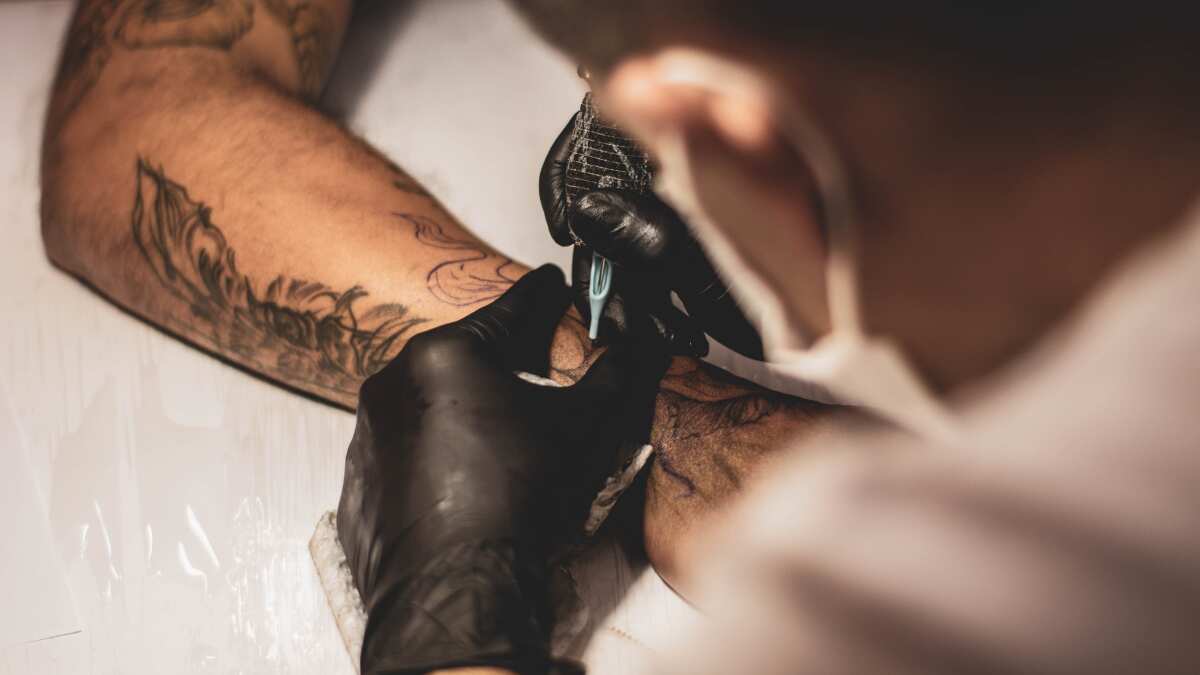
Representational image.
The defence forceof Japanhasbeen rethinking removing the ban on tattoos as it is making efforts to increase recruitment from a rapidly shrinking population.
For a long time, tattoos have been a taboo in the nation and are often linked to mafia-like criminal gangs which are popularly known as yakuza. These criminal gangs carry elaborate skin art on their body.
However, officials have stated that Japan's youth have been getting these tattoos done for sartorial reasons and hence, they must not be identified as yakuza.

The officials have further argued that the ban is hindering enlistment. The country's military Japanese Self-Defence Forces (JSDF) is 10 per cent short of its troop capacity and couldn't meet its recruitment target last April, stated officials,
"Rejecting applicants just because they have tattoos poses a problem in terms of enhancing the human resources base," Masahisa Sato, governing Liberal Democratic Party's MP, said recently.
ALSO READ |France gives thumbs down to NATO’s plans of opening liaison office in Japan
)
Why asking questions could be more important than memorising answers
)
BRICS Summit 2026 full schedule: Day-wise agenda, timings and key issues - All you need to know
)
BRICS Summit 2026: Iran's Pezeshkian praises PM Modi at BRICS
)
Osama Bin Laden ‘planned’ to target India, CIA reveals dozens of declassified documents
)
BRICS rejects EU carbon tax as ‘punitive’, ‘discriminatory’; warns of burden on Global South
)
Why dehydration is the hidden cause of travel fatigue on long flights
)
Top 5 places to visit in Goa beyond its famous beaches
)
'He is popular...': Malaysian PM Anwar Ibrahim's praise for PM Modi during bilateral meeting | WATCH
)
BRICS Summit 2026: 30+ countries seek BRICS membership
)
Frustrated man demolishes his kitchen after thousands flock to see Mother Mary his wife spotted on the wall
)
BRICS Summit 2026: PM Modi, Xi reach key consensus on ties, China to assume BRICS chairmanship in 2027
)
Trump says Canada eager to reach a deal, it could come ‘fairly soon’ if Ottawa treats US farmers better
)
From drones to KAAN fighters: Turkey outlines 229% surge in defence spending amid regional shifts
)
‘Partners, not rivals’: Xi outlines four point plan for stronger India-China ties
)
Could staying indoors all day affect your health?
&im=FitAndFill=(700,400))
Why Chinese PL-15 air-to-air missiles use dual-pulse motors compared to European interceptors
)
Why going digital does not always mean becoming more efficient
)
800 million years old - Scientists discover 'fingerprints' of supercontinent Gondwana in ancient rocks
)
BRICS stitches climate into its trade and growth agenda, experts say
&im=FitAndFill=(700,400))
Why do air defence missiles explode near their target instead of hitting it?
)
Israel spent nearly $470,000 on PM's hair, makeup since 2019, data shows
)
From severe mobility problems to recovery: Madhuri the elephant’s journey of wildlife care
)
BRICS Summit day 1: New Delhi declaration adopted with full consensus, big diplomatic win for India
)
From India, Putin warns Europe against sending troops to Ukraine, Zelensky expresses willingness to meet him at G20 Summit
)
Did Iran President Pezeshkian touch feet of Hindu spiritual leader at Delhi event as shown in viral video?
)
9-year-old Chennai prodigy clears Cambridge IGCSE grade 10 exams
)
Why does your body need time to adjust after a long journey?
)
Baba Vanga's first prophecy for 2027 is out, and straight out of science fiction
)
Why does your skin need protection from UV rays?
)
How does the loss of forests affect the way wildlife lives and moves?
)
IND vs AFG, 1st T20I: When and where to watch live streaming in India?
)
BRICS Summit: China resumes Guangzhou-New Delhi flight, issues 'good-neighbourliness' remark ahead of Xi-Modi meet
)
Why do wild animals need quiet places to survive?
)
Humans may lose control of AI: Anthropic CEO calls for slowdown, Altman, Musk back him
Head of the defence ministry's personnel bureau Kazuhito Machida said that they must reconsider the ban on tattoos, taking into account the country's declining birth rate.
In 2022, the country of 125 million recorded less than 800,000 births, which was less than two million in the 1970s. Japanese Prime Minister Fumio Kishida stated that it is a "now or never" situation for the country to address its ageing and shrinking population.
Japan under pressure to fillvacancies in JSDF
This situation has further increased pressure on the country to fill vacancies in the JSDF as it is doubling its spending on military, in response to the nuclear arsenal of North Korea and the growing might of China.
Japan has also been facing enduring calls to revise its post-war pacifist constitution so that it is capable of responding to the increasing tensions in the Asia-Pacific, and the ongoing Russia-Ukraine war.
It is still unknown when the government will take a final decision, however, scholars said that there was an era when tattoos were common in Japanese culture.
WATCH |Typhoon Mawar: Japanese streets flooded after heavy rains
A cultural anthropologist at Tsuru University Yoshimi Yamamoto, who has been studying the culture of tatoo in Japan and Taiwan, said that encounters of Japanese with Europeans in the 1800s changed that.
"Civilized Europe" considered the full-body tattoos on the people of Japan as "backward", because of which people covered up the ink, except during religious festivals, said Yamamoto, in an online lecture in 2019.
"Tattooed people are feared almost automatically," Yamamoto said.
You cannow write forwionews.comand be a part of the community. Share your stories and opinions with ushere.
WATCH WION LIVE HERE