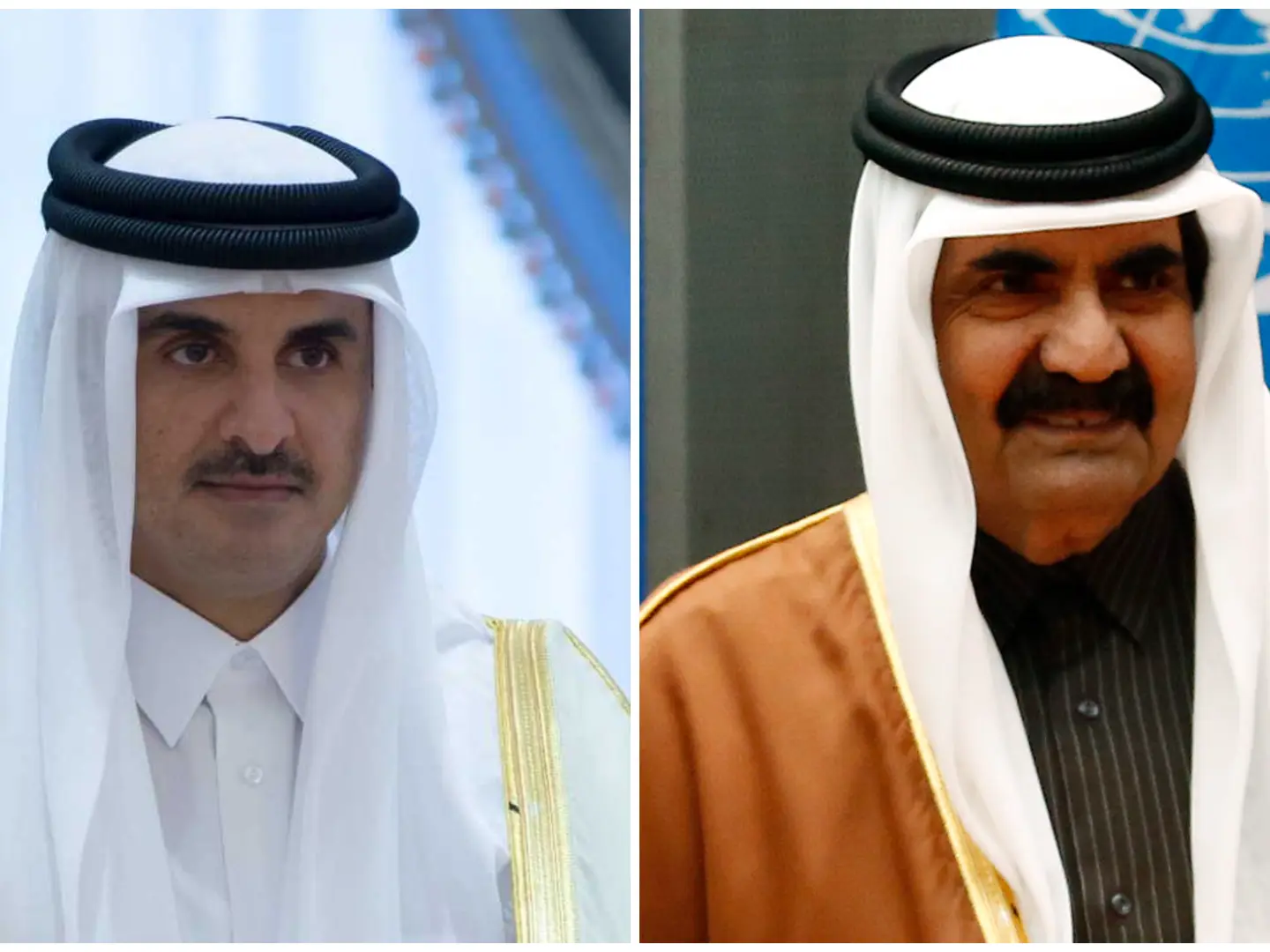
&imwidth=800&imheight=600&format=webp&quality=medium "Where is Qatar? How tiny Arab nation went from a clout builder to target of Iranian attack")
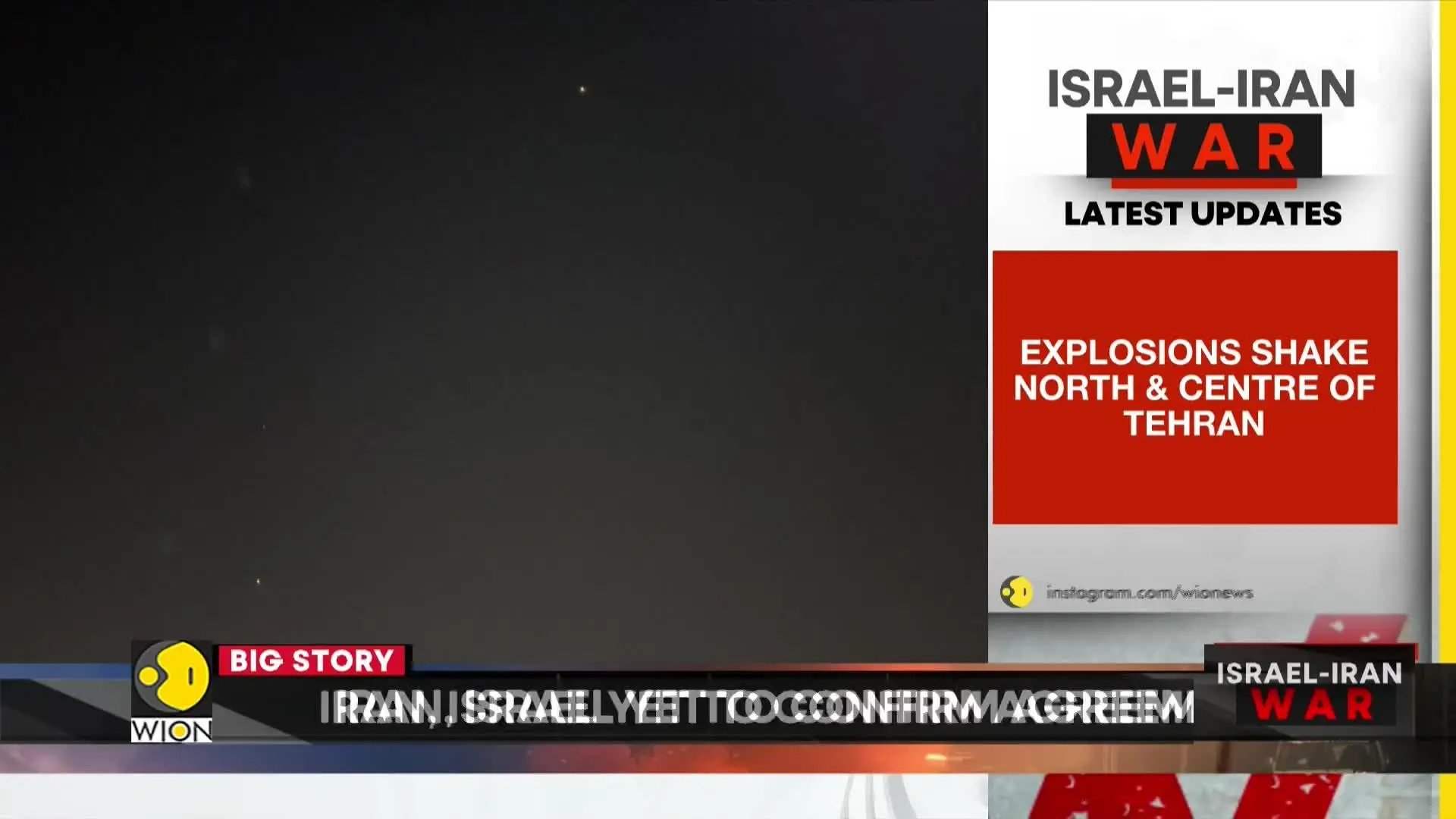
Iran launched a missile attack on a US air base in Qatar on Monday night (June 24), just hours before President Donald Trump announced a ceasefire between Tehran and Israel. The Iranian attack, in response to the bombardment of its nuclear facilities by Israel and the US, suddenly threw the small nation of Qatar into focus. The constitutional monarchy with a large Indian population, Qatar, reportedly played a role in bringing about the latest ceasefire. However, it's nothing new for the Arab nation, which has been a regional peace broker for years now. Here is what you should know about Qatar, and why it has such significant influence in the region, far above its size.
Where is Qatar?
Qatar is a small country in West Asia on the northeastern coast of the Arabian Peninsula. Located in the Qatar Peninsula, Qatar's only land border is with Saudi Arabia, the larger nation which held influence over its tiny neighbour till much of 20th century before relations soured. Qatar is only 11,571 square kilometres in size, slightly less than the US state of Connecticut. Sandwiched between the arid Arab desert and a shoreline of beaches and dunes, Qatar is a country rich in resources, particularly natural gas.
In terms of per capita income, Qatar is often listed among the wealthiest countries. It is one of the biggest exporters of liquefied natural gas (LNG).

88 per cent of people in Qatar are foreigners, most from India
Qatar, a Sunni-majority nation, has a population of just over 3.1 million, much smaller compared to the largest in the region, Saudi Arabia, which has 36 million people. Nearly 88 per cent of the Qatari population is of foreign origin. Indians are the largest expat population, comprising of nearly 22 per cent of the foreigners. There are some 830,000 Indians, working as doctors, engineers, teachers, businesspeople and blue-collar workers.
Trending Stories
)
The Early Spring is proof not everyone can talk about their real feelings, and it is perfectly OK
)
UN votes to ‘correct the map’ as India backs fairer world view
)
Nigerian Navy discovers 99,000 litres of suspected stolen, illegally refined products as it intensifies anti-crude oil theft operations
)
Who is Aditi Paudel? 17-year-old becomes Japan's first literacy ambassador
)
Bengaluru: Officials find 40 kg expired chilli at chairman's club
)
Jaishankar rejects trade link to ending Ukraine war
)
Israeli strikes on Lebanon kill three, injure 23 despite truce
)
Alpine glacier was covered with sheep wool sheets to prevent melting. It worked
)
South Korea mulls deploying military assets to Strait of Hormuz
)
World's fifth-largest economy, British army can't afford to train
)
Breaking | Vance takes the podium: First White House briefing since Leavitt's exit
)
Taiwan raises 'concerns' over China's missile test
)
BRICS 2026: $1 trillion sovereign capital set to converge in Delhi for first iBRICS Summit
)
What is Iran's Pickaxe Mountain that Trump has again threatened to bomb?
)
UN votes to correct world map that visually shrank Africa for 450 years
)
Former NewJeans member Danielle launches YouTube channel, hints at new solo journey
)
Bangladesh batter Towhid Hridoy creates history with 350 not out in South Africa
)
Brendan Fraser’s transformation fuels The Mummy 4 excitement as fans welcome back Rick O’Connell
&im=FitAndFill=(700,400))
Krishna Janmashtami 2026: From Dhaniya Panjiri to Makhana Kheer- 5 best sweet dishes perfect for celebrating Lord Krishna’s birth
)
Donald Trump plans to travel to Ireland on Qatari-donated jet amid security concerns
)
Nazi-looted art to return to Jewish heirs
)
Eight killed in Kerala’s Thrissur after car rams into lorry parked on highway
&im=FitAndFill=(700,400))
Why Russian fighter jets use bulky, low-pressure tyres compared to US jets
)
FBI-wanted fraud accused arrested in Jalandhar over $600,000 scam
&im=FitAndFill=(700,400))
Why US tanks weigh over 20 tons more than Russian tanks
&im=FitAndFill=(700,400))
New Friday OTT releases (September 4, 2026): GDN, Dhamaal 4, Jagamae Sangeetham- Watch 6 new movies and TV shows on Netflix, Prime Video and more
)
Killing the Himalayas slowly: Human urine is melting a glacier on Mount Everest
How Qatar's influence grew as a mediator in conflicts
Qatar had an important, albeit understated, role in global affairs since the late 20th century under former emir Sheikh Hamad bin Khalifa Al Thani. Qatar had close relations with the US, which built the Al Udeid Air Base in the Arab country in 1996. The base, attacked by Iran on Monday (June 24), is the forward headquarters for US Central Command or CENTCOM, which directs American military operations in the region that includes Egypt in the west to Kazakhstan in the east.
Under the current emir, Sheikh Tamim ibn Hamad Al Thani, who assumed the throne in 2013, Qatar emerged as a key nation for mediating global conflicts. In the past two decades, Qatar has mediated in, or hosted mediations of, several high-profile wars. These include the long-standing US-Taliban conflict that ended in the American troop exit from the South Asian nation after the Taliban takeover in 2021.
Qatar was a key player in hostage and prisoner swap mediations between Ukraine and Russia in the ongoing war. Even before the 2023 October 7 terror attack that led to the Israel-Hamas war, Qatar has been mediating between the Jewish nation and the Palestinian militant organisation, which had its political headquarters in Doha, the Qatari capital. Qatar also mediated in releasing several of the Israeli hostages taken to Gaza by Hamas after the 2023 attack.
Qatar was a mediator in conflicts and crises in Sudan, Lebanon, Yemen and Iraq too.
But, clout-building also had its cost for Qatar
But exerting such outsized influence had its cost for Qatar, particularly in the form of diplomatic tussles and even a boycott by fellow Arab nations, led by Saudi Arabia.
Qatar was influenced by Saudi Arabia till 1990s, which often treated it like a vassal state. But mediation in conflicts improved its global standing. It was also a strategy to protect the country from foreign interventions, particularly from larger neighbours Saudi and UAE.
This race for influence led to a crisis in 2017, when fellow Arab nations in the Gulf Cooperation Council announced a boycott of Qatar. That boycott, wherein Saudi, Bahrain, Egypt and the UAE accused Qatar of supporting terrorism, went on till 2021. Qatari aircraft and ships were blocked from the territory of these countries, and Saudi Arabia closed the only land border between the two nations. Many exports into the country from these neighbours were halted, including even essential goods.
Al Jazeera network: A multiplier of Qatari influence that fell out of favour in the region
The Al Jazeera TV network, founded in 1996 with funding from the state of Qatar, was one major step in the nation's path towards building its influence in the region and the world. Ten years later, it launched Al Jazeera English, which spoke to a global audience. Oddly enough, the channel, unlike the reality of Qatar as an absolute constitutional monarchy, became the voice of democracy in many countries in the region and outside. Of particular importance was how its journalism supported many anti-establishment movements during the Arab Spring of 2010-2012.
Qatar faced allegations of supporting what many in the region felt were US intelligence-supported, orchestrated regime changes. The diplomatic boycott was among the results of those tensions. Qatar was accused of interfering in the internal affairs of other nations, often using Al Jazeera as a tool to amplify its views. It was also criticised for maintaining relations with Iran, the Shia power of the region.
In Egypt, Qatar supported the elected government of Muslim Brotherhood in the wake of the Arab Spring, but UAE backed the regime led by military leader Abdel Fattah el-Sisi. That became one of the immediate triggers for the diplomatic boycott.
The attack on the US air base hosted by Qatar is the first instance of Qatar directly coming under fire in a raging war in the region. It possibly reflects the reality that the nation may not be immune to future conflicts even if it has the military presence of the most powerful nation in the world.