

&imwidth=800&imheight=600&format=webp&quality=medium "Iran expresses ‘necessary will’ to end war with US and Israel, seeks guarantees")
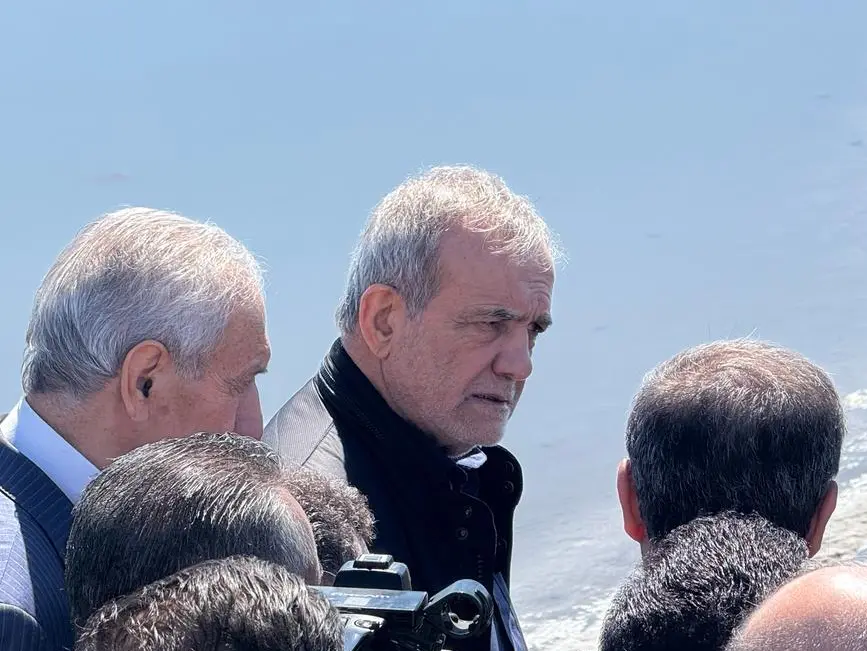
In a significant shift in Tehran's stance, Iranian President Masoud Pezeshkian on Tuesday (March 31) signalled that his country had the "necessary will" to bring the ongoing war with Israel and the United States to a close, as the conflict entered its second month. However, he stressed that Iran was seeking firm guarantees that hostilities would not be repeated, AFP reported.
"We possess the necessary will to end this conflict, provided that essential conditions are met, especially the guarantees required to prevent repetition of the aggression," Pezeshkian said in a phone conversation with the President of the European Council, according to a statement from his office, reiterating a key demand of Tehran's.
The remarks mark a notable softening in Iran's public posture and could prove pivotal in shaping the trajectory of a conflict that has shown little sign of letting up.
Earlier in the day, US President Donald Trump reportedly told his aides that he is prepared to end the military campaign against Iran even if the Strait of Hormuz remains largely closed.
According to reports from the Wall Street Journal, Trump and his advisors concluded that a full-scale operation to reopen the waterway would extend the conflict well beyond his preferred four-to-six-week timeline. Trump's current strategy focuses on "hobbling" Iran’s missile stocks and naval capabilities before transitioning to diplomatic pressure to restore global trade flows.
Trending Stories
However, the President has reiterated his warning to use overwhelming force asthe US continues to reinforce its military strength in the area, with additional troops being deployed in successive waves.
While expressing a willingness to wind down active hostilities, he warned on Truth Social on Monday that if a deal is not reached "shortly" and the Strait is not immediately "Open for Business," the US will move to "obliterate" Iran's civilian infrastructure, including electric plants, oil wells, and Kharg Island.
Iran continues to maintain its grip over the vital Strait of Hormuz, through which nearly 20 per cent of global oil transit, bringing shipping through the waterway to a standstill. However, it has allowed only selected countries to pass through the strait, which it describes as “friendly” towards Tehran.
(Disclaimer: WION takes utmost care to accurately and responsibly report ongoing conflicts in West Asia involving Israel, Iran, the US, Gulf nations and non-state actors like Hezbollah, Hamas, Houthis, Islamic State, and others. Claims and counterclaims, disinformation and misinformation are being made online and offline. Given this context, WION cannot independently verify the authenticity of all statements, social media posts, photos and videos.)
