Indian visa centre in Bangladesh's Chittagong suspends operations amid unrest

&imwidth=600&imheight=450&format=webp&quality=medium "Indian visa centre in Bangladesh's Chittagong suspends operations amid unrest")
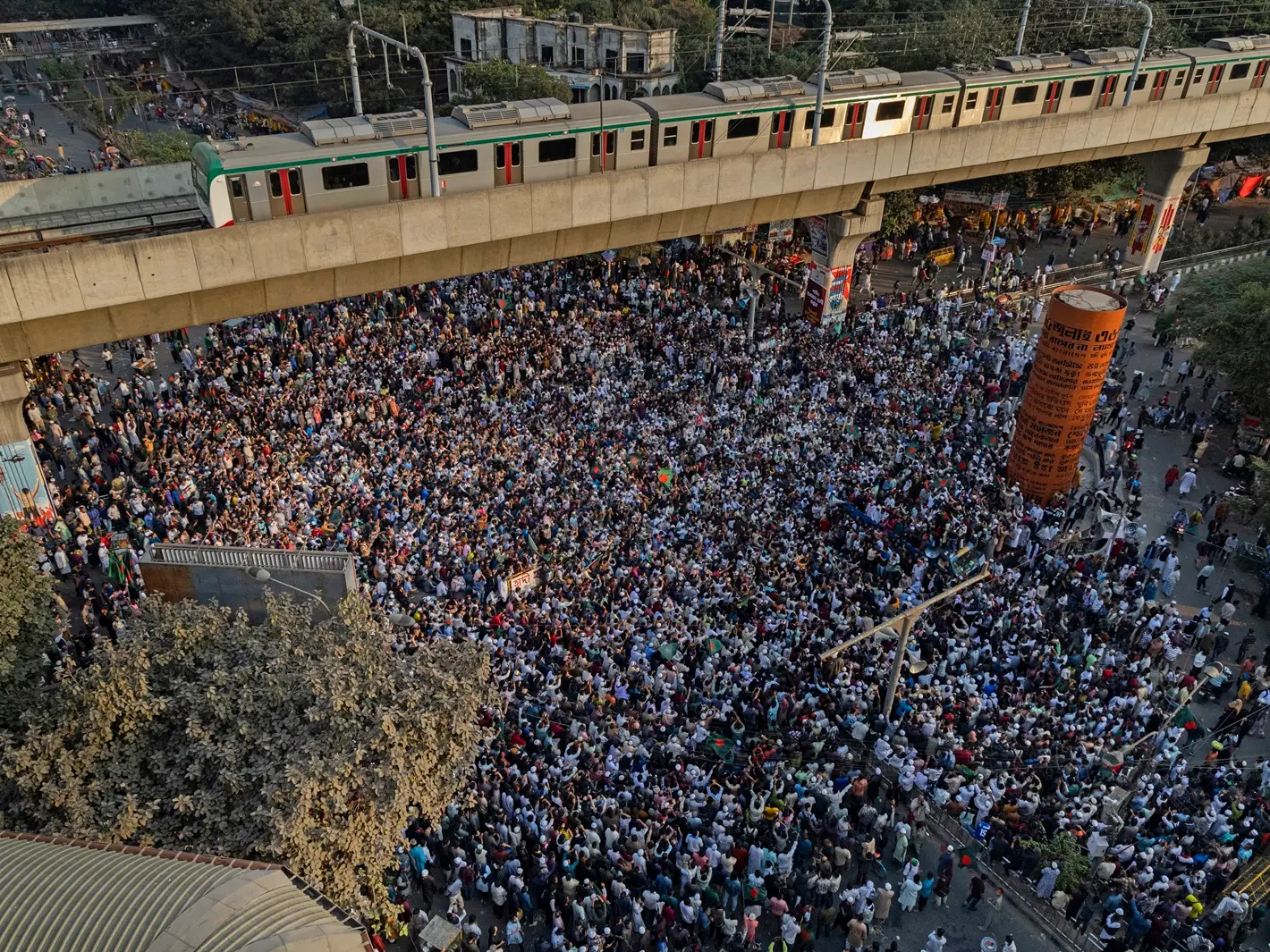
An aerial view shows protesters at Shahbagh intersection in Dhaka on December 19, 2025, following the death of youth leader Sharif Osman Hadi. Photograph: (AFP)
Bangladesh is witnessing violent protests across several cities, particularly in Dhaka, following the death of student leader Osman Hadi. Indian diplomatic missions in the country have also become targets of protesters, who held demonstrations outside consulates.
The Indian Visa Application Centre (IVAC) in Bangladesh's Chittagong has suspended its operation on Sunday (Dec 21), citing security concerns amid ongoing unrest in the country after student leader Osman Hadi's death. The IVAC announced on its website, saying that, due to the recent security situation at the Assistant High Commission of India (AHCI) in Chittagong, the visa operations will remain suspended until further notice.
“Due to the recent security incident at AHCI Chattogram, Indian visa operations at IVAC Chattogram will remain suspended until further notice,” the statement said, adding, “The announcement for reopening the visa centre will be made after reviewing the situation.”
The announcement follows overnight protests near the Assistant High Commission office in Upashahar area and the visa application centre in Shobhanight in Bangladesh. At least four people, including a member of the police, were injured after officers dispersed students and local residents protesting outside the mission on Friday against the killing of Sharif Osman Hadi.
Also Read: Yunus government condemns lynching of Hindu man, says violence has no place in New Bangladesh
Bangladesh is up in flames after the death of Political activist Sharif Osman Hadi on Thursday, after he was shot at by unidentified men last Friday (Dec 12), triggering a wave of violent protests across Bangladesh by Inqilab Moncho supporters.
Protesters went on a rampage during the unrest, ransacking the offices of leading newspapers such as The Daily Star, Prothom Alo and New Age, setting parts of the buildings on fire and disrupting printing operations. Demonstrators also torched or damaged other sites, including the historic cultural centre Chhayanaut and remnants of key political buildings, while in Rajshahi, crowds used heavy machinery, including a bulldozer, to demolish an Awami League party office.
Trending Stories
&imwidth=280&imheight=210&format=webp&quality=medium)
&imwidth=280&imheight=210&format=webp&quality=medium)
&imwidth=280&imheight=210&format=webp&quality=medium)
&imwidth=280&imheight=210&format=webp&quality=medium)
&imwidth=280&imheight=210&format=webp&quality=medium)
&imwidth=280&imheight=210&format=webp&quality=medium)
&imwidth=280&imheight=210&format=webp&quality=medium)
&imwidth=280&imheight=210&format=webp&quality=medium)
&imwidth=280&imheight=210&format=webp&quality=medium)
&imwidth=280&imheight=210&format=webp&quality=medium)
&imwidth=280&imheight=210&format=webp&quality=medium)
&imwidth=280&imheight=210&format=webp&quality=medium)
&imwidth=280&imheight=210&format=webp&quality=medium)
&imwidth=280&imheight=210&format=webp&quality=medium)
&imwidth=280&imheight=210&format=webp&quality=medium)
&imwidth=280&imheight=210&format=webp&quality=medium)
&imwidth=280&imheight=210&format=webp&quality=medium)
&imwidth=280&imheight=210&format=webp&quality=medium)
&imwidth=280&imheight=210&format=webp&quality=medium)
&imwidth=280&imheight=210&format=webp&quality=medium)
&imwidth=280&imheight=210&format=webp&quality=medium)
&imwidth=280&imheight=210&format=webp&quality=medium)
&imwidth=280&imheight=210&format=webp&quality=medium)
&imwidth=280&imheight=210&format=webp&quality=medium)
&imwidth=280&imheight=210&format=webp&quality=medium)
&imwidth=280&imheight=210&format=webp&quality=medium)
&im=FitAndFill=(700,400)&imwidth=280&imheight=210&format=webp&quality=medium)
&im=FitAndFill=(700,400)&imwidth=280&imheight=210&format=webp&quality=medium)
&imwidth=280&imheight=210&format=webp&quality=medium)
&imwidth=280&imheight=210&format=webp&quality=medium)
&imwidth=280&imheight=210&format=webp&quality=medium)
&imwidth=280&imheight=210&format=webp&quality=medium)
&imwidth=280&imheight=210&format=webp&quality=medium)
&imwidth=280&imheight=210&format=webp&quality=medium)
Amid the violence, a Hindu garment worker was beaten to death after being accused of blasphemy, deepening concerns over communal tensions.
This wave of violence follows prolonged political instability since 2024, including major nationwide protests over governance issues that led to the collapse of the Awami League government and ouster of former Prime Minister Sheikh Hasina.