
&imwidth=800&imheight=600&format=webp&quality=medium "India uses Russia's IL-76 cargo aircraft for first direct shipment to Antarctica — Here's why")
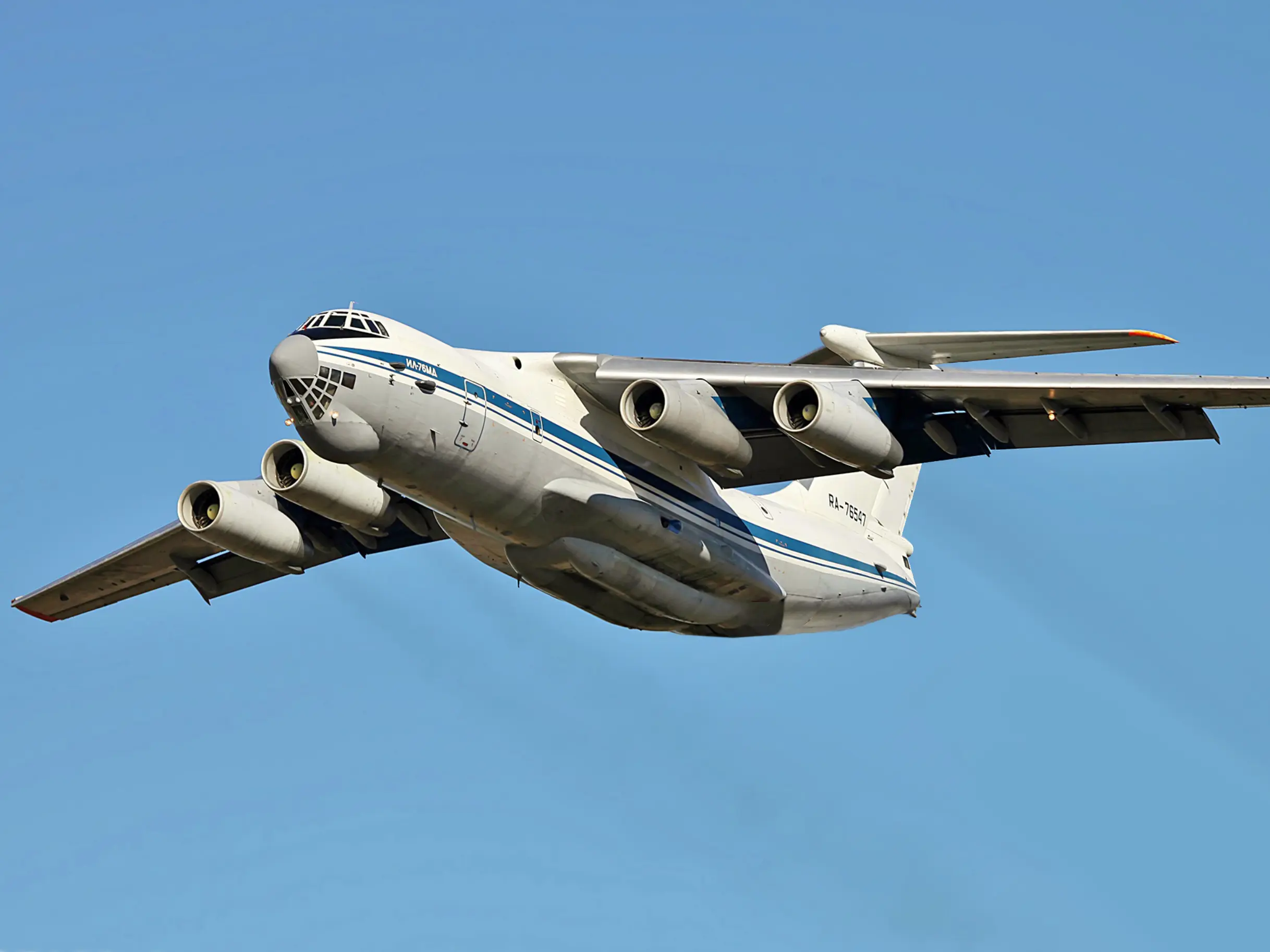
India sent a heavy-duty Russian cargo plane on October 2 to Antarctica to record atmospheric and climate changes in Antarctica. The cargo plane was sent with large scientific instruments and equipment for research. The mission was facilitated by an IL-76 operated by Dronning Maud Land Air Network (DROMLAN), carrying 18 tons of gear, medicines, provisions, and essentials for Indian researchers operating at the research bases, Bharati and Maitri.
According to a report in the Indian Express, this specialised cargo plane, deployed by the military, including the Indian Army, was rerouted via the Manohar International Airport located in Mopa of Goa. The cargo plane will fly to its destination in the southern hemisphere over the next few days en route to South Africa’s Cape Town.
India has been conducting scientific research in Antarctica since 1981. Throughout these years, both research teams and equipment have been sent to Antarctica via ships, often operated by other countries. Since the scientific equipment and gear used for scientific experiments are of a high-end and specialised nature compared to regular cargo shipments, the sea route was selected to keep in mind the operational cost and load-carrying capacity.

However, the volatile geopolitical situation in recent times, delays in obtaining permissions and shipment approvals, and unreliable sea freight services were among the major concerns for the Goa-based National Centre for Polar and Ocean Research (NCPOR), the nodal agency responsible for organising India’s scientific expeditions to the Arctic and Antarctic.
“Post the Covid-19 pandemic and the subsequent disruption in the supply chain, our scientific shipments to Antarctica were facing unacceptable delays. As a result, researchers would be forced to wait for their shipments to arrive, thus defeating the whole purpose of the mission. Two of our latest missions to Antarctica experienced a delay in shipment deliveries,” Thamban Meloth, director, NCPOR, told The Indian Express.
Why has India never sent its shipments via air in past?
Trending Stories
)
AI kill switch explained: Why shutting down a dangerous AI may not be as simple as pressing a button
)
US ships in Indian Ocean ‘will be attacked’ if war resumes, warns Iran
)
SNL UK takes aim at Ed Sheeran with AI Princess Diana sketch
)
Trump says he'll build an 'AI Force' and appoint a czar, for 'high IQ' people only
)
‘0% chance’: Nvidia CEO Jensen Huang dismisses AI extinction fears by 2030
&im=FitAndFill=(700,400))
What TSMC's 2nm technology means for Apple
)
'Were you here to sell chickpeas?': Wasim Akram criticises Babar Azam's captaincy
)
Mark Carney mimics Trump in hilarious moment over C$70 billion clean-energy investment; room erupts in laughter
&im=FitAndFill=(700,400))
Top 10 countries in mathematics: See the world’s best performers in 2026
)
Apple reportedly building AI server with M8 Ultra chips, may use Nvidia technology
)
TIFF 2026: Theja Rio’s Angh wins Platform Prize, puts Nagaland story on global stage
)
BTS' fans question iHeartRadio’s treatment of group after brief festival set
)
Glitch in the matrix caught on camera: Woman vanishes after talking to reporter
)
Samsung raises Galaxy S26 prices by Rs 20,000: Here’s what each model now costs
)
Operation Sindoor’s hidden naval dimension | MoD reveals Indian Navy Special Forces joined May 7 strikes
)
Trump-Xi summit: US Treasury Secretary holds meeting with Chinese Vice Premier
)
Bessent meets China’s He Lifeng to prepare for Trump-Xi summit
)
S Jaishankar, former Army chief among high-profile names issued Delhi SIR notices
)
CDU suffers historic defeat in eastern Germany as AfD surges, Merz vows to stay on
)
Iran sets 7 conditions to end war with US: What are Tehran’s demands?
)
Arvind Kejriwal, family members, Delhi CM Rekha Gupta get SIR notices
)
AI actress Tilly Norwood glitches mid-interview, switches from English to Chinese | Watch
)
Saudi vs Houthis: Houthis claim missiles & drones used in attack on key Saudi sites
)
Ed Sheeran addresses Macklemore's removal, Gaza conflict during Philadelphia concert: 'I cannot hide how I feel'
)
Punjab man consumes poison outside DC office; Congress, BJP target AAP government
)
Saudi Arabia exits China-led mBridge digital currency platform amid Saudi-Houthi conflict
)
ICE shooting in Texas leaves man seriously injured; officials demand independent investigation and transparency
)
Sudan gold mine collapse kills 11, injures 30; search under way for trapped miners
)
'Lot of things to learn from experienced players': Jayasuriya backs Rohit, Virat for 2027 ODI World Cup
)
Chancellor Friedrich Merz vows to stay on as exit polls signal major poll setback
)
North Korea's nuclear tests triggered 1,399 earthquakes: Earth is still shaking | Gravitas
)
Several petrol pumps, other businesses to refuse UPI payments above Rs 2,000 from Oct 16: Is it legal?
&im=FitAndFill=(700,400))
New OTT releases this week (September 21-27, 2026): Shaque: Trust No One, Hunkkaar, Don’t Be Shy- 5 new titles coming to Netflix, Prime Video and more
&im=FitAndFill=(700,400))
Gulshan Grover turns 70: Ram Lakhan, Gangster, Hera Pheri- Must-watch movies of the actor on OTT platforms
)
Noel Tata challenges Chandrasekaran’s reappointment as Tata Sons chairman. What happened at the board meeting
&im=FitAndFill=(700,400))
Kareena Kapoor birthday special: Inside her net worth, best movies, luxurious lifestyle and love story with Saif Ali Khan
)
China now makes advanced memory chips without the machines it was banned from buying
)
Trump in ‘deciding mode’ on Iran, says ‘very big things’ going to happen soon
)
Jailer 2: Vidya Balan joins Rajinikanth's upcoming film as Kantha | Watch
)
Microsoft executive called AI training the ‘largest theft of labour in human history’
)
Italy moves to ban face veils in schools as Meloni pushes new integration measures
When Meloth was questioned about why India never considered sending its shipments via air, he replied, “The need was felt due to the supply-chain problem and the delays in shipment deliveries. Also, air cargo is an expensive affair, needs planning and co-ordination as the cargo plane from Russia requires to be re-routed via India. That is why we may not opt for air cargo service every year.”
He noted that, similar to specialised shipment, landing on the icy and frozen Antarctica terrain is challenging, with only specific aircraft types designed to operate and land safely on its specially designed runways. For instance, IL-76 is particularly suited for the continent's blue-ice runways due to its special low-pressure tyres and specialised landing capabilities.
“The 3km-long runway is built and operated during October – early March, when it is winter time in Antarctica. It is the highly trained pilots, like test pilots, who are designated to operate these flights,” the NCPOR director noted.
The first Antarctic research station of India, known as Dakshin Gangotri, was built in 1983 and operated for a few years. Later, the second research station, Maitri, was established in 1989 in the Schimacher oasis region located in north Antarctica with the capability of accommodating about 25 crew members. Recently, Bharati, the third research station, positioned at about 3,000km east of Maitri, became operational in 2012, which supports 47 crew members at a time.

