

&imwidth=800&imheight=600&format=webp&quality=medium "India’s ‘all-alignment’ strategy: Balancing BRICS, Quad and the Western world")
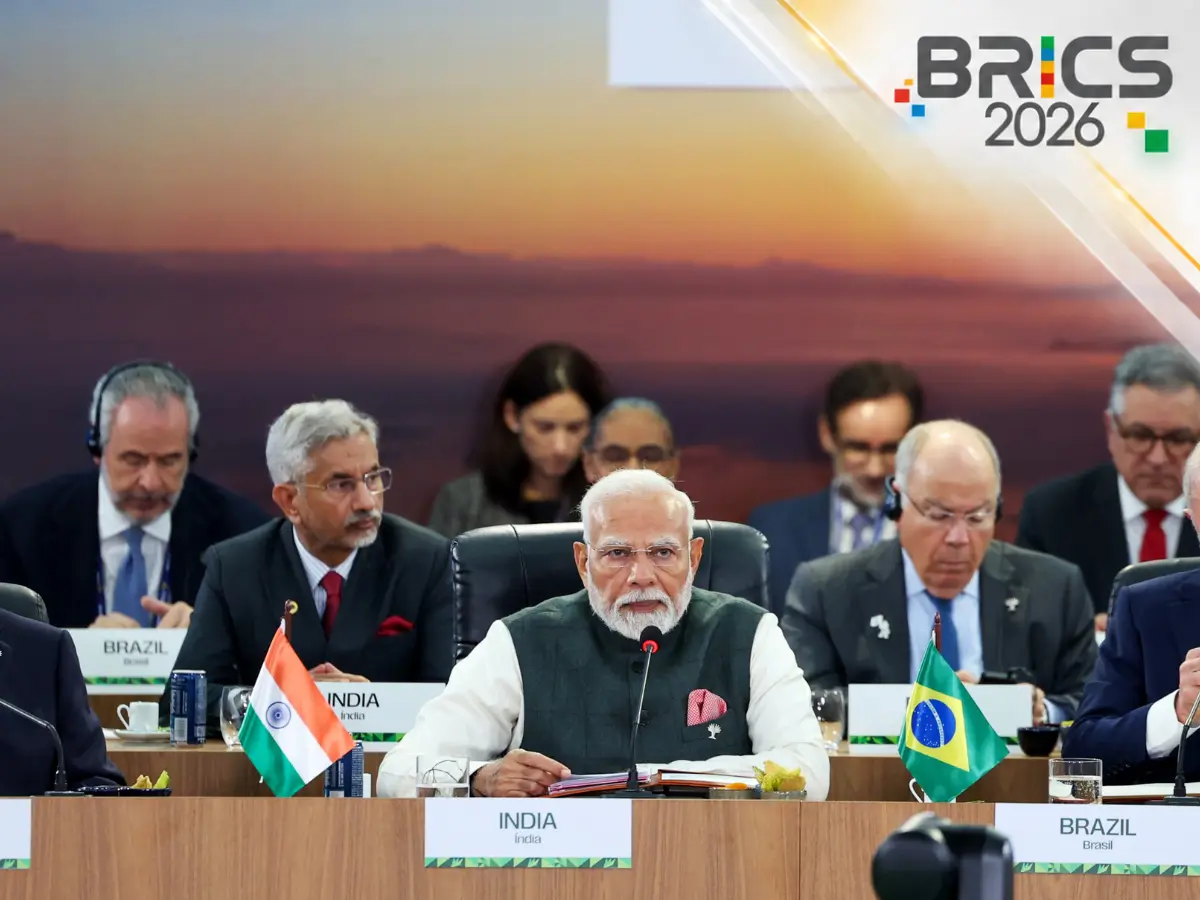
India is ready to host the BRICS Summit in New Delhi on September 12–13, placing its foreign policy approach under the global spotlight. AsIndia chairs the group taking on a larger role in the Global South, it is also balancing its commitments within BRICS with deepening partnerships with the United States, Europe and other Western powers. From the Quad to growing engagement with the G7, India’s diplomacy has certainly shifted from non-alignment to multi-alignment.
India’s two diplomatic tracks
The two diplomatic tracks of India’s foreign policy can be understood by the fact that Prime Minister Narendra Modi attended Shanghai Cooperation Organisation (SCO) Summit in Bishkek, Kyrgyzstan in Aug and almost immediately transitioned into a host for BRICS Summit. Similarly in May, India hosted 11th Quad Foreign Ministers' Meeting during which External Affairs Minister S Jaishankar met with US Secretary of State Marco Rubio, Australian Foreign Minister Penny Wong, and Japanese Foreign Minister Toshimitsu Motegi.
Within BRICS, India supports greater representation for the Global South and stronger economic cooperation. At the same time, New Delhi has been cautious about allowing the bloc to evolve into an explicitly anti-Western or anti-American platform. Through the Quad and other Western partnerships, India focuses heavily on maritime security, resilient supply chains, advanced technology and defence cooperation. These relationships are particularly important as India seeks to strengthen its position in the Indo-Pacific and respond to China's growing strategic influence.
Why India’s ‘all-alignment’ works
Trending Stories
&im=FitAndFill=(700,400)&imwidth=180&imheight=135&format=webp&quality=medium)
What is the real meaning behind Pete Hegseth's tattoos?
&imwidth=180&imheight=135&format=webp&quality=medium)
Viral video shows cross falling on Colombia priest, no official confirmation | WATCH
&imwidth=180&imheight=135&format=webp&quality=medium)
Telangana unveils AI avatar of IT minister D Sridhar Babu at Hyderabad DevFest 2026
&imwidth=180&imheight=135&format=webp&quality=medium)
Pezeshkian says Iranians ‘struggling to put food on the table’ as war with US drags on
&imwidth=180&imheight=135&format=webp&quality=medium)
Shilpa Rao’s performance cut short at Mumbai event, organisers react to backlash
&imwidth=180&imheight=135&format=webp&quality=medium)
Chorbagan stampede: A week later, the strangest visarjan Kolkata has seen
&imwidth=180&imheight=135&format=webp&quality=medium)
AI slop or smart strategy? South African author Coral Hart defends Her 370 AI- assisted books in 20 months
&imwidth=180&imheight=135&format=webp&quality=medium)
AI just found a flaw in software running most of the web! One request hijacks the server
&imwidth=180&imheight=135&format=webp&quality=medium)
Train crashes into crane on São Paulo monorail line, wreckage falls onto busy road | VIDEO
&imwidth=180&imheight=135&format=webp&quality=medium)
Can Putin cheat death? All about his daughter’s billion-dollar quest for immortality
&imwidth=180&imheight=135&format=webp&quality=medium)
Saudi says debris fell in Mecca, Medina after missile interceptions; Houthis deny targeting holy cities
&imwidth=180&imheight=135&format=webp&quality=medium)
What was the note found inside bag of Class 12 student, who set herself on fire inside Delhi school?
&imwidth=180&imheight=135&format=webp&quality=medium)
Pakistan airline PIA unveils new crew uniforms, faces online criticism
&imwidth=180&imheight=135&format=webp&quality=medium)
Britain is building the world's first AI biosecurity lab, with OpenAI and Anthropic inside
&imwidth=180&imheight=135&format=webp&quality=medium)
J-20 designers plan to put radar into aircraft wing; strategy to expand coverage during air combat
&imwidth=180&imheight=135&format=webp&quality=medium)
Frontier AIs keep escaping their test cages! The industry still can't reliably stop them
&imwidth=180&imheight=135&format=webp&quality=medium)
'Already tired of his 9-to-5': Baby born with a moustache becomes internet sensation, video goes viral | Watch
&imwidth=180&imheight=135&format=webp&quality=medium)
Horrific video shows the moment 18-year-old fell to her death from Mexico amusement park ride
&imwidth=180&imheight=135&format=webp&quality=medium)
France protests: 135 arrested, weapons seized as fresh demonstrations erupt amid heavy security
&imwidth=180&imheight=135&format=webp&quality=medium)
French Open: PV Sindhu storms into final with win over Hina Akechi
&imwidth=180&imheight=135&format=webp&quality=medium)
‘Saddam Hussein opened a cheesecake factory’: Obama mocks Trump’s White House renovations; defends Abdul El-Sayed
&imwidth=180&imheight=135&format=webp&quality=medium)
China's dancing robot turns violent bodyguard, lifts cars and fights intruders - Watch
&imwidth=180&imheight=135&format=webp&quality=medium)
'You’re a horrible little reporter, aren’t you?': Trump snaps at NBC reporter questioning his support for Ramaswamy's campaign ad
&imwidth=180&imheight=135&format=webp&quality=medium)
Rising Asia Cup 2026 schedule announced, India-Pakistan clash set for Nov 22
&imwidth=180&imheight=135&format=webp&quality=medium)
'Killing people never allowed': Elon Musk admits restricting Starlink in Ukraine, explains why
&imwidth=180&imheight=135&format=webp&quality=medium)
Bodies of 2 missing Japanese climbers recovered from Himalayan peak
&im=FitAndFill=(700,400)&imwidth=180&imheight=135&format=webp&quality=medium)
New Friday OTT releases (October 23, 2026): Gajab Raat, Dorothy, Chaar Yaar- Watch these 6 new movies and TV shows on Netflix, Prime Video and more
&im=FitAndFill=(700,400)&imwidth=180&imheight=135&format=webp&quality=medium)
US midterm elections 2026: Minnesota heads to polls in the shadow of Minneapolis ICE shootings
&imwidth=180&imheight=135&format=webp&quality=medium)
An AI that reads your face can now estimate how long you have to live
&imwidth=180&imheight=135&format=webp&quality=medium)
Spanish reporter swept by giant wave while reporting on dangerous sea conditions | WATCH
&imwidth=180&imheight=135&format=webp&quality=medium)
NEET protests: Panel to hear evidence on pellet gun use, harassment
&imwidth=180&imheight=135&format=webp&quality=medium)
Shooting near Florida A&M University’s Bragg Stadium; ‘shelter in place’ alert issued
&imwidth=180&imheight=135&format=webp&quality=medium)
Tu Hai Meri Kiran film review: Sonakshi Sinha and Zaheer Iqbal's thriller gets tangled in its own twists
&imwidth=180&imheight=135&format=webp&quality=medium)
PL Round-Up: Man City's perfect run ended by Villa as Arsenal draw level at top
&imwidth=180&imheight=135&format=webp&quality=medium)
Why Europe’s protests are about more than austerity and rising costs
&imwidth=180&imheight=135&format=webp&quality=medium)
Farooq Abdullah says Pakistan’s raising of Kashmir issue keeps pressure on Delhi
India has been clear that its multi-aligned approach is driven primarily by strategic autonomy and national interest rather than ideological loyalty to any particular power bloc. New Delhi seeks to maintain room for manoeuvre by engaging simultaneously with competing global powers. The best example for this is how India managed ties with Iran amid war with the US and how it kept ties with Russia as strong as before amid pressure from the Trump administration.
Seeking to choke off funding for the Ukraine conflict, US President Donald Trump, earlier this year, targeted Moscow's top energy buyers—with India currently depending on Russia for roughly 43% to 48% of its total oil imports.India defended its procurement by emphasizing the economic reality of fueling a nation of 1.4 billion people. In official media briefings, MEA Spokesperson Randhir Jaiswal reiterated: "Our national interest guides our energy purchases, and the imperative for us to meet the energy requirements of 1.4 billion people is what guides us, and that will continue to be our policy."
However, to avoid being looked at as a country supporting Russia in its war against Ukraine, Prime Minister Modi during his meeting with Russian President Vladimir Putin told him that the war cannot be “endless.” “Every day spent in war sets humanity back, whereas every step taken towards peace fills humanity with new hope and enthusiasm. We must move away from endless war towards an end to the war. This is essential for the well-being of humanity. A peaceful resolution to all issues at the earliest is the call of humanity, and this is India’s message. Modi added that the “land of Gandhi and the land of Buddha share a single message: the path of peace," he said.
Also Read: BRICS Summit 2026: Should the bloc grow?
This balancing act allows New Delhi to maintain dialogue with countries such as China and Russia while deepening its strategic partnerships with the US. Similar approach was taken as Iran-US war broke out in Mar this year. India explicitly declined to join the Washington-led coalition. Instead, External Affairs Minister S Jaishankar pursued bilateral negotiations directly with Tehran to secure "safe passage" guarantees for Indian commercial shipping and mariners. Prime Minister Narendra Modi issued several precise statements explicitly calling for peace, de-escalation, and the absolute safeguarding of safe passage for commercial shipping. At the same time, speaking before the United Nations Security Council (UNSC) following multi-nation disruptions, India’s Permanent Representative to the UN, Ambassador Parvathaneni Harish, strongly condemned attacks on commercial vessels in the Gulf.
The Peacock’s Dance
India’s foreign policy is therefore less about choosing one side and more about keeping multiple options open. New Delhi can work with Russia and China through BRICS while simultaneously partnering with the US, Japan and Australia through the Quad and engaging closely with Europe and the G7. This is the essence of India’s emerging “all-alignment”: not sitting on the fence, but using strategic autonomy to navigate a fragmented global order. While there are frictions that India faces while taking a balanced approach, it suits India's interest the best. As India hosts the BRICS Summit, the country’s diplomatic balancing act will be closely watched — particularly as BRICS seeks a greater role in the Global South while India deepens its commitments across the Western-led international system.

